
Author: Carlos L.

  • You Don’t Need the Right Mindset to Work Out. You Need This Instead

    You Don’t Need the Right Mindset to Work Out. You Need This Instead

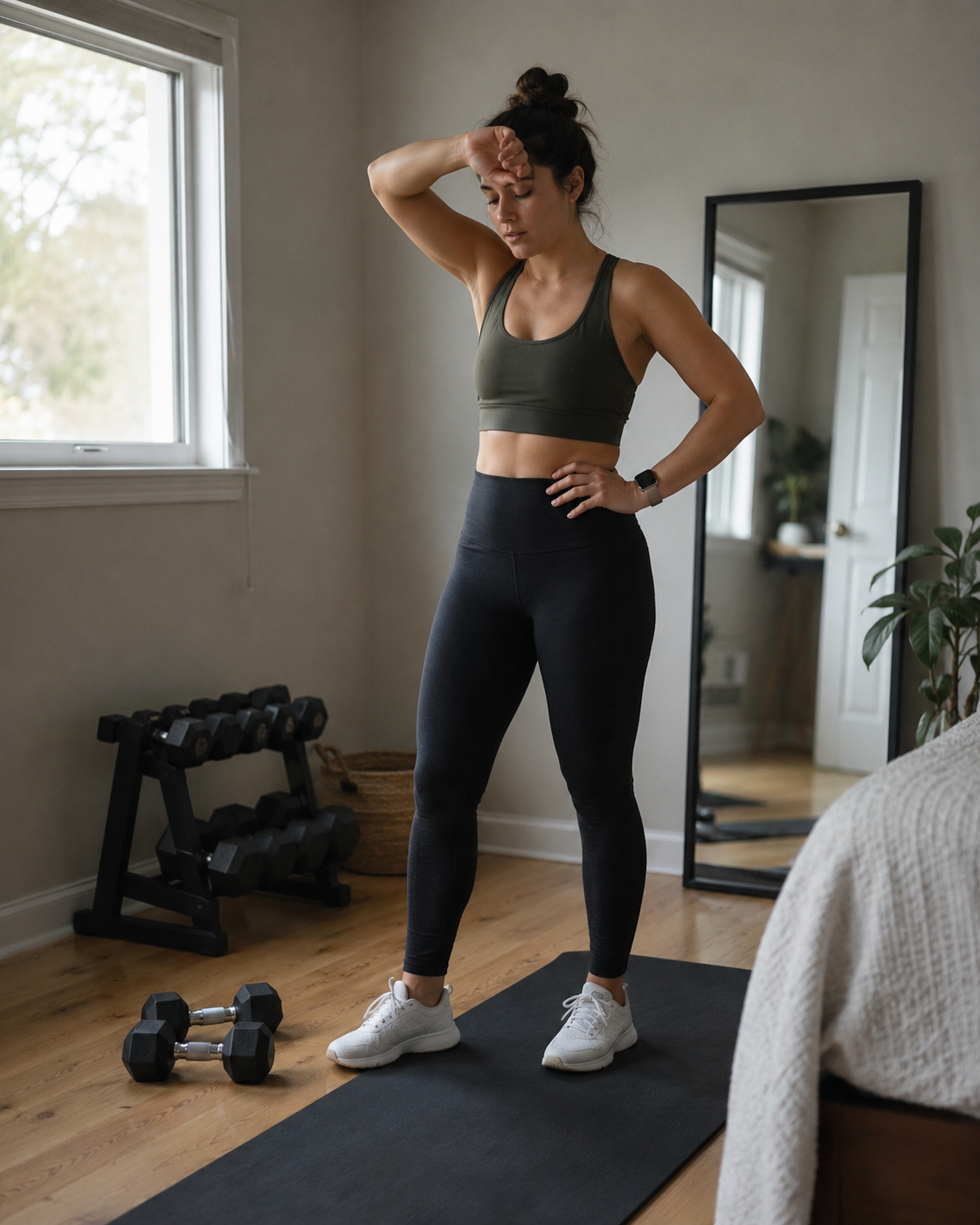
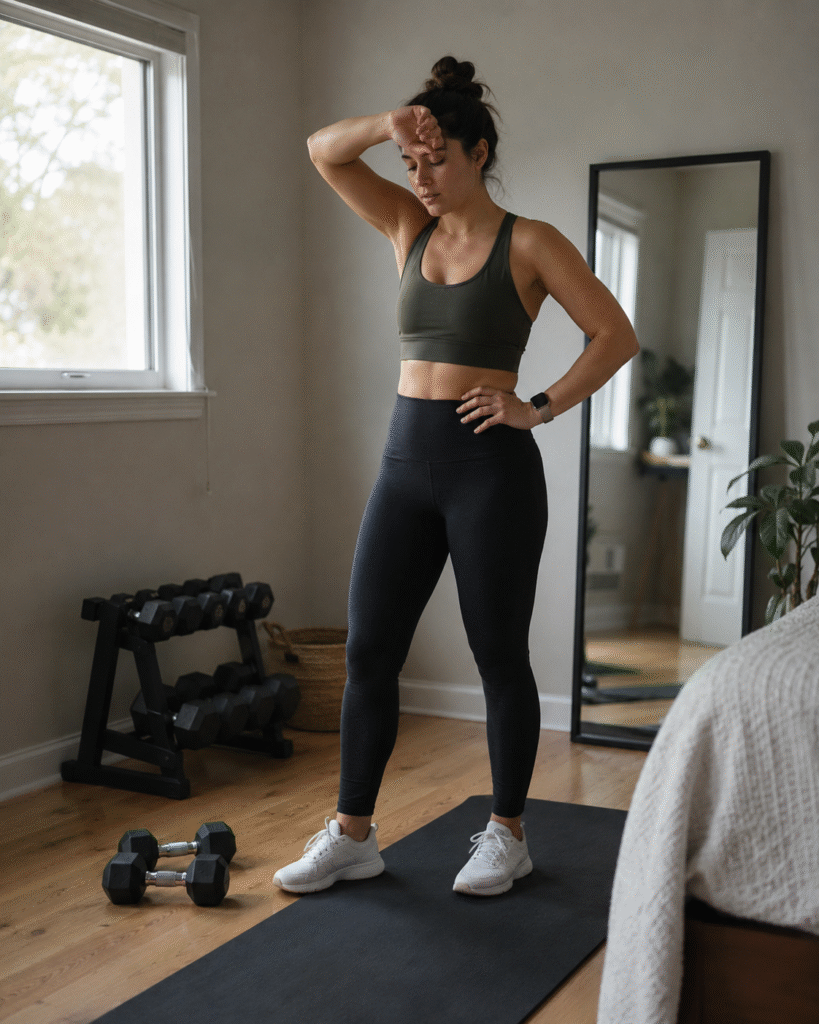
    A woman stands on a black workout mat in a quiet home workout space, looking tired but ready to begin. Dumbbells, a dumbbell rack, a mirror, and soft natural light from a nearby window create a calm, relatable fitness setting.

    Most people believe they need to feel ready before they work out. They wait for the right mindset, more energy, less stress, or even a clearer head before they even consider starting. On paper, that sounds reasonable. In reality, it’s one of the biggest reasons people stay stuck. The truth is, that moment rarely comes.

    Instead, people sit in that in-between space where they want to do something, but never quite feel right enough to begin. Days pass and workouts become something they’ll “get back to” later. The issue isn’t a lack of discipline. It’s the belief that mindset has to come first. In most cases, it doesn’t.

    Why You Don’t Need Motivation to Work Out

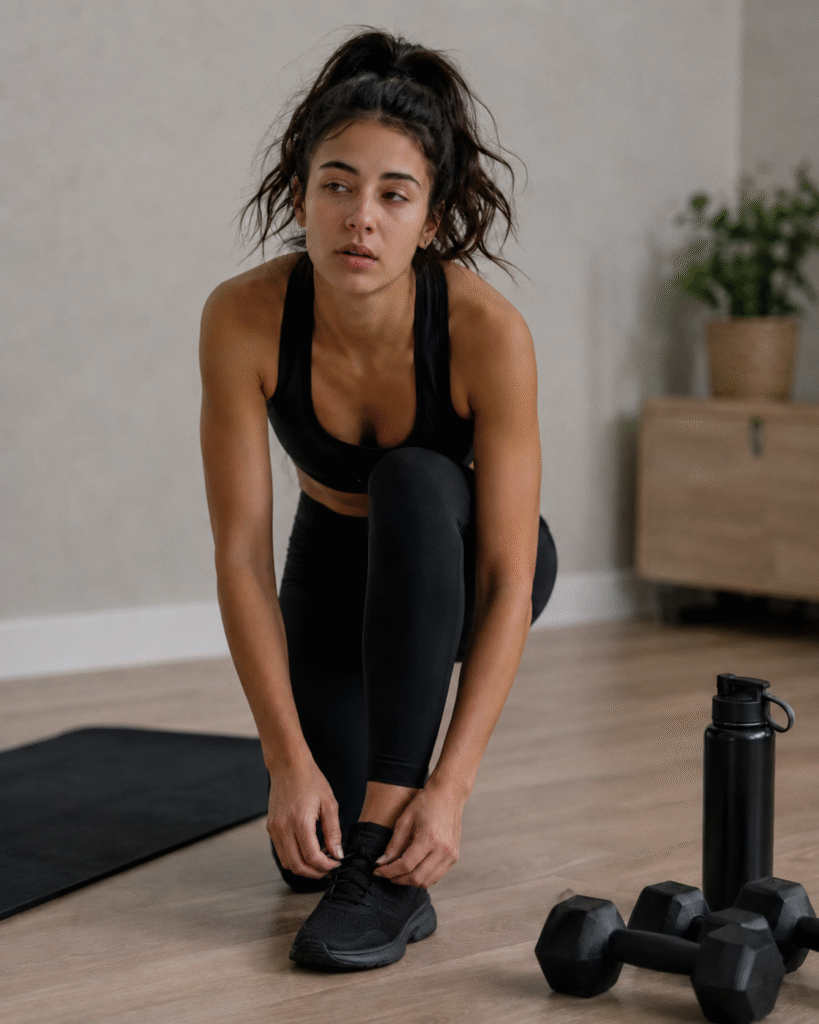
    A woman in black workout clothes ties her black sneakers before exercising in a clean home workout space. Dumbbells, a water bottle, and a yoga mat sit nearby, creating a calm scene of starting a workout before feeling fully ready.

    It’s easy to think that focus, motivation, and clarity should show up before a workout. That if you just felt a little better or less overwhelmed, everything would fall into place. Most workouts don’t begin with perfect focus. They create it.

    Energy tends to rise once you start moving. Mental clarity often shows up somewhere between the warm-up and your first real set. What feels like resistance at the beginning usually fades once you’re in motion. You can’t expect a result before you’ve taken the action that produces it. Mindset isn’t a prerequisite; it’s a byproduct.

    Feeling Unmotivated? You Might Be Mentally Overloaded

    A lot of the time, what people interpret as a lack of motivation is actually something else entirely. It’s not that they don’t want to work out. It’s that they’re mentally overloaded. Stress from work, responsibilities, and expectations all build throughout the day and by workout time, the mind is already crowded. That crowded feeling gets mistaken for low motivation, but it’s really a buildup of pressure with nowhere to go.

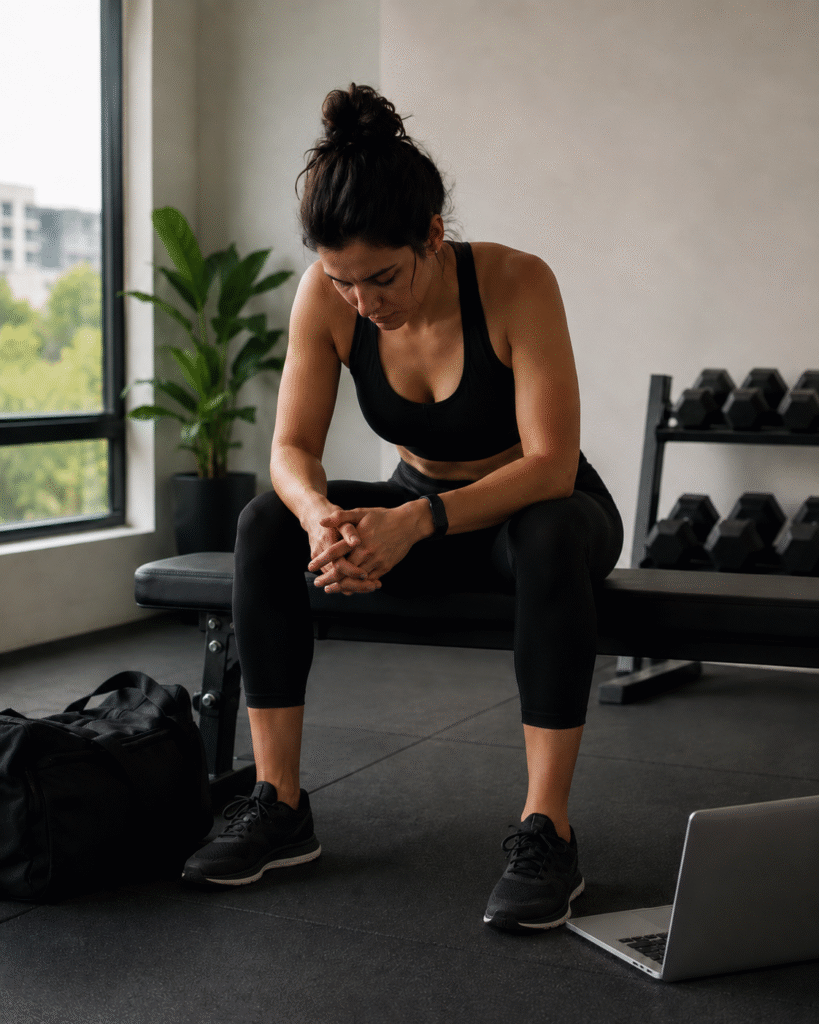
    A woman sits on a workout bench with her head lowered and hands clasped, appearing mentally tired before or after training. A gym bag, laptop, dumbbell rack, and soft window light create a quiet fitness space that reflects stress, focus, and the need to reset.

    If you’ve ever felt like your progress is slow or even invisible at first, that same buildup can make it feel like nothing is working. I break that down further in “Why Fitness Progress Feels Invisible at First (And What’s Actually Happening)”; it’s often more progress than you realize.

    How Exercise Helps You Relieve Stress and Reset Your Mind

    A workout isn’t just a physical activity. It’s a way to process everything you’ve been carrying.

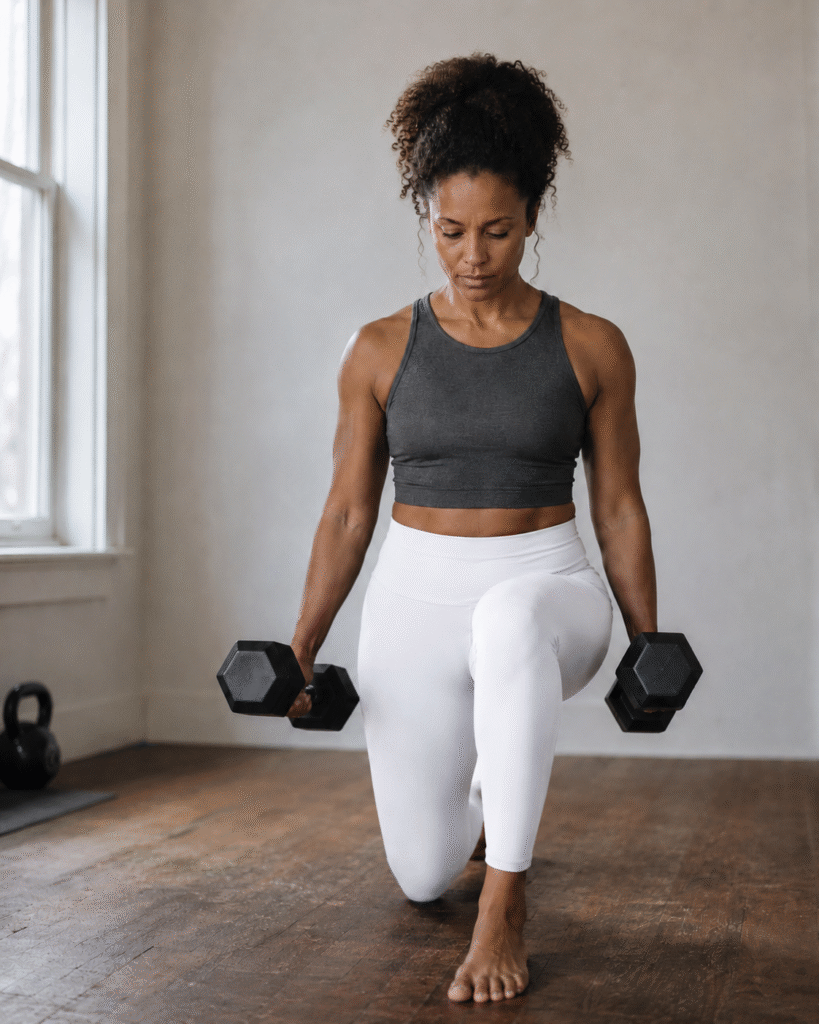
    A woman in white leggings performs a controlled kneeling lunge while holding dumbbells in both hands. Soft window light, a quiet minimalist room, and her focused expression create a calm strength training scene centered on control, consistency, and movement.

    There’s an important distinction here. Working out isn’t about escaping your problems. It’s about giving them somewhere to go. Stress can turn into effort and frustration can turn into movement. The mental noise that’s been sitting in your head gets replaced with something simple and physical.

    Even a short session can completely change how you feel. Not because your problems disappear, but because you’re no longer holding onto them in the same way.

    If you’ve been feeling physically off during training, that disconnect might not be random. It could be tied to how your body is responding overall, which I cover in “Why Your Body Feels Older Than It Should (And How to Fix It)”.

    How Distractions Affect Your Workout Performance

    Your workouts aren’t only affected by your internal state. They’re also shaped by your environment. One conversation can shift your mood. One negative interaction can drain your energy. One distraction can pull your focus away before you even get started. Most workouts aren’t lost during the session itself. They’re lost in the moments leading up to it.

    If your attention is scattered, your effort will be too.

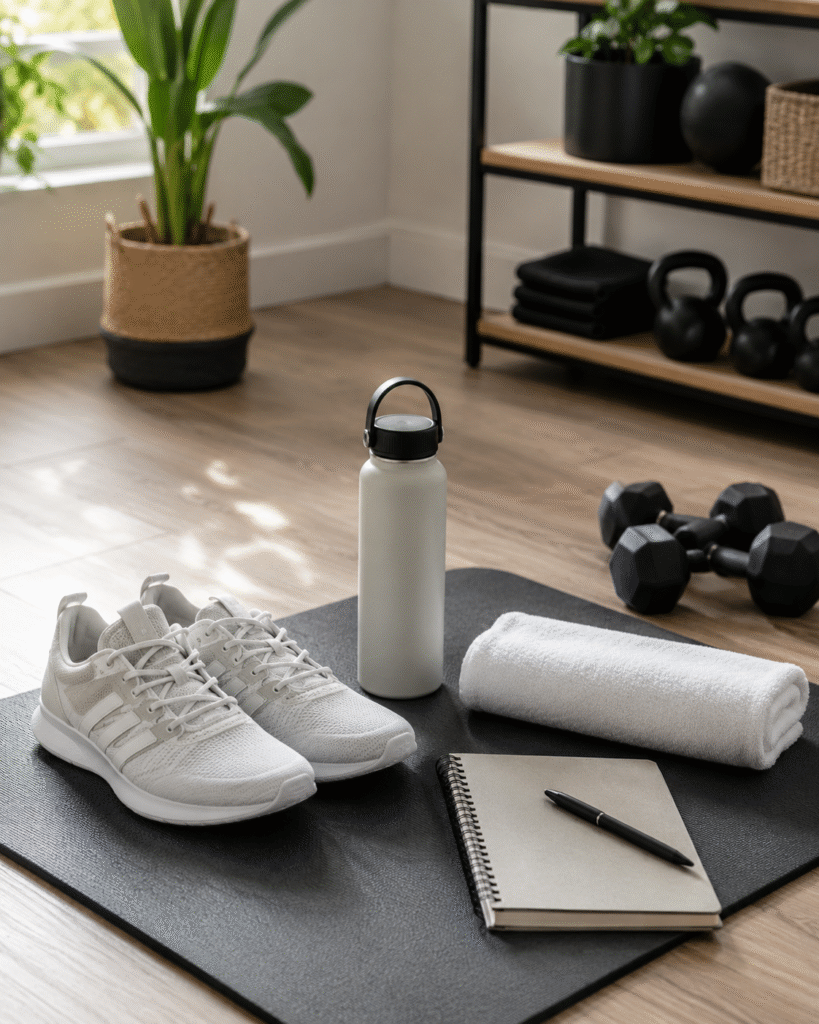
    A neatly organized home workout setup with white sneakers, a water bottle, towel, notebook, and pen placed on a black exercise mat. Dumbbells, kettlebells, plants, and soft daylight create a calm fitness space focused on structure, readiness, and consistency.

    How to Stay Consistent With Workouts (Even Without Motivation)

    Consistency isn’t just about effort. It’s about protecting your focus. If you rely on motivation, you’ll always be at the mercy of how you feel or what’s happening around you. If you treat your workout like a non-negotiable part of your day, you create structure around it.

    That might mean limiting distractions beforehand, keeping your pre-workout time quiet, or simply deciding ahead of time that you’re going regardless of how you feel. The goal isn’t to create a perfect mindset. It’s to give yourself the best chance to start.

    Why Some of Your Best Workouts Happen on Your Worst Days

    This doesn’t mean every workout will feel great. There will be days where your energy is low, your focus is off, and everything feels harder than it should. Those are often the days that matter most. Some of your best workouts will come from the ones you almost skipped.

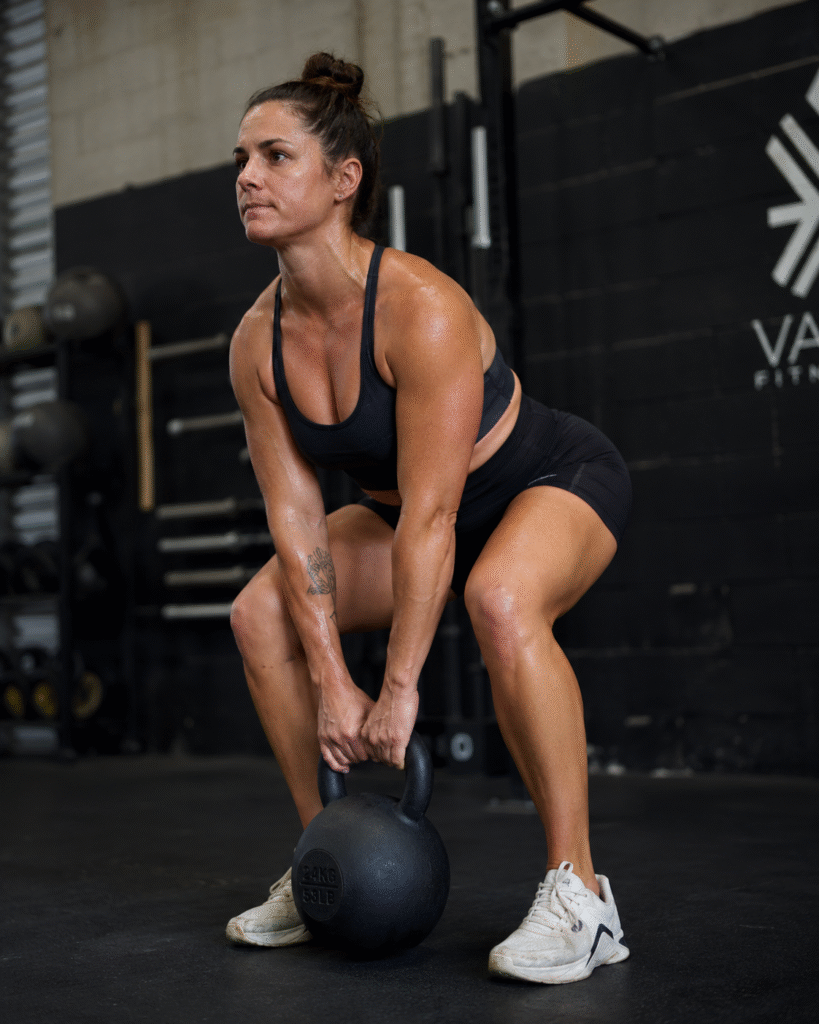
    A woman performs a kettlebell deadlift in a gym, looking focused and determined as she pushes through the movement. Sweat, strong posture, and the dark gym setting create a gritty strength and conditioning scene about working through a hard day.

    Those are the moments where you stop overthinking and just move. Where you let the structure carry you instead of waiting to feel ready. Over time, those sessions build a level of consistency that doesn’t depend on motivation.

    Start Working Out Before You Feel Ready

    At the end of the day, waiting for the perfect mindset is what keeps most people from getting started.

    You don’t need to feel ready.
    You don’t need more motivation.
    You don’t need everything to line up perfectly.

    You need to begin.

    More often than not, the mindset you’re waiting for is built in the process itself.


    Interested in training with me or just want to connect?
    Fitness professional standing with arms crossed, wearing a black sleeveless hoodie and cap, calm confident expression against a clean neutral background.


    Send a DM to @ConditionedLiving or email Carlos@ConditionedLiving.com — I’d love to hear from you.

    Follow me on social media for reflections, tips, and updates on mindset, strength, and everyday wellness.

    Stay in the loop by joining my free mailing list for updates and inspiration.

    Additionally, download the free guide “A Sustainable Start” to begin your journey toward sustainable strength and wellness, with a focus on consistency and balance.


  • Why Body Weight Can Be Misleading: You Are Not a Number

    Why Body Weight Can Be Misleading: You Are Not a Number

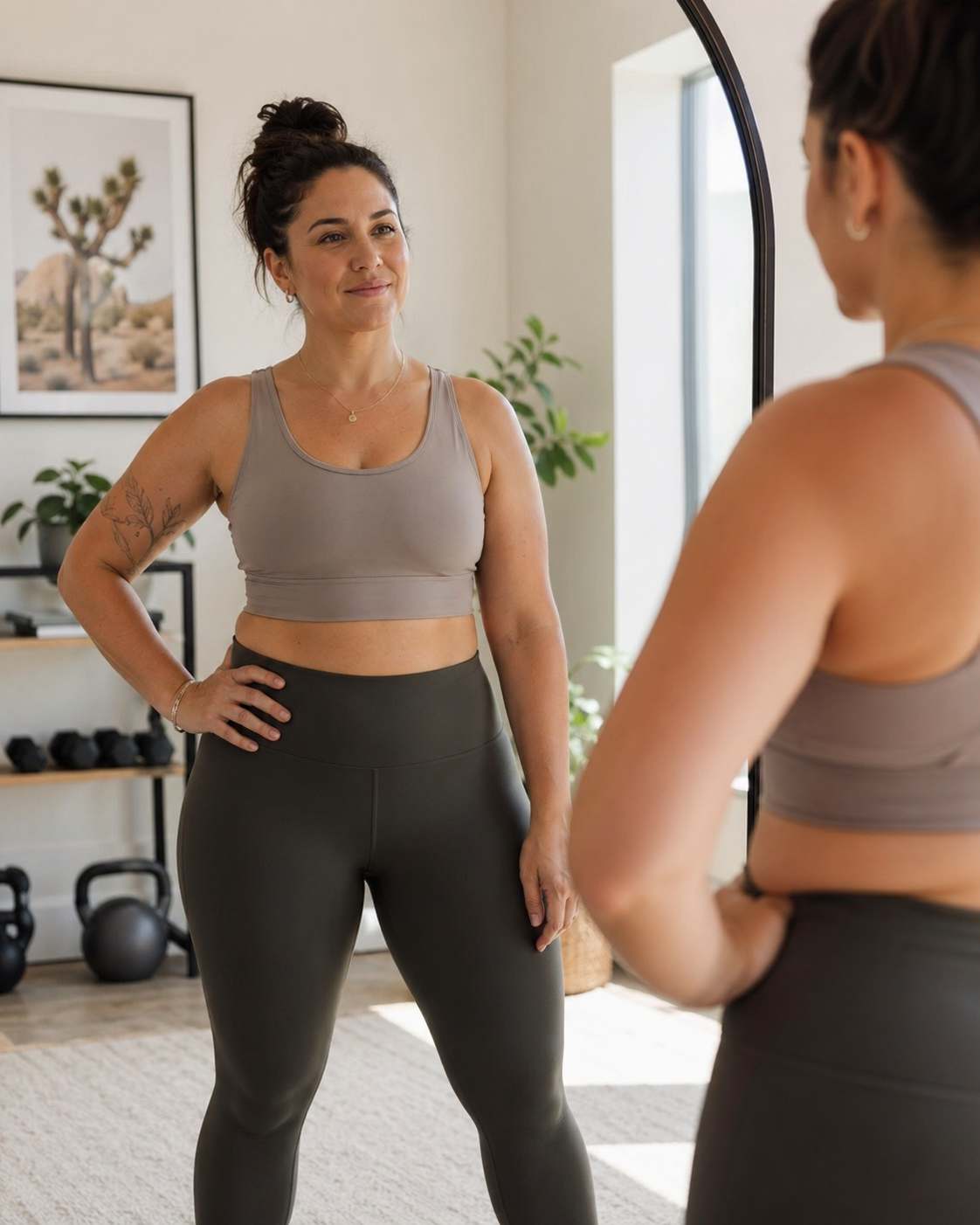
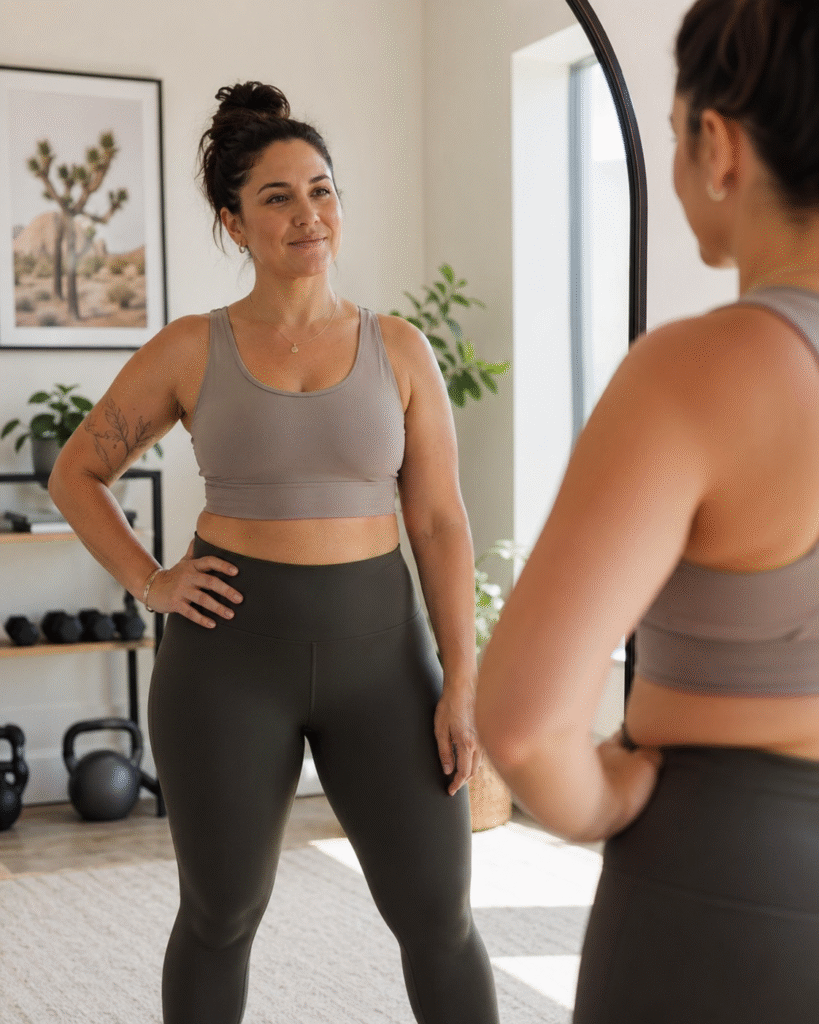
    Confident woman in neutral workout clothes standing near a tall mirror in a bright home fitness space, with dumbbells and kettlebells in the background, reflecting on her body and progress with a calm, body-positive expression.

    A number on the scale can feel louder than it should.

    People hear a weight like 180, 200, or 230 pounds and immediately picture a certain body type. They assume they know what that number looks like. They imagine size, softness, fitness level, and sometimes even health, but body weight can be misleading.

    Two people can weigh the exact same and look completely different. One person may look athletic and strong. Another may look softer. Someone else may carry weight in a way that makes the number surprising. That is because the scale only tells you total weight. It does not tell you height, muscle mass, fat distribution, posture, training history, or how someone feels in their body.

    The scale gives information, it doesn’t tell the whole story.

    Weight Does Not Sit the Same on Every Body

    One of the biggest reasons body weight can be misleading is that weight does not sit the same on every person.

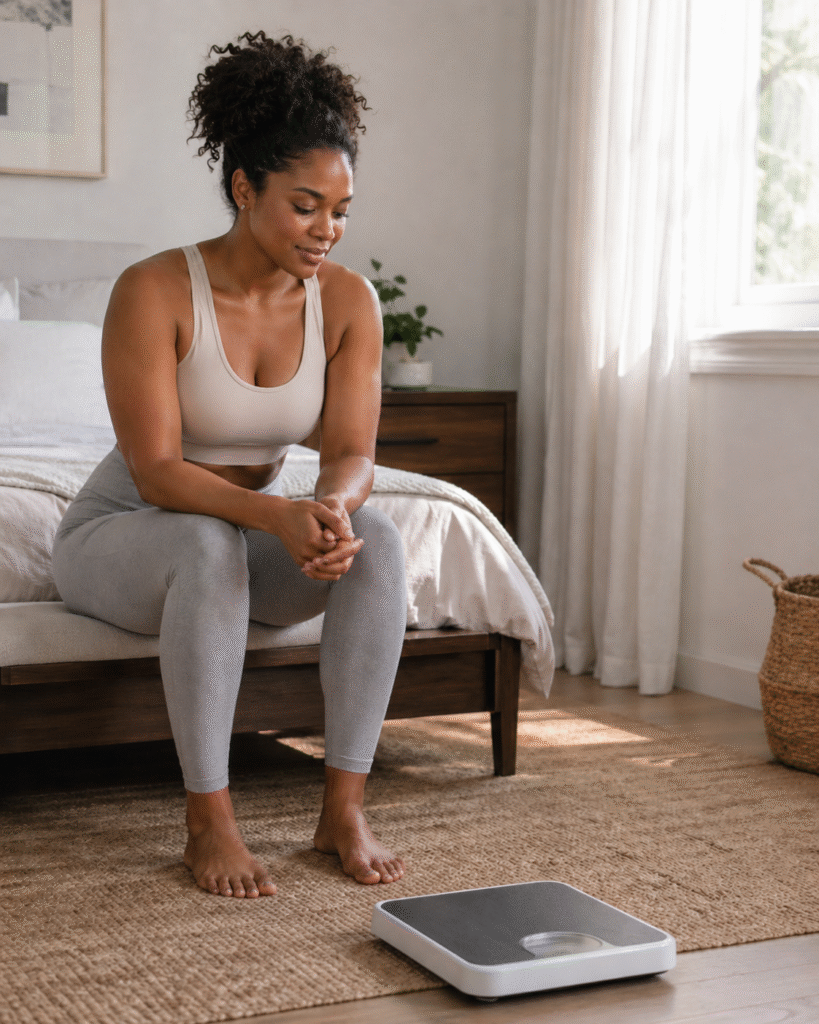
    African American woman in neutral athletic wear sitting on the edge of a bed in a bright bedroom, calmly looking toward a bathroom scale with no visible number, reflecting on wellness beyond weight.

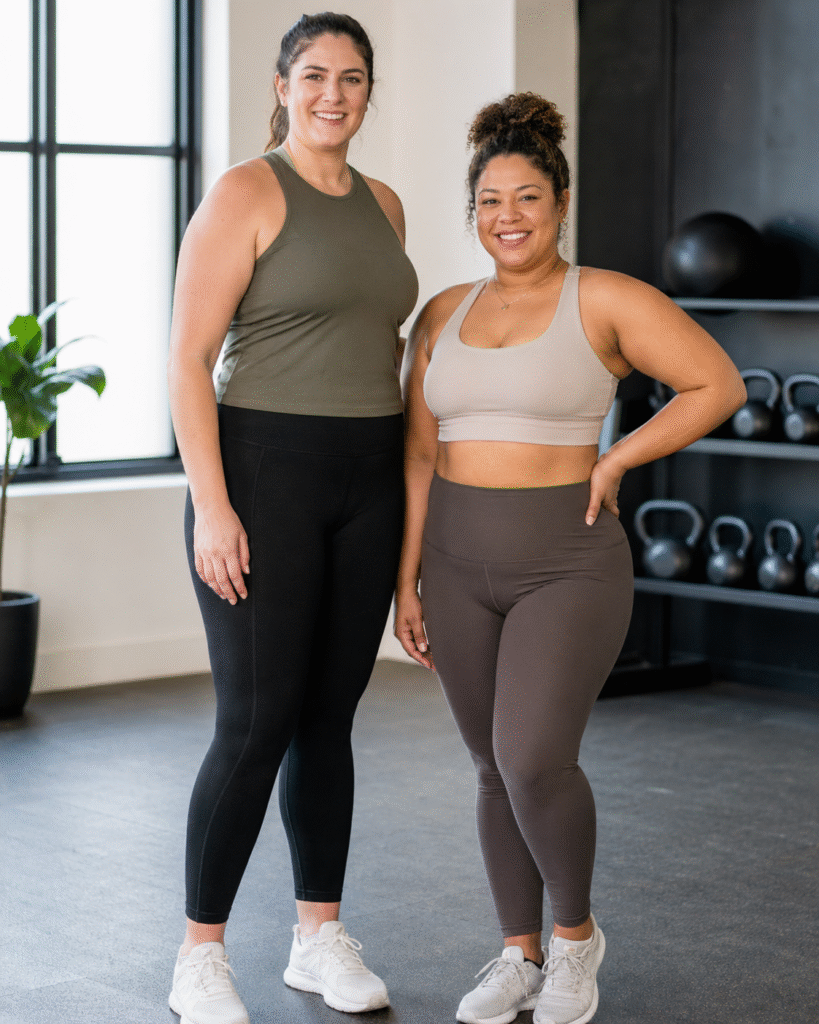
    Height (for one) can change everything. A woman who is 230 pounds at 5 feet 2 inches will usually look very different from a woman who is 230 pounds at 5 feet 9 inches. A taller body has more space for that weight to distribute. The number may be the same, but the visual result can be completely different.

    Frame size matters too. Shoulder width, hip structure, bone density, and natural body shape all affect how weight appears. Some people carry weight evenly. Others carry more in their stomach, hips, thighs, chest, arms, or back. Just like I covered in BMI and Fitness: Why the Number Doesn’t Tell the Whole Story, a single measurement can give you information, but it cannot explain the full picture.

    Body Composition Matters More Than Body Weight

    Body composition is one of the most important parts of this conversation.

    Your total body weight includes muscle, fat, bone, water, organs, food, and stored glycogen. The scale does not separate those things for you. It simply gives you one number and lets your brain panic or celebrate from there.

    Someone with more muscle may weigh more than expected but look firmer, stronger, or more athletic. Muscle adds weight, especially in the legs, glutes, back, and shoulders. Someone else may weigh less but look softer if they have less muscle mass.

    This is why strength training can change the way your body looks even when the scale barely moves. If your goal is to build muscle while improving body composition, Are You Lifting Heavy Enough? A Simple Guide to Muscle Growth and Fat Loss breaks down why the right training stimulus matters. The scale tells you how much of you there is, not what that weight is made of.

    Fat Distribution Changes the Visual Story

    Fat distribution plays a major role in how someone looks at any weight.

    Some people gain weight mostly in the midsection, while others gain more in their hips, thighs, glutes, chest, arms, or back. Genetics, hormones, stress, age, activity level, and lifestyle can all affect where the body stores fat.

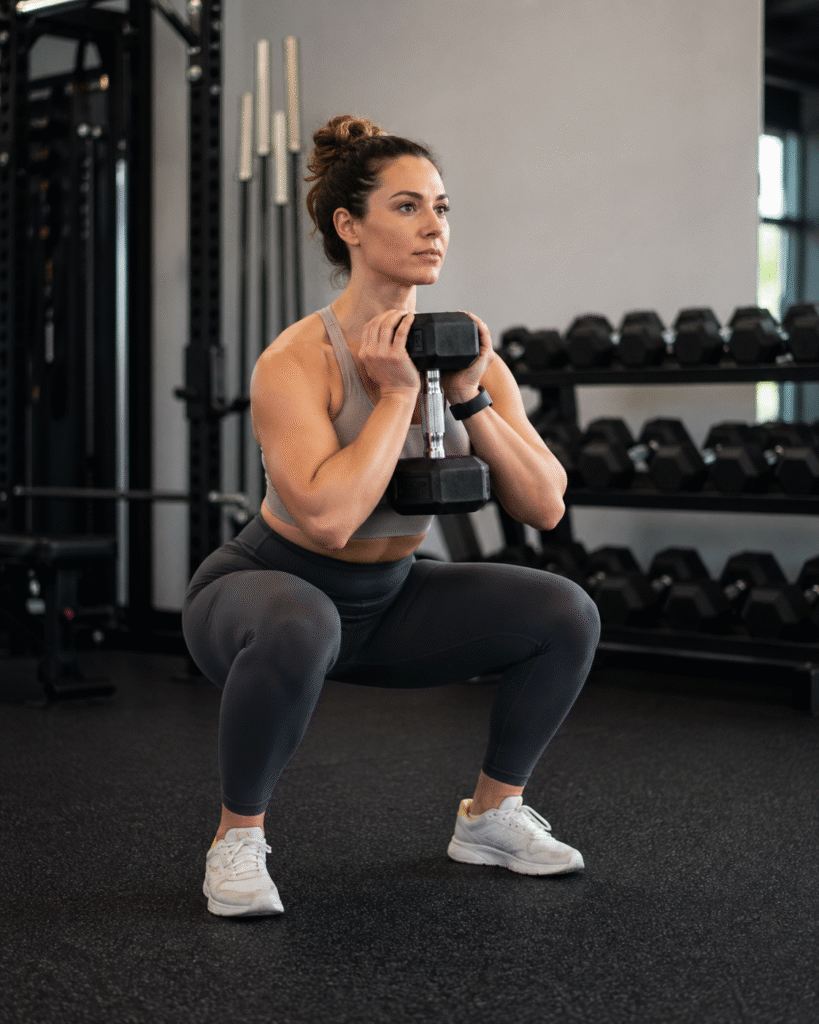
    Strong woman in neutral workout clothes performing a controlled goblet squat with a dumbbell in a clean gym, showing focused strength and natural athletic form.

    Someone can have noticeable softness in one area but still not look as big as the scale number sounds. A person may have belly softness, but if weight is also spread through the legs, hips, chest, and upper body, the overall appearance may look more balanced. Softness is not a moral failure. It is part of how bodies store energy and respond to life. The goal isn’t shame, it’s awareness.

    The Problem With Scale Obsession

    The scale becomes a problem when it turns into the only scoreboard. A higher number can make someone feel like they are failing, even if they are stronger, sleeping better, walking more, and building healthier habits. A lower number can create false confidence if that weight loss comes with muscle loss, low energy, or poor nutrition.

    Body weight is useful, but it needs context. It can help track trends, but it should not control the entire conversation. Better progress markers include:

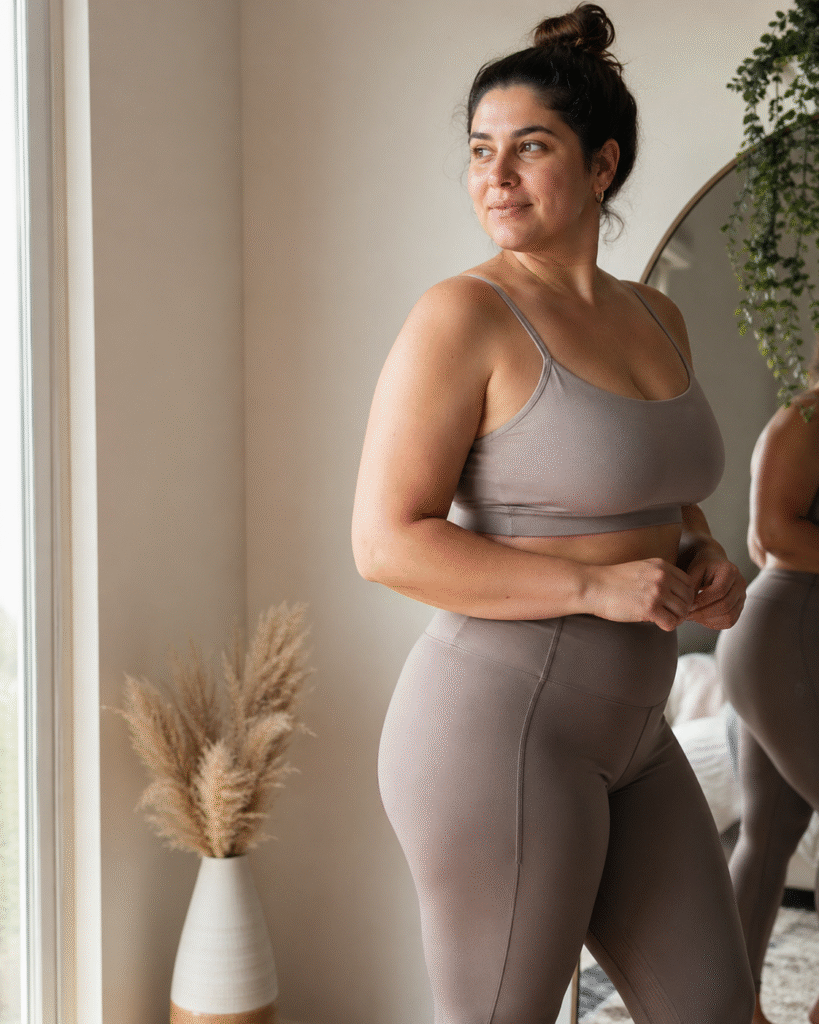
    Woman in neutral fitted workout clothes standing near a bright window and mirror, showing a natural body shape with a calm, confident expression in a warm wellness setting.
    • how your clothes fit
    • waist measurement
    • strength increases
    • walking endurance
    • workout recovery
    • resting heart rate
    • energy levels
    • mood
    • consistency

    Progress photos can help too, as long as they are used with a healthy mindset. A healthier body usually reveals itself through more than one number.

    You Are Not a Scale Reading

    You can weigh more than expected and not look the way people assume. You can weigh less and still feel soft, weak, or out of shape. You can also stay the same weight while building a stronger, healthier body underneath. The goal is not to ignore the scale completely. The goal is to stop giving it more power than it deserves.

    If you take one thing away for this let it be that ou do not look like a number. You look like a combination of height, structure, muscle, fat distribution, habits, history, and life. That is why real progress should be measured by more than pounds.

    Focus on building strength, improving your conditioning and moving consistently. Eat in a way that supports your body and let the scale be one tool, not the final judge.

    Interested in training with me or just want to connect?

    Fitness professional standing with arms crossed, wearing a black sleeveless hoodie and cap, calm confident expression against a clean neutral background.

    Send a DM to @ConditionedLiving, or email Carlos@ConditionedLiving.com.  Stay in the loop by following me on social media for updates, inspiration, for reflections, tips, and updates on mindset, strength, and everyday wellness.

    Also, download the free guide A Sustainable Start to begin your journey toward sustainable strength and wellness.

  • Why Listening to Your Body Leads to Better Workouts and Recovery

    Why Listening to Your Body Leads to Better Workouts and Recovery

    Athletic woman in grey and teal workout outfit sitting on a bench in a gym, eyes closed and resting between workouts, with water bottle and towel nearby

    Many people treat consistency like the ultimate fitness badge. If the workout is on the calendar, they do it no matter how tired, sore, stressed, or drained they feel. That mindset can look disciplined, but it often creates setbacks.

    Your workout plan is useful, but it is not magic. It cannot predict poor sleep, extra stress, lingering soreness, or early signs of injury. Your body gives real-time feedback every day. Learning how to listen to your body during workouts can help you train and recover Kmarter, as well as stay consistent long term. Progress is not built on blindly pushing through everything. knowing when to push, scale back, and recover is key.

    The Problem With Pushing Through Pain and Fatigue

    There is a difference between effort and warning signs.

    Fitness woman in pink gym outfit assessing knee discomfort during training in a modern fitness center, focusing on recovery and body awareness

    Many people ignore pain, fatigue, or burnout because they do not want to lose momentum, often repeating mistakes covered in Interval Training vs Reps: What Most Workouts Get Wrong. Forcing hard workouts when your body is asking for recovery can lead to:

    • nagging injuries
    • stalled performance
    • poor motivation
    • chronic fatigue
    • mental burnout

    One skipped workout rarely ruins progress. Weeks of poor recovery often do. Consistency should not mean running yourself into the ground. It should mean staying healthy enough to keep showing up.

    Body Check-Ins Before Every Workout

    Before you train, take sixty seconds and ask yourself these questions.

    1. Check Your Energy Levels Before Training

    Ask yourself:

    Am I tired from life, or am I under-recovered?

    These are not the same thing. If you are mentally tired from work or stress, movement may help you feel better. A strength session, walk, or light cardio workout can improve energy.

    If you feel physically drained, heavy, sluggish, and sleep-deprived, recovery may be the smarter move. Lower intensity or shorten the workout instead of forcing max effort.

    2. Know the Difference Between Soreness and Pain

    Ask yourself:

    Is this normal soreness or sharp pain?

    Soreness is common after training. It usually feels stiff, dull, or tender. Pain is different. It may feel sharp, unstable, sudden, or worse during movement.

    Normal soreness can often be trained around. Sharp pain should be respected. Trying to “push through” pain is one of the fastest ways to turn a small issue into a larger injury.

    3. Check Your Stress and Mood Before Exercise

    Ask yourself:

    Am I ready to train hard today, or am I mentally overloaded?

    Stress affects performance more than many people realize. High stress can reduce recovery, motivation, and workout quality. If your mind feels crowded and your body feels tense, today may be a better day for:

    • walking
    • mobility work
    • stretching
    • easy cardio
    • lighter lifting

    That still counts. Smart training is not all-or-nothing.

    Adjust Your Workout Instead of Skipping It

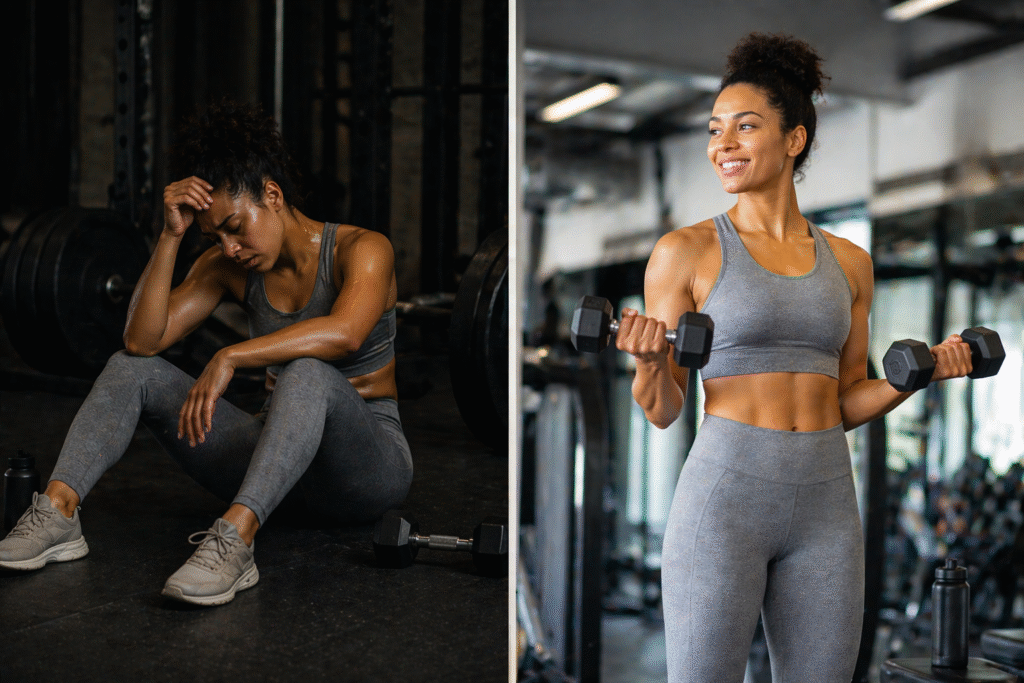
    Comparison image of overtraining versus balanced exercise, with fatigued woman resting on gym floor contrasted with energized woman strength training with dumbbells

    Many people think they only have two choices:

    • crush the planned workout
    • do nothing

    That is weak logic. A better option is to adjust the session based on what your body needs today, especially if you are rebuilding after time away, as discussed in How to Return to Fitness After Time Off Without Pressure or Guilt.

    You can:

    • reduce workout volume
    • lower the weight
    • add longer rest periods
    • shorten the session
    • swap HIIT for a walk
    • focus on movement quality

    This approach helps you stay active while protecting recovery.

    Hard Work Should Feel Like Effort, Not Dread

    Challenging workouts are normal. Every session should not feel easy.

    But if your workouts constantly feel heavy, draining, or mentally exhausting, something needs to change. Hard training should feel like effort, not dread. The goal is not to avoid challenge. The goal is to build a routine you can sustain for months and years.

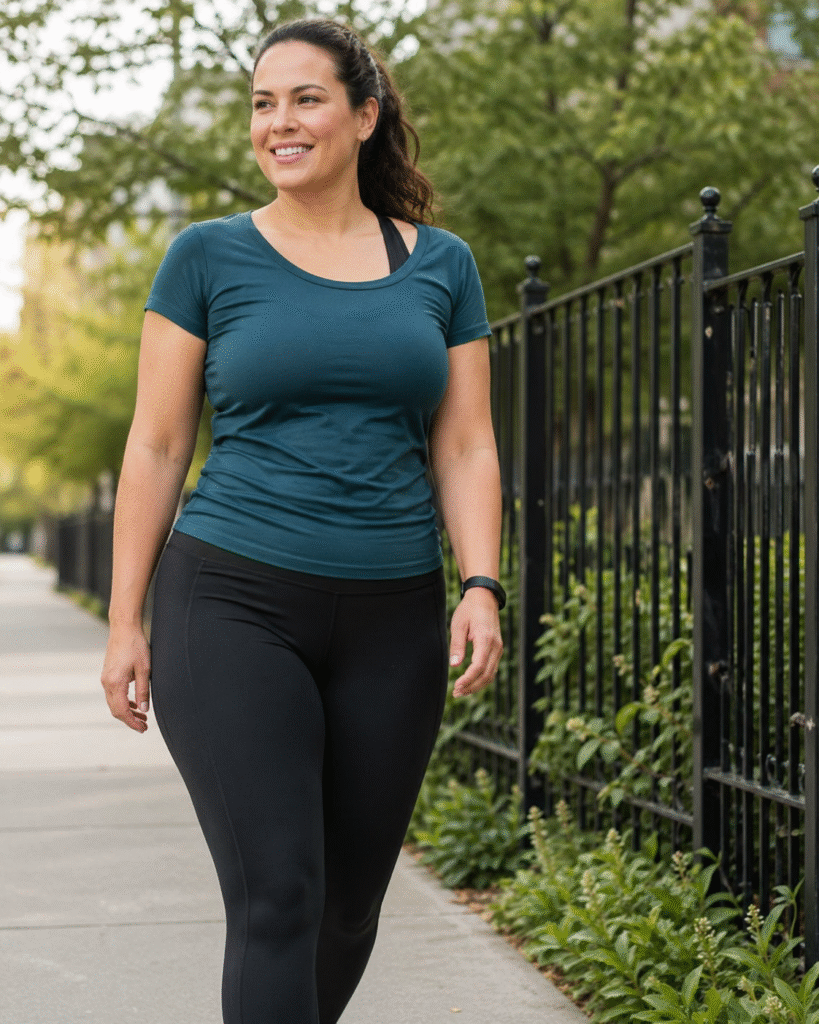
    Woman taking a mindful morning walk in a park with relaxed breathing and sunrise light, representing fitness recovery, stress relief, and wellness

    Long-Term Fitness Is Built on Smart Consistency

    The best workout plan is one you can follow consistently without breaking yourself down. Listening to your body is not weakness. It is awareness. It helps you avoid setbacks, improve recovery, and train with better intention.

    Your body often whispers before it screams. Learn to hear it early.


    Interested in Training with Me or Just Want to Connect?

    Fitness professional standing with arms crossed, wearing a black sleeveless hoodie and cap, calm confident expression against a clean neutral background.

    Fitness professional standing with arms crossed, wearing a black sleeveless hoodie and cap, calm confident expression against a clean neutral background.
    Send a DM to @Litoswaay, or email Carlos@ConditionedLiving.com; I’d love to hear from you!
    Follow @ConditionedLiving for reflections, tips, and updates on mindset, strength, and everyday wellness.

    Stay in the loop by joining my free mailing list for updates and inspiration.

    Additionally, download the free guide/e-book A Sustainable Start” to begin your journey toward sustainable strength and wellness, with a focus on consistency and balance.

    Conditioned Living is about realistic fitness and training advice. Real progress takes time; stay consistent.

  • Interval Training vs Reps: What Most Workouts Get Wrong

    Interval Training vs Reps: What Most Workouts Get Wrong

    Most workouts are built around counting reps. Ten squats, ten pullups, twelve lunges or fifteen pushups sound normal. On the surface, this looks structured and effective, but when you look closer, the effort behind those numbers can vary dramatically. When comparing interval training vs counting reps, this is where the gap begins.

    One round might be slow and controlled. The next might be rushed. Another might feel easy, while the following one leaves you exhausted. The numbers stay the same, but the stimulus changes every time. Your body doesn’t respond to numbers; it responds to demand. When that demand changes from set to set, the adaptation becomes inconsistent. Over time, this makes progress harder to predict and harder to measure.

    This is the difference between going through the motions and actually creating a training effect, something I break down further when discussing whether you’re actually building strength or just exercising.

    How Interval Training Improves Workout Consistency

    Interval training removes much of that randomness by controlling time instead of reps. Instead of performing twelve squats, you might perform squats for thirty seconds followed by thirty seconds of rest. Now the structure stays the same every round. When you look at interval training vs reps, the biggest difference is consistency.

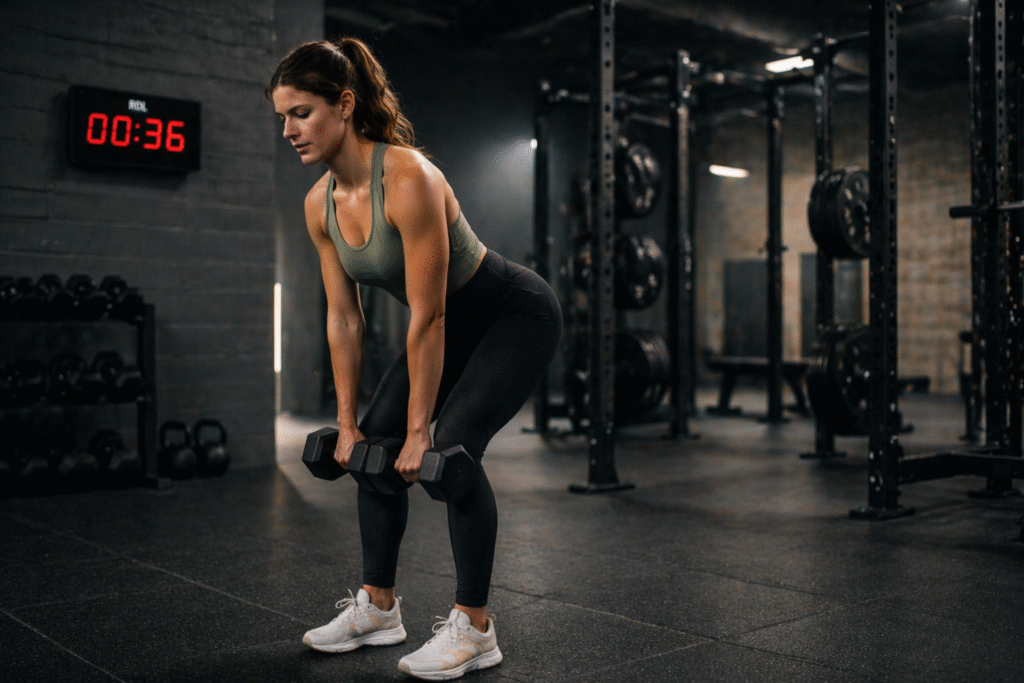
    Female athlete performing a controlled dumbbell Romanian deadlift in a modern gym, maintaining proper hip hinge form with a focused expression, while a red digital wall timer counts down in the background under cinematic lighting

    Pacing becomes part of the workout and effort becomes more predictable. Fatigue also follows a pattern instead of spiking randomly. Your heart rate rises and falls in a controlled way, which improves conditioning over time. This doesn’t necessarily make workouts harder. It makes them repeatable, and repeatable workouts are what lead to measurable progress.

    That’s also why progress can feel slow at first. Improvements are happening, but they’re subtle and consistent rather than dramatic and random. This idea connects closely to why fitness progress often feels invisible in the early stages.

    Over time, interval training creates a clearer signal for your body to adapt to. And clearer signals produce better results.

    When Counting Reps Is Better Than Interval Training

    Counting reps still plays a critical role, especially in strength training. Reps allow you to slow down and focus on quality. Eight squats, six presses, or seven rows encourage control, proper mechanics, and muscle engagement. You’re not racing the clock. You’re focusing on execution. When comparing interval training vs counting reps, this is where reps win.

    Strength training benefits from deliberate pacing. You want controlled movement, consistent form, and the ability to gradually increase resistance over time. Intervals can sometimes push you to rush, which reduces stability and technique.

    Female athlete holding a paused lunge position in a modern gym, resting her arm on her front knee with a fatigued expression, wearing a purple top and black shorts, surrounded by weights and equipment under soft cinematic lighting

    Rep-based training works best for:

    • Strength development
    • Muscle control
    • Progressive overload
    • Technique refinement

    Reps create structure for strength. Intervals create structure for conditioning. They serve different purposes. The problem isn’t counting reps. It’s using them for everything.

    Structure Is What Actually Drives Results

    This isn’t really about choosing between interval training and counting reps. It’s about structure versus randomness. Many workouts mix the two without intention. People rush through strength work, slow down when they should maintain effort, and rest inconsistently between sets. The result is unpredictable fatigue and unclear progress.

    Male athlete performing jump rope outdoors on a park path, maintaining a smooth and consistent rhythm with a focused expression, wearing green shorts and a light grey shirt, surrounded by trees and greenery in a bright spring environment

    When comparing interval training vs counting reps, the real advantage comes down to structure. Intervals create structured conditioning. Reps create structured strength training. When each is used correctly, workouts become repeatable. When workouts are repeatable, progress becomes measurable.

    Research consistently shows that structured training improves both cardiovascular efficiency and performance over time. The common factor isn’t the method, it’s consistency; which…comes from structure.

    Choosing the Right Approach

    Interval training builds conditioning. Counting reps builds strength. The best approach isn’t choosing one over the other. It’s understanding when to use each method and applying it with intention. If your workouts feel random, inconsistent, or hard to track, the issue usually isn’t effort; it’s structure.

    Give your body a clear and repeatable signal, and it will adapt. Progress isn’t just about what you do, it’s about how consistently you do it.


    Interested in Training with Me or Just Want to Connect?

    Fitness professional standing with arms crossed, wearing a black sleeveless hoodie and cap, calm confident expression against a clean neutral background.

    Send a DM to @Litoswaay, or email Carlos@ConditionedLiving.com; I’d love to hear from you!
    Follow @ConditionedLiving for reflections, tips, and updates on mindset, strength, and everyday wellness.

    Stay in the loop by joining my free mailing list for updates and inspiration.

    Additionally, download the free guide/e-book “A Sustainable Start” to begin your journey toward sustainable strength and wellness, with a focus on consistency and balance.

    Conditioned Living is about realistic fitness and training advice. Real progress takes time; stay consistent.

  • Why Your Body Feels Older Than It Should (And How to Fix It)

    Why Your Body Feels Older Than It Should (And How to Fix It)

    It usually starts small. You stand up after sitting for a while and feel stiff. Your back tightens up. Your knees crack going up the stairs. Workouts feel heavier than they should. Recovery takes longer.

    At some point, the thought creeps in:

    “Am I just getting old?”

    Here’s the truth most people don’t hear enough:

    You’re probably not feeling old because of your age.
    You’re feeling old because of how your body is being used… or not used.

    It’s Not Age, It’s Movement (or Lack of It)

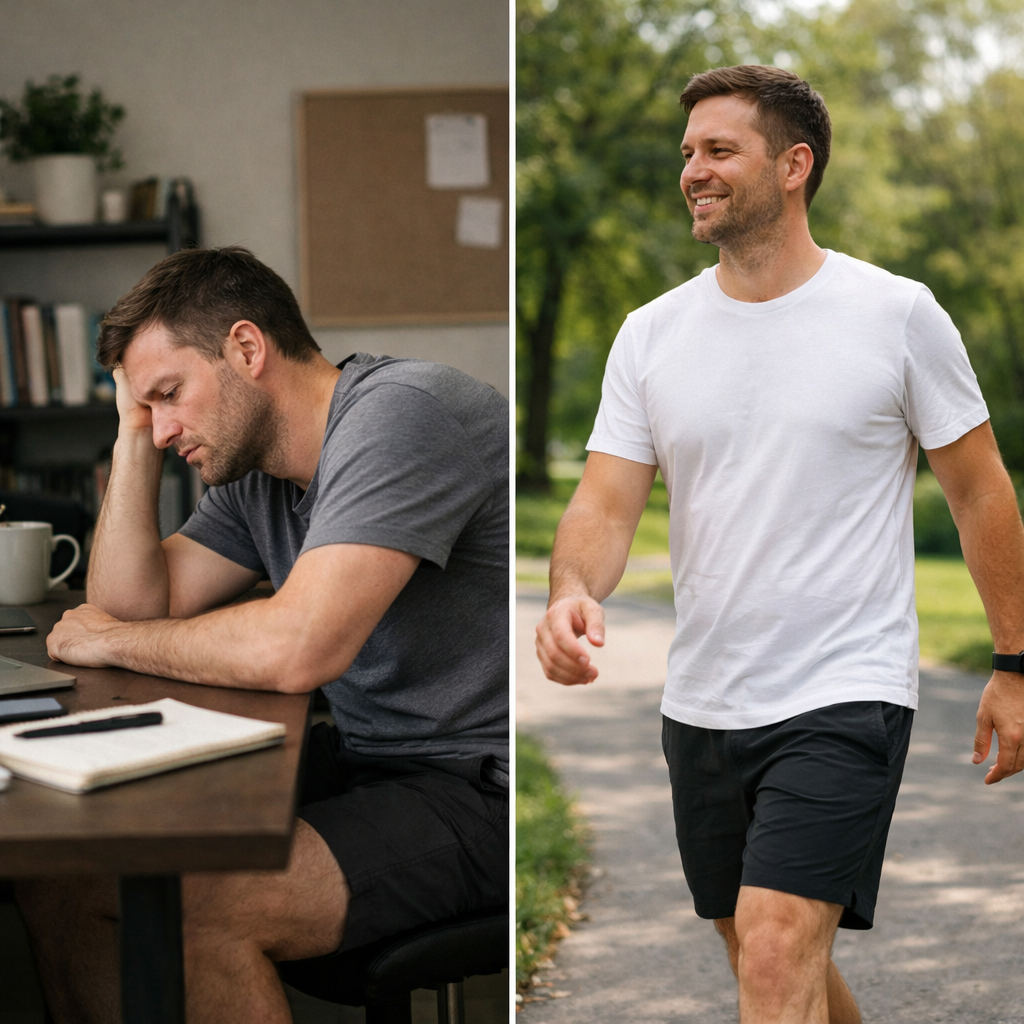
    Split image of the same adult man showing a contrast in mobility and posture. On the left, he sits slouched at a desk indoors with a tired expression, leaning on his hand in a dim, neutral-toned workspace. On the right, he walks outdoors upright with relaxed posture and a slight smile, in natural light with greenery in the background, representing improved movement and ease.

    Your body doesn’t suddenly decline overnight. What actually happens is much quieter. Small habits stack up. Things like:

    • Less movement
    • More sitting
    • Repetitive workouts
    • Skipping warm-ups
    • Ignoring mobility

    Your body could also adapt to these patterns and this could lead to:

    • Tight hips.
    • Stiff joints.
    • Limited range of motion
    • Muscles that don’t fire the way they should

    That “old” feeling? It’s not time catching up to you. It’s your body responding to how it’s being trained and how it’s being neglected.

    Low Sitting Too Much Makes Your Body Feel Stiff and Tight

    For most people, a large part of the day is spent sitting. At a desk. In the car. On the couch. Looking down at a phone. The problem isn’t just the sitting itself. It’s how long you stay there.

    A woman sits at a desk working on a laptop with a slightly hunched posture and forward head position, her shoulders rounded as she leans in. A coffee mug rests in the foreground, and warm, dim lighting from a desk lamp highlights her focused yet fatigued expression in a quiet office setting.

    Your body adapts to the positions it spends the most time in. When you sit for hours at a time, your hips stay in a shortened position, your hamstrings gradually lose length, and your upper back begins to round forward. Blood flow slows, and your body settles into that posture as its default.

    Then, when you finally stand up, move, or try to train, everything feels tight and restricted.

    It can feel like something is wrong, like your body is breaking down; but it’s not. Your body is simply doing what it’s designed to do, adapting to what you repeatedly ask of it. The issue is that most of what you’re asking it to do is… not much movement at all.

    Unbalanced Workouts Are Wearing You Down

    One of the biggest misconceptions is that as long as you’re working out, you’re doing things right. That’s not always true. A lot of people are active, but their training lacks balance.

    Some people focus only on lifting. They build strength, but slowly lose mobility and fluidity. Others rely heavily on running or cardio, placing the same repetitive stress on their joints without building the strength needed to support it.

    Then there’s the in-between group, the ones who rush into workouts without warming up, skip mobility work, and move quickly through exercises without paying attention to how they’re actually moving.

    Man in a gym mid-workout, leaning forward with hands on his knees, visibly fatigued and slightly frustrated, sweat on his face and shirt, with weights and cardio equipment blurred in the background under natural light.

    None of this feels like a problem in the moment. In fact, it can feel productive. Over time it creates a body that’s constantly working, yet never fully supported.

    That’s where the “worn down” feeling starts to show up.

    You’re not doing nothing. You’re just not doing the right mix of things to support how your body is supposed to move and this is where a lot of people get tripped up.

    They assume that effort automatically equals progress, when in reality, it depends on how that effort is structured. That’s exactly the difference between actually building strength and just going through the motions, something I broke down more in Are You Actually Building Strength or Just Exercising?.

    Stress, Sleep, and Recovery Are Part of the Problem

    What happens outside the gym matters just as much as what happens inside it.

    Woman lying awake in bed at night wearing a navy blue tank top, dim bedside lamp casting warm light across the room, staring up at the ceiling with a tired expression. In a second scene, she looks at her phone, face softly lit by the screen, appearing restless and unable to sleep in a cozy but tense nighttime setting.

    You can have a well-structured workout routine, but if your recovery is off, your body will still feel it.

    Poor sleep limits your ability to recover. Stress keeps your body in a constant state of tension. Muscles stay tight longer. Energy levels drop. Focus fades.

    Instead of resetting each day, your body carries fatigue forward. One tough day turns into two. Two turns into a week. A week turns into a baseline. That’s when everything starts to feel heavier than it should, not just workouts, but everyday movement.

    This isn’t always obvious while it’s happening, but the accumulation is real. And over time, it contributes just as much to that “older” feeling as anything physical.

    Feeling Stiff Every Day Isn’t Normal,  It’s Just Common

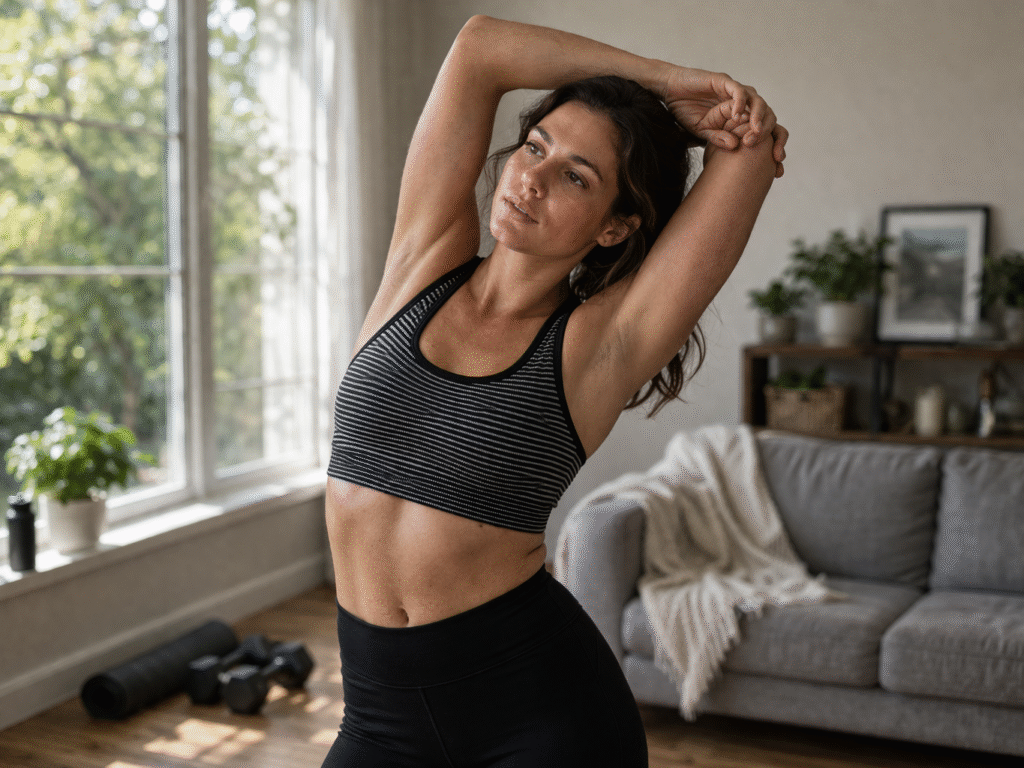
    Woman wearing a black and white striped sports bra and black leggings performing a slow overhead side stretch in a sunlit living room, natural light coming through a window, calm focused expression, soft shadows, and a relaxed home workout environment with couch and plants in the background.

    This is where a lot of people settle without realizing it. They accept the stiffness, the soreness, the constant tightness and they assume it’s just part of getting older; it’s not. It’s common, but that doesn’t make it normal. Your body is built to move, adapt, and feel capable. It’s designed to handle a wide range of motion, recover from effort, and respond positively to the right kind of training.

    If you constantly feel limited, tight, or worn down, it’s not something you have to live with. It’s a signal. Something in your routine, your movement patterns, or your recovery needs to change. The good news is, those things are within your control.

    How to Feel Stronger, Looser, and More Capable Again

    You don’t need a complete overhaul. You need better inputs.

    Start simple:

    • Move more throughout the day
    Break up long periods of sitting. Walk. Stand. Shift positions often.

    • Warm up before you train
    5–10 minutes can make a major difference in how your body performs and feels.

    • Train through full range of motion
    Controlled, complete reps help restore mobility while building strength.

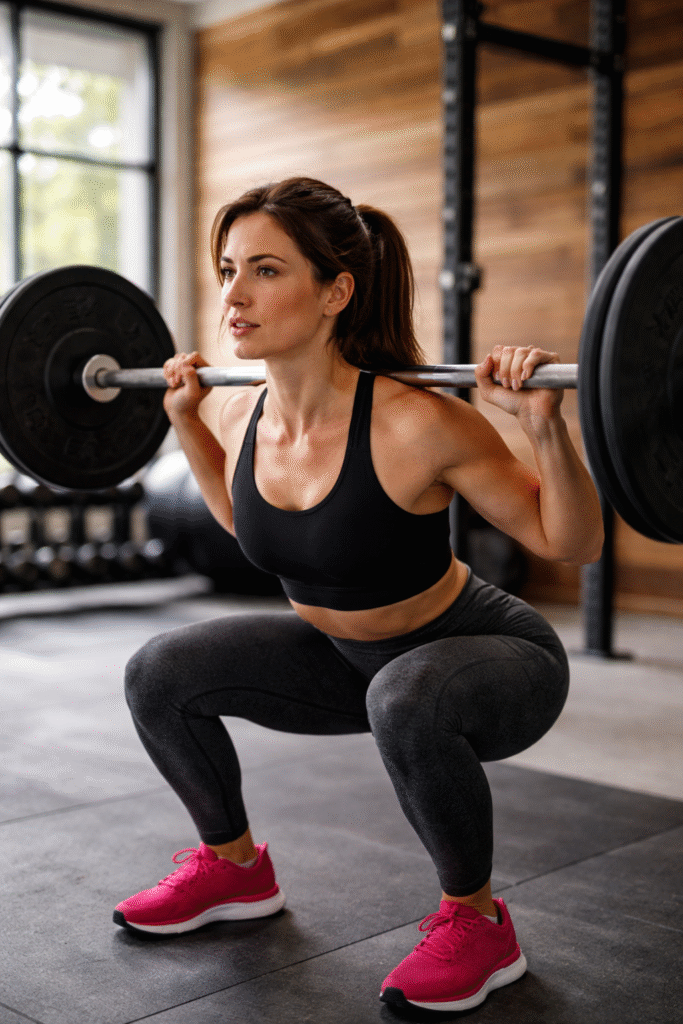
    Woman performing a deep barbell squat in a modern gym with wooden wall panels, wearing a black sports bra, dark leggings, and bright pink sneakers, maintaining controlled full-range movement with a focused expression under natural light.

    • Add basic mobility work
    Focus on hips, hamstrings, and shoulders. It doesn’t need to be long to be effective.

    • Balance your training
    Strength, conditioning, and mobility should all be part of your routine.

    If your progress feels slow or invisible, that’s often part of the process, not a sign that something is wrong. It usually means your body is adapting in ways you can’t fully see yet, which is something I break down more in Why Fitness Progress Feels Invisible at First (And What’s Actually Happening).


    Fitness professional standing with arms crossed, wearing a black sleeveless hoodie and cap, calm confident expression against a clean neutral background.

    Interested in Training with Me or Just Want to Connect?

    Send a DM to @Litoswaay, or email Carlos@ConditionedLiving.com; I’d love to hear from you!
    Follow @ConditionedLiving for reflections, tips, and updates on mindset, strength, and everyday wellness.

    Stay in the loop by joining my free mailing list for updates and inspiration.

    Additionally, download the free guide/e-book A Sustainable Start” to begin your journey toward sustainable strength and wellness, with a focus on consistency and balance.

    Conditioned Living is about realistic fitness and training advice. Real progress takes time; stay consistent.

  • Spring Is When Discipline Starts Showing

    Spring Is When Discipline Starts Showing

    Average man jogging on a park path in early spring, wearing a gray hoodie and black pants, cloudy bright sky overhead, trees with early leaves in the background, natural lighting, realistic outdoor fitness lifestyle scene with a calm, focused expression.

    Spring arrives and suddenly everyone wants to train again. The weather gets warmer, the days get longer, and people start thinking about getting back into shape. Gyms become busier, parks fill up with runners, and motivation seems to come back almost overnight.

    It can feel like progress should happen quickly this time of year. When the weather improves, people expect their fitness to improve too. What many don’t realize is that the results showing up in spring often come from work that started long before the season changed. Results show up when the weather gets nice, but the work usually happened before.

    Why People Feel More Motivated to Work Out in Spring

    Woman running on a treadmill in a bright modern gym, wearing a light blue tank top and black leggings, with other everyday people training on treadmills in the background, large windows letting in natural sunlight, realistic fitness environment, documentary style photography.

    Spring naturally makes people want to move a lot more than they have been. More time outdoors can boost energy levels and improve mood. Plus, after months of winter routines, it feels easier to start fresh. There is also a mental shift that happens when the seasons change. Heavier clothes come off, schedules become more social, and people become more aware of their health and appearance. That awareness often turns into motivation to start working out again.

    Motivation is not a bad thing. In fact, it can be a great starting point. The problem is that motivation alone rarely creates lasting results. Many people begin training in spring, but only a small number stay consistent long enough to see real change. Spring makes people want to start. Discipline determines who actually improves.

    Discipline Shows Up Later, Not Immediately

    Fitness progress rarely happens overnight. The body needs time to adapt, and those adaptations often happen beneath the surface before they become visible. This is why progress can feel confusing. You might train consistently for weeks without seeing much difference, and then suddenly things start to change. What looks like fast progress is usually the result of steady work done earlier.

    Woman stretching outdoors near a running track in early spring, wearing a light windbreaker, standing on green grass with trees in the background, warm natural sunlight, calm focused expression, realistic fitness lifestyle photography with a peaceful but motivated mood.

    Discipline does not always feel rewarding in the moment, but it shows up later when the results finally become visible. You can read more about how early fitness progress often happens beneath the surface in Why Fitness Progress Feels Invisible at First, where I break down why results don’t always show up right away even when training is working.

    The Workouts You Don’t Feel Like Doing Matter Most

    Middle-aged woman sitting on a bench alone in a quiet gym early in the morning, hoodie off, looking contemplative with dumbbells on the floor in front of her, soft natural light coming through the windows, realistic documentary-style fitness scene.

    Winter mornings are darker, schedules feel heavier, and energy levels can be lower. These are the times when skipping workouts feels the easiest because training isn’t always convenient. Those are also the times that build the foundation for future progress.

    Consistency during the weeks when you do not feel motivated is what makes the biggest difference over time. A shorter workout still counts. A lighter session still counts. Showing up when you do not feel like it keeps the routine alive. The workouts you almost skip are often the ones that matter the most later.

    When spring arrives, the people who stayed consistent through those difficult weeks are usually the ones who start seeing results first.

    Lifestyle vs Short Bursts of Motivation

    Two people walking out of a gym after a workout, each carrying a gym bag over their shoulder, smiling and talking to each other in warm sunset light. They are wearing casual workout clothes, and the scene has a relaxed, everyday fitness lifestyle feel with a realistic spring atmosphere outside the gym.

    Many people feel motivated and train hard for a few weeks, then stop when life gets busy or the excitement fades. When the next season comes around, they start over again. Others train year-round, even when progress feels slow. They do not rely on motivation; they rely on routine. To someone on the outside, it can look like those people suddenly improved when spring arrives. In reality, their progress is the result of steady habits that never stopped. Motivation starts workouts but lifestyle keeps them going.

    When fitness becomes part of your routine instead of something you do only when you feel inspired, results begin to build without needing perfect conditions. If you want a deeper look at this idea, I talked more about it in Discipline from the Gym to Everyday Life: Making Fitness Part of Your Identity, where I explain why real fitness progress starts when training becomes part of who you are, not just something you do when motivation is high.

    The Identity Shift Behind Lasting Fitness Progress

    The biggest change in long-term fitness is not physical. It is mental.

    At some point, training stops being something you try to do and becomes something you simply do. You stop asking yourself if you feel like working out. You train because it is part of your life, just like going to work or getting enough sleep.

    This shift in identity is what makes discipline easier. You are no longer relying on motivation every day. You are following a pattern you have already decided is part of who you are. Fitness becomes more sustainable when it moves from effort to lifestyle.

    Spring does not create results. It reveals them.


    Fitness professional standing with arms crossed, wearing a black sleeveless hoodie and cap, calm confident expression against a clean neutral background.

    Interested in training with me or just want to connect?
    Send a DM to @Litoswaay, or email Carlos@ConditionedLiving.com — I’d love to hear from you.

    Follow @ConditionedLiving for reflections, tips, and updates on mindset, strength, and everyday wellness.

    Stay in the loop by joining my free mailing list for updates and inspiration.

    Additionally, download the free guide A Sustainable Start to begin your journey toward sustainable strength and wellness, with a focus on consistency and balance.

  • Why Spring Is Perfect for Strength and Conditioning Training

    Why Spring Is Perfect for Strength and Conditioning Training

    Average woman jogging on a paved park path in early spring, wearing a light windbreaker and leggings, with cloudy bright sky and trees with new leaves in the background.

    Spring is right around the corner, and every year when people feel the urge to start training again. The weather improves, the days get longer, and energy levels seem to come back after the slower winter months. Gyms get more crowded, parks fill up with runners, and motivation feels easier to find.

    The problem is that many people return to the same routines that never worked for them before. Some go back to doing only cardio, hoping to lose weight quickly. Others focus only on lifting weights, but never challenge themselves enough to see real change. If you are unsure whether your workouts are actually difficult enough to create progress, you may want to read Are You Lifting Heavy Enough? A Simple Guide to Muscle Growth and Fat Loss, which explains why many people train consistently but never see the results they expect. These approaches can work for a short time, but they often lead to burnout, frustration, or progress that stalls.

    Spring is actually the perfect time to train differently. Instead of choosing between lifting and cardio, this season is ideal for combining both. Strength and conditioning training, sometimes called hybrid training, allows you to build real fitness without feeling stuck in one extreme or the other.

    What Strength and Conditioning Training Actually Means

    Man with an average build performing dumbbell lunges in a clean, modern gym, holding moderate-weight dumbbells, wearing a gray t-shirt and black shorts, natural lighting, realistic training environment, focused expression, documentary fitness photography style

    Strength and conditioning training means developing muscle, endurance, and work capacity at the same time. It does not mean doing random workouts or exhausting yourself every day. It means using a structured approach that includes resistance training, conditioning work, and enough recovery to allow the body to adapt.

    When done correctly, training like this improves body composition, increases strength, and builds cardiovascular fitness without forcing you to sacrifice one for the other. You become stronger, but you also move better and feel more capable in everyday life.

    Why Spring Is the Best Time to Start a Strength and Conditioning Routine

    Spring is the perfect season to train this way because it naturally encourages more movement. After spending months indoors during the winter, most people feel ready to be active again. The weather makes it easier to walk, run, or do conditioning work outside, and the change in season often brings a mental reset that makes new routines easier to stick to.

    Woman stretching outdoors near a running track in early spring, holding a quad stretch with a hoodie tied around her waist, sunlight on green grass, natural lighting, realistic fitness lifestyle scene with a calm and motivated mood.

    This time of year also sits between two extremes that many people fall into. During the winter, people often focus on lifting heavier while moving less. In the summer, many switch to doing more cardio and stop strength training altogether. Spring creates a natural middle ground where both can exist together.

    Instead of chasing short-term results, you can start building a balanced routine that carries into the rest of the year. One reason this matters is that real fitness progress often happens more slowly than people expect. Early improvements are not always visible, which is why many people quit before results appear. If that sounds familiar, you may want to read Why Fitness Progress Feels Invisible at First (And Why That’s Normal), which explains why the body often changes beneath the surface before you notice it in the mirror.

    What Hybrid Training Looks Like in Real Workouts

    In real life, strength and conditioning training does not need to be complicated. A workout might include lifting weights followed by jump rope, sled pushes, running intervals, or simple conditioning circuits. Some days may focus more on strength, while others emphasize movement and endurance. The goal is not to destroy yourself every session. The goal is to build a body that can handle more over time.

    Athlete walking on turf gym floor toward a sled push after finishing a weightlifting set, modern strength and conditioning gym with racks and weights in the background, natural lighting, realistic functional fitness training environment, documentary photography style.

    This type of hybrid training helps improve endurance, strength, and overall fitness without forcing you to choose between looking strong and feeling athletic.

    Why Most People Avoid Strength and Conditioning Training

    Many people avoid this type of training because they think they have to choose one path. Lifters sometimes worry that conditioning will make them lose muscle. People who prefer cardio may avoid weights because they think strength training will slow them down. In reality, combining both usually leads to better results than focusing on only one.

    Most people train for comfort, not for capability. They stay with what feels familiar, even if it is not helping them progress. Strength and conditioning training requires more balance and patience, but it builds the kind of fitness that lasts longer than any short-term program.

    Build a Spring Fitness Routine That Lasts All Year

    Man and woman walking out of a gym together after a workout, gym bags over their shoulders, warm sunset lighting, relaxed and accomplished mood, modern gym exterior, realistic fitness lifestyle photography with a spring atmosphere, documentary style.

    Spring is indeed when motivation starts to come back, but motivation alone does not create results. What matters is what you build when that motivation shows up. This season is the perfect opportunity to start training in a way that develops strength, endurance, and consistency at the same time.

    Instead of repeating the same cycle every year, spring can be the moment you begin building a routine that actually carries forward. Strength and conditioning training is not just a way to get in shape for the season. It is a way to create a level of fitness you can keep year-round.


    Fitness professional standing with arms crossed, wearing a black sleeveless hoodie and cap, calm confident expression against a clean neutral background.

    Interested in training with me or just want to connect?
    Send a DM to @Litoswaay, or email Carlos@ConditionedLiving.com, I’d love to hear from you!
    Follow @ConditionedLiving for reflections, tips, and updates on mindset, strength, and everyday wellness.
    Stay in the loop by joining my free mailing list for updates and inspiration.

    Additionally, download the free guide A Sustainable Start to begin your journey toward sustainable strength and wellness, with a focus on consistency and balance.

  • Why Fitness Progress Feels Invisible at First (And What’s Actually Happening)

    Why Fitness Progress Feels Invisible at First (And What’s Actually Happening)

    Man with an average build tying his running shoes while sitting on a gym bench, soft morning light coming through large windows in a quiet gym, dumbbells resting on the floor nearby, calm and reflective pre-workout moment.

    Many people expect noticeable fitness results within a few weeks of starting a training program. They anticipate visible changes in the mirror or dramatic improvements in performance almost immediately. When those changes do not appear right away, the experience can feel confusing or discouraging.

    The reality is that the early phase of training rarely looks dramatic from the outside. Workouts begin to happen regularly, routines take shape, effort is being applied consistently, and yet, the results are often subtle or difficult to notice.

    Because of this, many people believe something is wrong with their program or their body. In truth, the process is unfolding exactly the way it should. Early progress simply tends to happen beneath the surface before it becomes visible.

    Why Early Fitness Progress Happens Inside the Body

    When someone begins training, the body starts adapting almost immediately. However, the first changes rarely involve visible muscle growth or dramatic improvements in endurance.

    Female athlete performing a controlled dumbbell curl while seated on a bench in a quiet gym, wearing a gray sleeveless top, focused expression, soft natural lighting with blurred gym equipment in the background.

    Instead, the nervous system is often the first system to adapt. The brain becomes more efficient at recruiting muscle fibers and coordinating movement patterns. This is why exercises that initially feel awkward or difficult often start to feel smoother within a few weeks.

    Movements become more controlled. Balance improves. The body learns how to perform exercises more efficiently.

    These neurological adaptations create the foundation for future improvements in strength, conditioning, and physical performance. Even though these changes are not always visible, they represent an important part of the training process.

    Many people confuse fatigue with progress during this phase. Understanding the difference between simply working hard and actually building strength is essential, which is explored further in Are You Actually Building Strength or Just Exercising?

    Why Workout Results Take Time to Appear

    One of the most confusing aspects of fitness progress is the delay between effort and visible results.

    Each workout acts as a small stimulus that encourages the body to adapt. Muscles, connective tissue, and the nervous system all respond to the stress placed on them during training. However, these adaptations do not happen instantly. Instead, they accumulate gradually over time.

    Female athlete holding a controlled forearm plank on a workout mat in a quiet minimalist gym, wearing an olive green athletic top and black shorts, focused expression, soft natural lighting with blurred gym equipment in the background.

    This delay creates the impression that nothing is happening. People continue to train, but because the visible results have not appeared yet, it can feel like their efforts are not producing real progress.

    In reality, the body is constantly responding to the training stimulus. The changes are simply unfolding more gradually than many people expect.

    Small Signs of Fitness Progress Most People Miss

    Progress often appears in subtle ways that are easy to overlook.

    Exercises may begin to feel easier to perform even though the weight has not changed. Balance or coordination may improve. Recovery between sets might become slightly faster. Movements that once felt uncomfortable may start to feel more natural.

    Another important signal of progress is consistency. When workouts begin to feel like a normal part of the week rather than something that requires constant motivation, it often means the body and mind are adapting to the training process. These signals indicate the body is building capacity and improving its ability to handle training stress.

    How Unrealistic Fitness Expectations Distort Progress

    Female athlete standing on a body composition scanner while looking at the results on a screen, wearing a tie-dye athletic top, with a trainer beside her in a modern wellness facility with soft lighting and neutral tones.

    Fitness culture often highlights dramatic transformation stories. Before and after photos suggest that major changes can happen quickly and effortlessly. These stories can be motivating but they often compress months or years of work into a simplified narrative. The slower phases of progress aren’t shown as much. In reality, sustainable improvements in strength and conditioning occur gradually. The body needs time to adapt safely and effectively.

    This is also why relying on simple measurements like BMI can be misleading when evaluating fitness progress. Weight alone does not always reflect improvements in strength, conditioning, or overall health. This topic is explored further in BMI and Fitness: Why the Number Doesn’t Tell the Whole Story.

    Why Consistency Becomes the Turning Point

    Over time, consistent training begins to compound. Strength gains become more noticeable; endurance improves, workouts become more productive and physical changes gradually begin to appear. The turning point often arrives quietly. What once felt difficult and required intense effort becomes manageable and routine. None of this happens without the early stage of training where progress feels slow or invisible. Consistency during this phase is what allows improvements to show up later.

    Why Real Fitness Progress Takes Time

    Woman leaving the gym with a gym bag over her shoulder and a water bottle in hand, wearing a pink athletic top and black leggings, warm natural light coming through the windows, calm and relaxed post-workout moment.

    The early stage of training often feels quiet and uneventful. Progress may seem slow, and visible changes can take time to appear. Beneath the surface the body is building the foundation for long term improvement. The nervous system is learning new movement patterns. On top of that, muscles and connective tissues are adapting to the demands of training. These early changes prepare the body for future gains in strength, endurance, and overall fitness.

    Real progress develops gradually through consistent effort. When patience is maintained during the early phase, those hidden improvements eventually begin to show.


    Interested in training with me or just want to connect?

    Fitness professional standing with arms crossed, wearing a black sleeveless hoodie and cap, calm confident expression against a clean neutral background.


    Send a DM to @Litoswaay, or email Carlos@ConditionedLiving.com — I’d love to hear from you!
    Follow @ConditionedLiving for reflections, tips, and updates on mindset, strength, and everyday wellness.

    Stay in the loop by joining my free mailing list for updates and inspiration.

    Additionally, download the free guide/e-book “A Sustainable Start” to begin your journey toward sustainable strength and wellness, with a focus on consistency and balance.

  • BMI and Fitness: Why the Number Doesn’t Tell the Whole Story

    BMI and Fitness: Why the Number Doesn’t Tell the Whole Story

    Athletic woman with a slightly chubby build standing on a digital scale in a modern gym, looking thoughtfully at the number, illustrating confusion around weight, BMI, and fitness progress.

    Why BMI Can Be Confusing for People Who Exercise

    Many people begin exercising with the expectation that progress will show up clearly on a scale or through measurements like BMI. When those numbers don’t change the way they expect, it can create confusion about whether their efforts are actually working.

    Someone may begin strength training, improve their conditioning, and develop consistent exercise habits. They feel stronger, move better, and notice their workouts becoming more structured. Then they check their BMI and see little change, or sometimes even a higher number.

    Moments like this reveal an important truth about BMI: while it can provide general information about population health trends, it does not always capture what is happening within an individual fitness journey.

    Understanding where BMI is helpful and where it falls short can make it easier to interpret progress more realistically.

    What BMI Was Originally Designed to Measure

    BMI, or Body Mass Index, was created in the 1800s by a Belgian statistician named Adolphe Quetelet. His goal was not to evaluate individual fitness or health. Instead, the formula was designed as a simple way to study weight patterns across large populations.

    Color-coded Body Mass Index (BMI) chart showing weight categories from underweight to morbidly obese with BMI ranges used to classify body weight.

    The calculation compares a person’s weight to their height and produces a number that places them into categories such as underweight, normal weight, overweight, or obese. Because the formula is simple and easy to apply, it has become widely used in public health and medical settings.

    However, BMI was never designed to evaluate body composition or athletic performance. It simplifies the body into a single number, which means it cannot capture the full complexity of how someone trains, moves, or builds strength.
    Why Muscle Mass Can Make BMI Misleading

    One of the biggest limitations of BMI becomes clear when people begin resistance training.

    Strong female athlete performing a barbell squat in a gym, illustrating strength training and how muscular fitness does not always align with BMI measurements.

    Muscle tissue weighs more than fat by volume. As someone begins lifting weights and building muscle, their body composition may improve even if their overall weight stays the same. In some cases, their weight may increase slightly as muscle develops. In fact, learning how to train with enough resistance to stimulate muscle growth is something I discuss in “Are You Lifting Heavy Enough? A Simple Guide to Muscle Growth and Fat Loss.”

    Because BMI only looks at total body weight relative to height, it cannot distinguish between muscle and fat. A person becoming stronger and leaner could technically move into a higher BMI category despite improving their physical fitness.

    Body Composition vs BMI: What the Number Misses

    Another limitation of BMI involves body composition.

    Athlete undergoing a body composition scan while a trainer reviews results on a screen, illustrating modern fitness testing beyond BMI measurements.

    Two people can have identical BMI scores while having completely different physical profiles. One person may carry higher levels of muscle and lower body fat. Another person may have lower muscle mass and higher body fat.

    Even though their BMI numbers are identical, their strength levels, metabolic health, and physical resilience could be dramatically different. BMI measures total body mass, but it does not measure what that mass is made of.

    Real Fitness Progress Goes Beyond Body Weight

    Fitness progress often appears in ways BMI cannot measure.

    Strength improvements, better endurance, and faster recovery between workouts are all meaningful signs of physical adaptation. In fact, this difference between real training progress and simply going through the motions is something I explored more deeply in “Are You Actually Building Strength or Just Exercising?”

    Someone who consistently trains may find that exercises feel smoother, movements become more controlled, and their conditioning steadily improves.These changes reflect real progress even if they do not immediately change a height-to-weight ratio.

    Why BMI Is Still Widely Used in Health Guidelines

    BMI remains widely used because it is simple and inexpensive to calculate. Public health systems rely on metrics that can be applied quickly across large groups of people. For population-level trends, BMI can provide useful general insights.

    But for individuals who are actively training, the number often tells only part of the story.

    Trainer reviewing BMI and body composition data on a tablet with a client during a health consultation, illustrating modern fitness and health assessment.

    A better way to think about fitness progress is to consider a broader picture. Strength, conditioning, consistency, and sustainable habits all play important roles in long-term health.

    Charts and formulas may provide helpful context, but they rarely capture the full reality of someone’s training journey.

    In the long run, real progress is often reflected not just in numbers, but in how the body moves, performs, and adapts over time.


    Interested in training with me or just want to connect?

    Fitness professional standing with arms crossed, wearing a black sleeveless hoodie and cap, calm confident expression against a clean neutral background.

    Send a DM to @Litoswaay, or email Carlos@ConditionedLiving.com.

    If you’re looking for a calm, realistic way to get started, you can also download my free guide, A Sustainable Start, which walks you through building strength, conditioning, and consistency without burnout or pressure.

    Follow @ConditionedLiving for reflections, tips, and updates on mindset, strength, and everyday wellness. Stay in the loop by joining my free mailing list for updates and inspiration.

  • Are You Actually Building Strength or Just Exercising?

    Are You Actually Building Strength or Just Exercising?

    Split-image editorial fitness photo in a minimalist modern gym. Left side shows a focused female athlete in a white shirt performing a heavy barbell deadlift. Right side shows an exhausted male athlete in a black shirt sitting on a bench, sweating, with a towel and water bottle nearby. Neutral tones and soft natural lighting create a calm, cinematic mood.

    There is a particular kind of satisfaction that comes from leaving the gym completely exhausted. You are sweating, your heart is pounding, your muscles feel heavy, and there is a comforting sense that you “did something.” For many people, that feeling becomes the primary measure of a good workout. If it was hard, it must have been effective. If you are tired, you must be making progress.

    That assumption deserves a closer look.

    Feeling worked and actually building strength are not the same thing. Yet the two are constantly confused. This misunderstanding is one of the most common reasons people train consistently for months, sometimes years, without seeing meaningful improvements in strength, body composition, or performance.
    Why Feeling Tired Doesn’t Always Mean You’re Getting Stronger

    Exercising is very good at creating the illusion of progress because it provides immediate feedback through physical sensations. A high heart rate feels athletic. Muscle burn feels productive. Next-day soreness feels like proof that something “worked.” These signals are loud, emotional, and convincing.

    Conceptual fitness image of a sleek treadmill console in a modern minimalist gym. The digital display glows, highlighting heart rate and workout metrics, while an athlete runs blurred in motion in the background. Neutral tones and soft lighting create a cinematic, editorial mood.

    The problem is that your body does not change based on how tired you feel. It changes in response to the stimulus you apply repeatedly and progressively. You can push yourself to exhaustion with random circuits or constantly varied workouts and still never build meaningful strength. Fatigue is easy to accumulate but adaptation is a little more specific.

    Strength Training vs Exercising: Understanding the Critical Difference

    Exercising is centered around activity. It is movement for calorie burn, stress relief, or general fitness. There is nothing inherently wrong with that. General exercise is beneficial for health and well-being.

    Organized minimalist gym scene with a barbell centered symmetrically on a polished concrete floor. Neatly stacked black weight plates and kettlebells sit evenly on both sides. Soft natural lighting and neutral tones create a clean, structured, editorial fitness aesthetic conveying discipline and order.

    Training, however, is designed to produce adaptation. Strength training follows structure, uses measurable variables, and applies progressive overload over time. Instead of asking, “How hard did this feel?” training asks, “What is improving?”

    Exercising focuses on effort and training focuses on development. Confusing the two is where stagnation begins.

    Signs You’re Actually Building Strength in the Gym

    Open fitness tracking journal on a gym floor beside black hex dumbbells. A pen rests on the page showing logged workouts with exercises, sets, and reps. Minimalist modern lifestyle editorial style with neutral tones and soft lighting.

    Real strength gains leave measurable clues, even when progress feels slow. You may be building strength if you notice that weights are gradually increasing, repetitions improve at the same load, movements feel more stable, and recovery becomes easier between sessions.

    Strength progress is rarely dramatic day to day. It accumulates quietly through consistency and progression. These are performance-based indicators rather than emotional ones.

    Without tracking, however, these improvements are easy to miss or may never occur at all.

    Signs You’re Exercising Without Making Strength Progress

    Exhausted athlete lying on a gym floor after a workout, wearing black athletic clothing. A white towel and water bottle rest nearby. Dramatic, moody lighting creates a cinematic editorial feel, conveying fatigue and burnout rather than triumph.

    Many people drift unknowingly into a pattern of high effort without adaptation. Workouts feel consistently difficult, yet strength does not improve. There is little awareness of what was lifted last week. Programs change frequently. Sweat becomes the success marker. Fatigue becomes chronic.

    High effort without progressive overload is simply repeated stress. Repeated stress without adaptation becomes wear and tear rather than growth.

    Why Progressive Overload Matters for Muscle and Strength Gains

    Strength training works because it challenges the body in a way that demands change and that challenge must increase over time. If the load never progresses, the stimulus eventually becomes maintenance at best.

    Strong female athlete performing a heavy barbell back squat in a modern minimalist gym. Cinematic lighting highlights muscular definition and an intense, focused expression. Clean, editorial strength training aesthetic with neutral tones.

    This is why understanding intensity is essential. Many people work hard but not hard enough in a way that forces adaptation. If this sounds familiar, give Are You Lifting Heavy Enough? A Simple Guide to Muscle Growth and Fat Loss a read. It clarifies one of the biggest gaps in most training routines.

    Conditioning vs Strength Training: How to Balance Both

    Athlete riding an air bike in a modern minimalist gym, captured with cinematic lighting. The man wears black athletic clothing and shows intense focus. A loaded barbell sits blurred in the background, creating a dynamic editorial strength and conditioning aesthetic

    Conditioning workouts create strong sensations of effort, but they do not automatically build strength. Conditioning improves cardiovascular health, endurance, and work capacity. Strength training improves force production, muscle development, and structural resilience.
    These systems support each other when programmed intentionally. Structured pairings like those discussed in Spin Bike and Deadlift Combo: A Lower Body Strength and Conditioning Circuit succeed because they blend modalities with purpose instead of randomness.

    Always remember, random intensity scatters adaptation and structured intensity directs it.

    Reframing Your Workouts for Real Strength Progress

    When effort is high but results are missing, the solution is rarely “work harder.” More often, the answer is clarity and structure. Tracking lifts, anchoring workouts around compound movements, applying progressive overload, and reducing unnecessary randomness can dramatically change outcomes.
    Fatigue should not be confused with effectiveness.
    Exhaustion should not be the goal.
    Adaptation should.

    Many people believe they lack discipline when the real issue is direction. They often assume stagnation means they are not motivated enough or genetically gifted. In reality, they may be exercising consistently rather than training progressively.

    Effort may not be the problem, it could simply by direction.


    Interested in training with me or just want to connect?

    Fitness professional standing with arms crossed, wearing a black sleeveless hoodie and cap, calm confident expression against a clean neutral background.

    Send a DM to @Litoswaay, or email Carlos@ConditionedLiving.com.

    If you’re looking for a calm, realistic way to get started, you can also download my free guide, A Sustainable Start, which walks you through building strength, conditioning, and consistency without burnout or pressure.

    Follow @ConditionedLiving for reflections, tips, and updates on mindset, strength, and everyday wellness. Stay in the loop by joining my free mailing list for updates and inspiration.

fb-share-icon
Instagram