
Tag: Health and Wellness

  • Why Listening to Your Body Leads to Better Workouts and Recovery

    Why Listening to Your Body Leads to Better Workouts and Recovery

    Athletic woman in grey and teal workout outfit sitting on a bench in a gym, eyes closed and resting between workouts, with water bottle and towel nearby

    Many people treat consistency like the ultimate fitness badge. If the workout is on the calendar, they do it no matter how tired, sore, stressed, or drained they feel. That mindset can look disciplined, but it often creates setbacks.

    Your workout plan is useful, but it is not magic. It cannot predict poor sleep, extra stress, lingering soreness, or early signs of injury. Your body gives real-time feedback every day. Learning how to listen to your body during workouts can help you train and recover Kmarter, as well as stay consistent long term. Progress is not built on blindly pushing through everything. knowing when to push, scale back, and recover is key.

    The Problem With Pushing Through Pain and Fatigue

    There is a difference between effort and warning signs.

    Fitness woman in pink gym outfit assessing knee discomfort during training in a modern fitness center, focusing on recovery and body awareness

    Many people ignore pain, fatigue, or burnout because they do not want to lose momentum, often repeating mistakes covered in Interval Training vs Reps: What Most Workouts Get Wrong. Forcing hard workouts when your body is asking for recovery can lead to:

    • nagging injuries
    • stalled performance
    • poor motivation
    • chronic fatigue
    • mental burnout

    One skipped workout rarely ruins progress. Weeks of poor recovery often do. Consistency should not mean running yourself into the ground. It should mean staying healthy enough to keep showing up.

    Body Check-Ins Before Every Workout

    Before you train, take sixty seconds and ask yourself these questions.

    1. Check Your Energy Levels Before Training

    Ask yourself:

    Am I tired from life, or am I under-recovered?

    These are not the same thing. If you are mentally tired from work or stress, movement may help you feel better. A strength session, walk, or light cardio workout can improve energy.

    If you feel physically drained, heavy, sluggish, and sleep-deprived, recovery may be the smarter move. Lower intensity or shorten the workout instead of forcing max effort.

    2. Know the Difference Between Soreness and Pain

    Ask yourself:

    Is this normal soreness or sharp pain?

    Soreness is common after training. It usually feels stiff, dull, or tender. Pain is different. It may feel sharp, unstable, sudden, or worse during movement.

    Normal soreness can often be trained around. Sharp pain should be respected. Trying to “push through” pain is one of the fastest ways to turn a small issue into a larger injury.

    3. Check Your Stress and Mood Before Exercise

    Ask yourself:

    Am I ready to train hard today, or am I mentally overloaded?

    Stress affects performance more than many people realize. High stress can reduce recovery, motivation, and workout quality. If your mind feels crowded and your body feels tense, today may be a better day for:

    • walking
    • mobility work
    • stretching
    • easy cardio
    • lighter lifting

    That still counts. Smart training is not all-or-nothing.

    Adjust Your Workout Instead of Skipping It
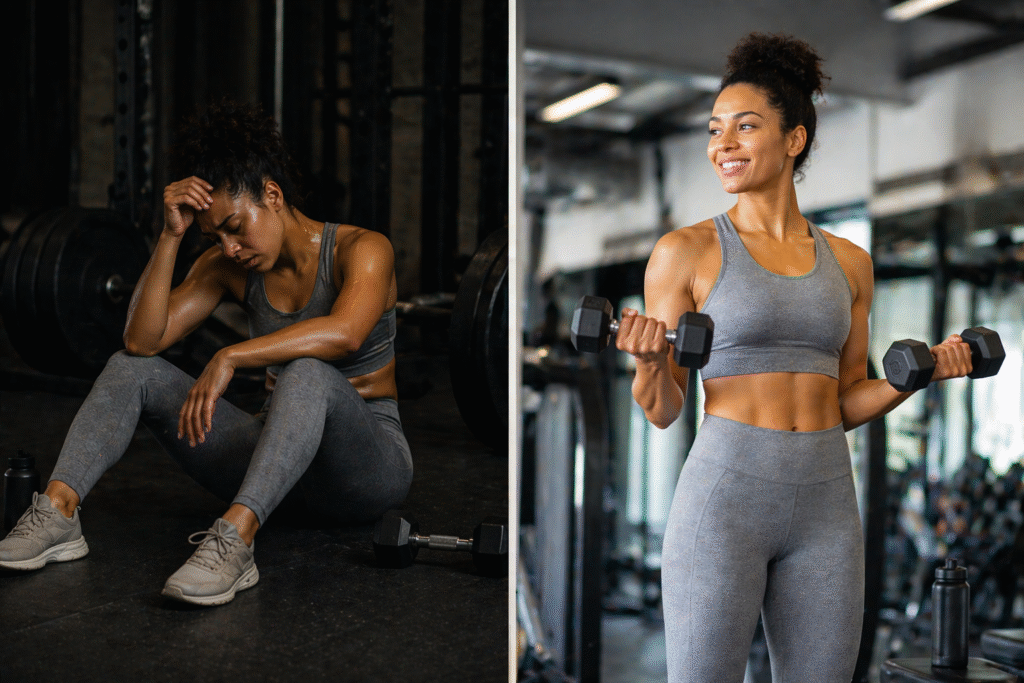
    Comparison image of overtraining versus balanced exercise, with fatigued woman resting on gym floor contrasted with energized woman strength training with dumbbells

    Many people think they only have two choices:

    • crush the planned workout
    • do nothing

    That is weak logic. A better option is to adjust the session based on what your body needs today, especially if you are rebuilding after time away, as discussed in How to Return to Fitness After Time Off Without Pressure or Guilt.

    You can:

    • reduce workout volume
    • lower the weight
    • add longer rest periods
    • shorten the session
    • swap HIIT for a walk
    • focus on movement quality

    This approach helps you stay active while protecting recovery.

    Hard Work Should Feel Like Effort, Not Dread

    Challenging workouts are normal. Every session should not feel easy.

    But if your workouts constantly feel heavy, draining, or mentally exhausting, something needs to change. Hard training should feel like effort, not dread. The goal is not to avoid challenge. The goal is to build a routine you can sustain for months and years.

    Woman taking a mindful morning walk in a park with relaxed breathing and sunrise light, representing fitness recovery, stress relief, and wellness

    Long-Term Fitness Is Built on Smart Consistency

    The best workout plan is one you can follow consistently without breaking yourself down. Listening to your body is not weakness. It is awareness. It helps you avoid setbacks, improve recovery, and train with better intention.

    Your body often whispers before it screams. Learn to hear it early.


    Interested in Training with Me or Just Want to Connect?
    Fitness professional standing with arms crossed, wearing a black sleeveless hoodie and cap, calm confident expression against a clean neutral background.

    Fitness professional standing with arms crossed, wearing a black sleeveless hoodie and cap, calm confident expression against a clean neutral background.
    Send a DM to @Litoswaay, or email Carlos@ConditionedLiving.com; I’d love to hear from you!
    Follow @ConditionedLiving for reflections, tips, and updates on mindset, strength, and everyday wellness.

    Stay in the loop by joining my free mailing list for updates and inspiration.

    Additionally, download the free guide/e-book A Sustainable Start” to begin your journey toward sustainable strength and wellness, with a focus on consistency and balance.

    Conditioned Living is about realistic fitness and training advice. Real progress takes time; stay consistent.

  • Why Your Body Feels Older Than It Should (And How to Fix It)

    Why Your Body Feels Older Than It Should (And How to Fix It)

    It usually starts small. You stand up after sitting for a while and feel stiff. Your back tightens up. Your knees crack going up the stairs. Workouts feel heavier than they should. Recovery takes longer.

    At some point, the thought creeps in:

    “Am I just getting old?”

    Here’s the truth most people don’t hear enough:

    You’re probably not feeling old because of your age.
    You’re feeling old because of how your body is being used… or not used.

    It’s Not Age, It’s Movement (or Lack of It)

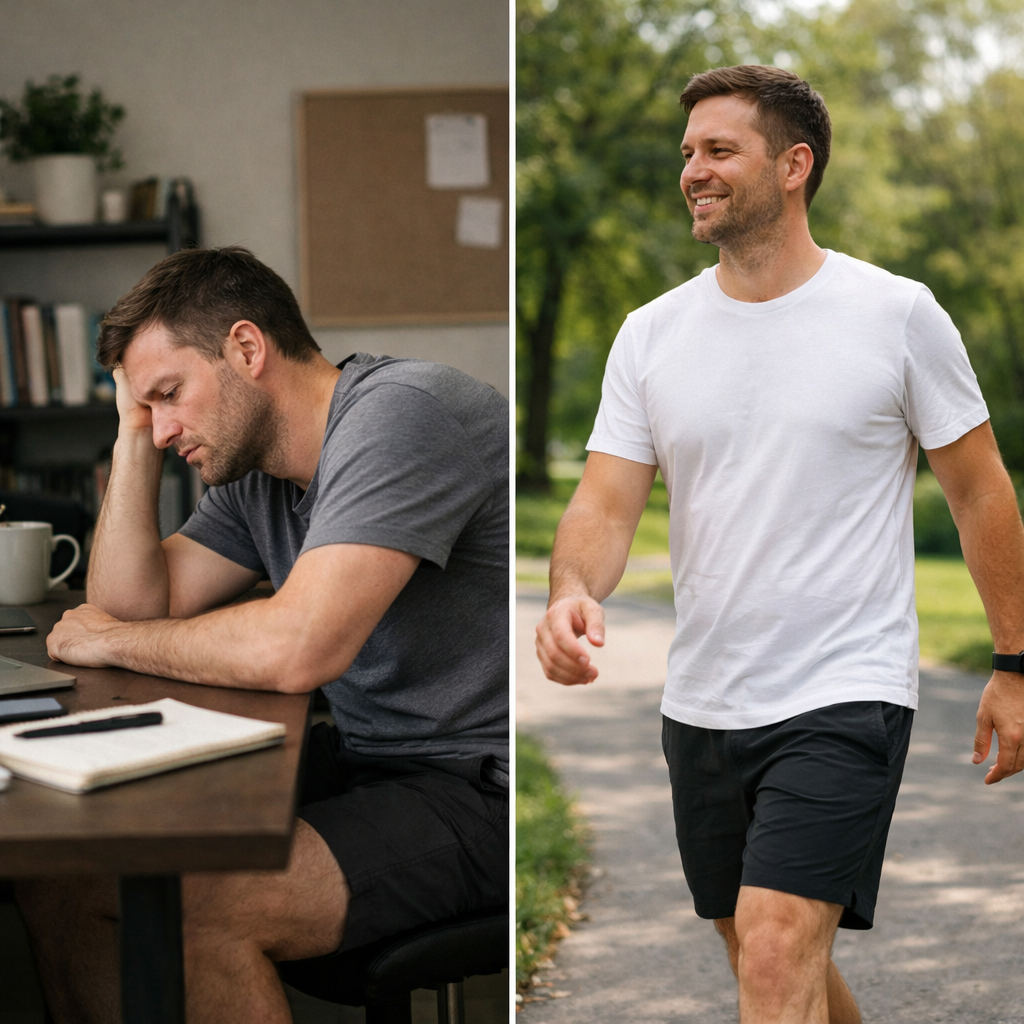
    Split image of the same adult man showing a contrast in mobility and posture. On the left, he sits slouched at a desk indoors with a tired expression, leaning on his hand in a dim, neutral-toned workspace. On the right, he walks outdoors upright with relaxed posture and a slight smile, in natural light with greenery in the background, representing improved movement and ease.

    Your body doesn’t suddenly decline overnight. What actually happens is much quieter. Small habits stack up. Things like:

    • Less movement
    • More sitting
    • Repetitive workouts
    • Skipping warm-ups
    • Ignoring mobility

    Your body could also adapt to these patterns and this could lead to:

    • Tight hips.
    • Stiff joints.
    • Limited range of motion
    • Muscles that don’t fire the way they should

    That “old” feeling? It’s not time catching up to you. It’s your body responding to how it’s being trained and how it’s being neglected.

    Low Sitting Too Much Makes Your Body Feel Stiff and Tight

    For most people, a large part of the day is spent sitting. At a desk. In the car. On the couch. Looking down at a phone. The problem isn’t just the sitting itself. It’s how long you stay there.

    A woman sits at a desk working on a laptop with a slightly hunched posture and forward head position, her shoulders rounded as she leans in. A coffee mug rests in the foreground, and warm, dim lighting from a desk lamp highlights her focused yet fatigued expression in a quiet office setting.

    Your body adapts to the positions it spends the most time in. When you sit for hours at a time, your hips stay in a shortened position, your hamstrings gradually lose length, and your upper back begins to round forward. Blood flow slows, and your body settles into that posture as its default.

    Then, when you finally stand up, move, or try to train, everything feels tight and restricted.

    It can feel like something is wrong, like your body is breaking down; but it’s not. Your body is simply doing what it’s designed to do, adapting to what you repeatedly ask of it. The issue is that most of what you’re asking it to do is… not much movement at all.

    Unbalanced Workouts Are Wearing You Down

    One of the biggest misconceptions is that as long as you’re working out, you’re doing things right. That’s not always true. A lot of people are active, but their training lacks balance.

    Some people focus only on lifting. They build strength, but slowly lose mobility and fluidity. Others rely heavily on running or cardio, placing the same repetitive stress on their joints without building the strength needed to support it.

    Then there’s the in-between group, the ones who rush into workouts without warming up, skip mobility work, and move quickly through exercises without paying attention to how they’re actually moving.

    Man in a gym mid-workout, leaning forward with hands on his knees, visibly fatigued and slightly frustrated, sweat on his face and shirt, with weights and cardio equipment blurred in the background under natural light.

    None of this feels like a problem in the moment. In fact, it can feel productive. Over time it creates a body that’s constantly working, yet never fully supported.

    That’s where the “worn down” feeling starts to show up.

    You’re not doing nothing. You’re just not doing the right mix of things to support how your body is supposed to move and this is where a lot of people get tripped up.

    They assume that effort automatically equals progress, when in reality, it depends on how that effort is structured. That’s exactly the difference between actually building strength and just going through the motions, something I broke down more in Are You Actually Building Strength or Just Exercising?.

    Stress, Sleep, and Recovery Are Part of the Problem

    What happens outside the gym matters just as much as what happens inside it.

    Woman lying awake in bed at night wearing a navy blue tank top, dim bedside lamp casting warm light across the room, staring up at the ceiling with a tired expression. In a second scene, she looks at her phone, face softly lit by the screen, appearing restless and unable to sleep in a cozy but tense nighttime setting.

    You can have a well-structured workout routine, but if your recovery is off, your body will still feel it.

    Poor sleep limits your ability to recover. Stress keeps your body in a constant state of tension. Muscles stay tight longer. Energy levels drop. Focus fades.

    Instead of resetting each day, your body carries fatigue forward. One tough day turns into two. Two turns into a week. A week turns into a baseline. That’s when everything starts to feel heavier than it should, not just workouts, but everyday movement.

    This isn’t always obvious while it’s happening, but the accumulation is real. And over time, it contributes just as much to that “older” feeling as anything physical.

    Feeling Stiff Every Day Isn’t Normal,  It’s Just Common

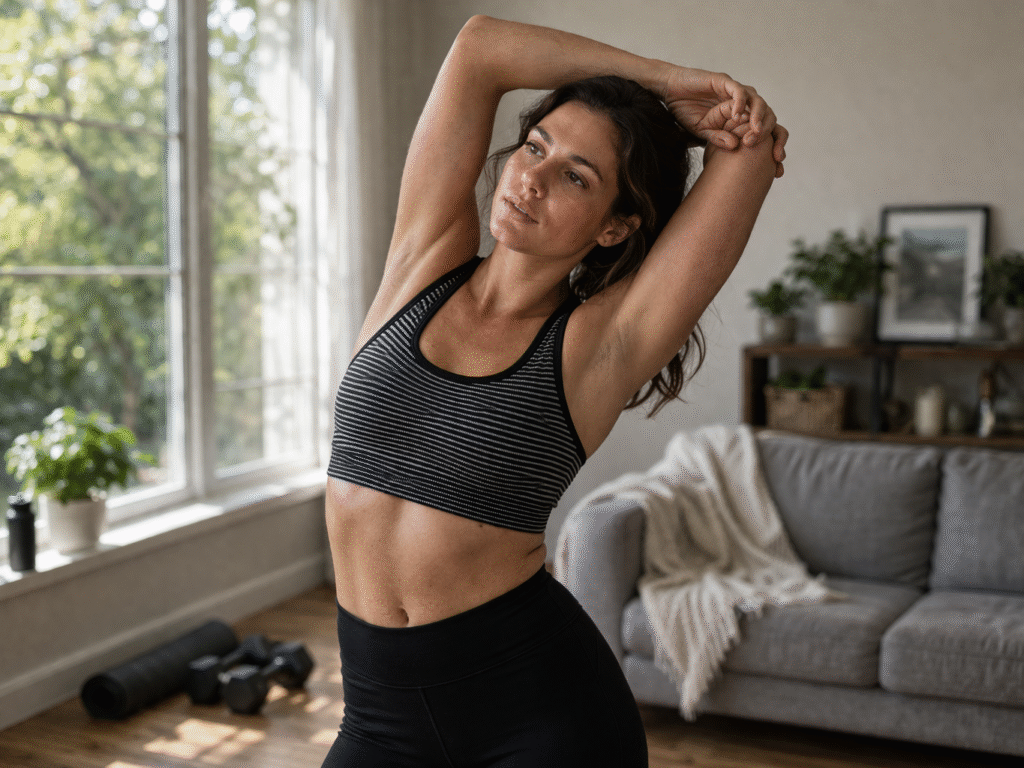
    Woman wearing a black and white striped sports bra and black leggings performing a slow overhead side stretch in a sunlit living room, natural light coming through a window, calm focused expression, soft shadows, and a relaxed home workout environment with couch and plants in the background.

    This is where a lot of people settle without realizing it. They accept the stiffness, the soreness, the constant tightness and they assume it’s just part of getting older; it’s not. It’s common, but that doesn’t make it normal. Your body is built to move, adapt, and feel capable. It’s designed to handle a wide range of motion, recover from effort, and respond positively to the right kind of training.

    If you constantly feel limited, tight, or worn down, it’s not something you have to live with. It’s a signal. Something in your routine, your movement patterns, or your recovery needs to change. The good news is, those things are within your control.

    How to Feel Stronger, Looser, and More Capable Again

    You don’t need a complete overhaul. You need better inputs.

    Start simple:

    • Move more throughout the day
    Break up long periods of sitting. Walk. Stand. Shift positions often.

    • Warm up before you train
    5–10 minutes can make a major difference in how your body performs and feels.

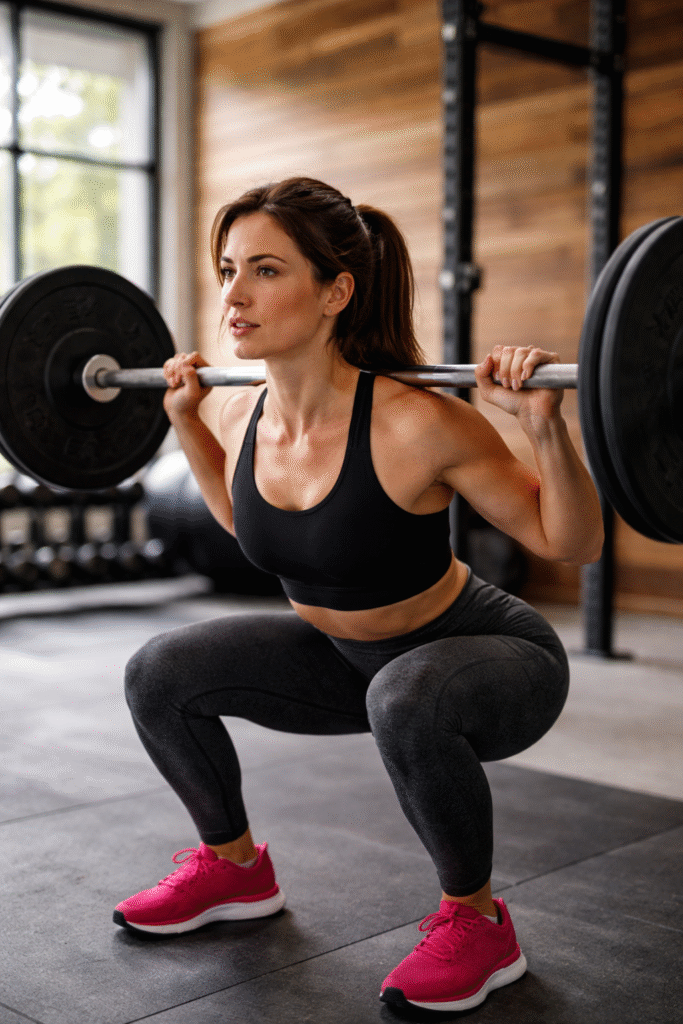
    • Train through full range of motion
    Controlled, complete reps help restore mobility while building strength.

    Woman performing a deep barbell squat in a modern gym with wooden wall panels, wearing a black sports bra, dark leggings, and bright pink sneakers, maintaining controlled full-range movement with a focused expression under natural light.

    • Add basic mobility work
    Focus on hips, hamstrings, and shoulders. It doesn’t need to be long to be effective.

    • Balance your training
    Strength, conditioning, and mobility should all be part of your routine.

    If your progress feels slow or invisible, that’s often part of the process, not a sign that something is wrong. It usually means your body is adapting in ways you can’t fully see yet, which is something I break down more in Why Fitness Progress Feels Invisible at First (And What’s Actually Happening).


    Fitness professional standing with arms crossed, wearing a black sleeveless hoodie and cap, calm confident expression against a clean neutral background.

    Interested in Training with Me or Just Want to Connect?

    Send a DM to @Litoswaay, or email Carlos@ConditionedLiving.com; I’d love to hear from you!
    Follow @ConditionedLiving for reflections, tips, and updates on mindset, strength, and everyday wellness.

    Stay in the loop by joining my free mailing list for updates and inspiration.

    Additionally, download the free guide/e-book A Sustainable Start” to begin your journey toward sustainable strength and wellness, with a focus on consistency and balance.

    Conditioned Living is about realistic fitness and training advice. Real progress takes time; stay consistent.
  • Try This Outdoor Workout to Maximize the Last Days of Summer

    Try This Outdoor Workout to Maximize the Last Days of Summer

    As summer winds down and the cooler months are around the corner, there’s no better time to take your workouts outside. Outdoor fitness isn’t just refreshing; it’s proven to boost mood, increase vitamin D, and add variety to your routine. You can take this workout anywhere, at the park, on a trail, or right in your backyard.

    It’s just four moves, no equipment needed, and it’ll take you about 30–40 minutes. Not only is it simple and  efficient, it’s a great way to get in a solid full-body session while enjoying the fresh air.

    Why Outdoor Workouts Work

    Before jumping into the routine, here are a few benefits of taking your training outdoors:

    • Fresh air and Sunlight: Outdoor workouts boost serotonin and vitamin D, both linked to improved mood and energy.
    • More Calorie Burn: Uneven terrain, wind, and natural surfaces make your body work harder than an indoor treadmill or gym floor.
    • Stress Relief: Exercising outdoors can help reduce stress and improves mental clarity.

    All of this makes outdoor workouts a perfect way to close out summer and carry into those early fall days

    Full-Body Outdoor Workout (No Equipment Required)

    Perform the following moves in a circuit. Complete 3–4 rounds, resting 60–90 seconds between each round.

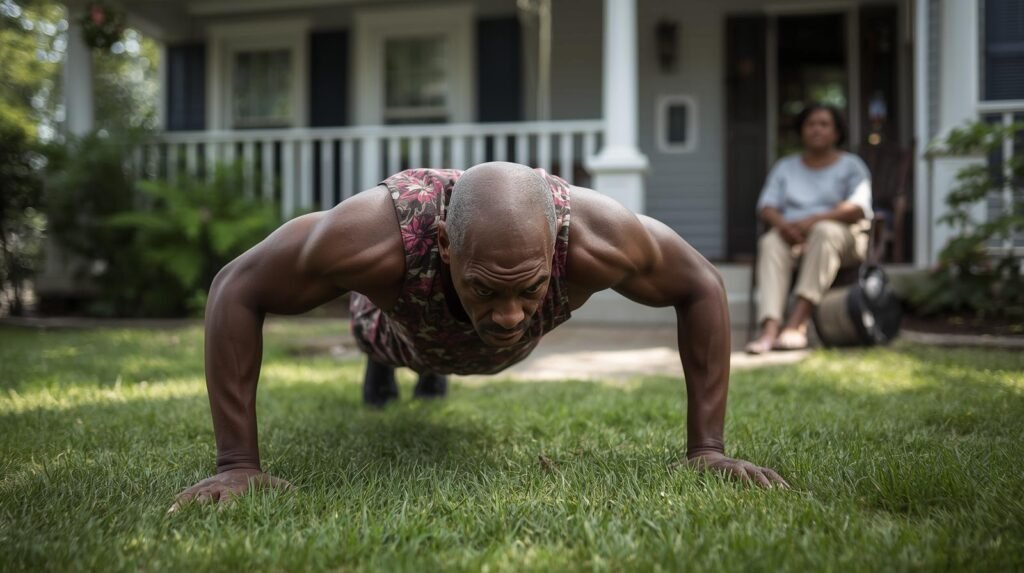
    1. Push-Ups (10–15 reps)

    A classic for building upper-body strength in the chest, shoulders, and triceps.

    • Pro tip: Try incline push-ups on a bench or decline push-ups with feet elevated for variety.

    2. Walking Lunges (10–12 steps per leg)

    Strengthens legs and glutes while improving balance.

    • Pro tip: Focus on long, controlled steps to stretch and activate the hips.

    3. Plank-to-Shoulder Taps (10-second plank, 10–12 taps per side)

    Challenges core stability while also working shoulders and coordination.

    • Pro tip: Keep hips steady and avoid rotating; quality over speed.

    4. Squat Jumps (8–12 reps)

    Adds power and conditioning to the circuit.

    • Pro tip: Land softly with knees slightly bent to protect your joints.

    Outdoor Run Finisher

    Once the circuit is complete, finish strong with a run.

    • Steady Jog: 10–15 minutes at a moderate pace.
    • Intervals: 1 minute fast / 1 minute easy jog, repeated 6–10 times.

    This adds endurance and cardiovascular conditioning to round out the workout.


    Wrapping Up Summer Strong

    As the last warm days of the season slip away, outdoor workouts are a great way to balance strength, conditioning, and endurance while soaking in fresh air. This bodyweight-focused session requires no equipment, can be done anywhere, and leaves you with that energized feeling only an outdoor workout can provide.

    Make the most of these final warm, sunny days.

fb-share-icon
Instagram