
Tag: Fitness Discipline

  • When to Push Through, and When Your Body Needs a Break

    When to Push Through, and When Your Body Needs a Break

    Athletic man sitting thoughtfully on a gym bench while deciding whether to push through his workout or take a break.

    Some mornings, the workout feels difficult before it begins. Your to-do list looks exhausting, and putting everything off until tomorrow feels easier.

    I recently had one of those mornings. I felt mentally drained and discouraged by things happening in my life and business. Part of me wanted to write off the entire day. Instead, I started my workout and finished it. I felt better afterward, but the experience raised a question: When should we push through resistance, and when do we genuinely need a break?

    The answer is not obvious. Discipline matters, but it requires more than forcing yourself forward.

    Discipline Is Not the Same as Constantly Pushing

    We describe discipline as doing the work regardless of how we feel. If we only honored commitments when motivation was high, consistency would disappear. On the other hand, ignoring exhaustion is not discipline. The goal is long-term commitment, not proving how much discomfort you can tolerate. Sometimes discipline means finishing. Sometimes it means adjusting the plan or stepping away to recover.

    When You Probably Need to Push Through

    Man beginning a treadmill workout after overcoming low motivation and deciding to keep moving.

    Ordinary resistance sounds like, “I don’t feel like it.” You may be unmotivated or distracted, but you are still capable of doing the work.

    Notice what happens after you begin. If your energy and focus improve, you probably needed momentum more than rest. The workout does not have to be perfect. A warm-up, lighter weights, or a shorter session may be enough. Action often creates the motivation we were waiting to feel first.

    When Your Body Needs a Break

    Depletion is broader than reluctance. Poor sleep, physical heaviness, irritability, trouble concentrating, or declining performance may continue for days. Even after warming up, you still feel drained.

    Man sitting on an exercise mat and drinking water during an intentional workout recovery break.

    The key is the pattern. One uncomfortable morning does not mean you should cancel everything. If the signals keep appearing across workouts and daily life, pushing harder may deepen the problem.

    As I discussed in Why Listening to Your Body Leads to Better Workouts and Recovery, paying attention is not weakness. It helps you train with intention.

    Try the Ten-Minute Check-In

    When you are unsure, try ten minutes of light movement or a scaled-down workout, then reassess honestly. Do you feel clearer and more capable? Continue appropriately. Do you feel equally depleted or worse? Switch to walking, mobility, or intentional recovery.

    This prevents one difficult moment from deciding the entire day while respecting what your body is telling you.

    Modify the Plan Before Abandoning It

    Man modifying his workout with a controlled resistance-band row in a modern gym.

    Training and rest are not the only choices. Shorten the workout, reduce the weight, replace intervals with steady movement, or move the harder session.

    That flexibility supports consistency when life gets busy, as I explained in Summer Fitness Motivation: How to Stay Consistent When Life Gets Busier. Adjusting the plan is often what allows you to keep it.

    Discipline Requires Judgment

    Fitness professional standing with arms crossed, wearing a black sleeveless hoodie and cap, calm confident expression against a clean neutral background.

    Discipline is not blindly following a schedule. It is staying committed while honestly deciding what you need today.

    Some days, you need to begin before motivation arrives. Other days, your body needs recovery. Learning the difference is not an excuse. It is part of building a routine that lasts.

    For realistic fitness and wellness guidance, follow @ConditionedLiving, join the mailing list, and download the free guide, A Sustainable Start. For training questions, email Carlos@ConditionedLiving.com.

  • You Don’t Need the Right Mindset to Work Out. You Need This Instead

    You Don’t Need the Right Mindset to Work Out. You Need This Instead

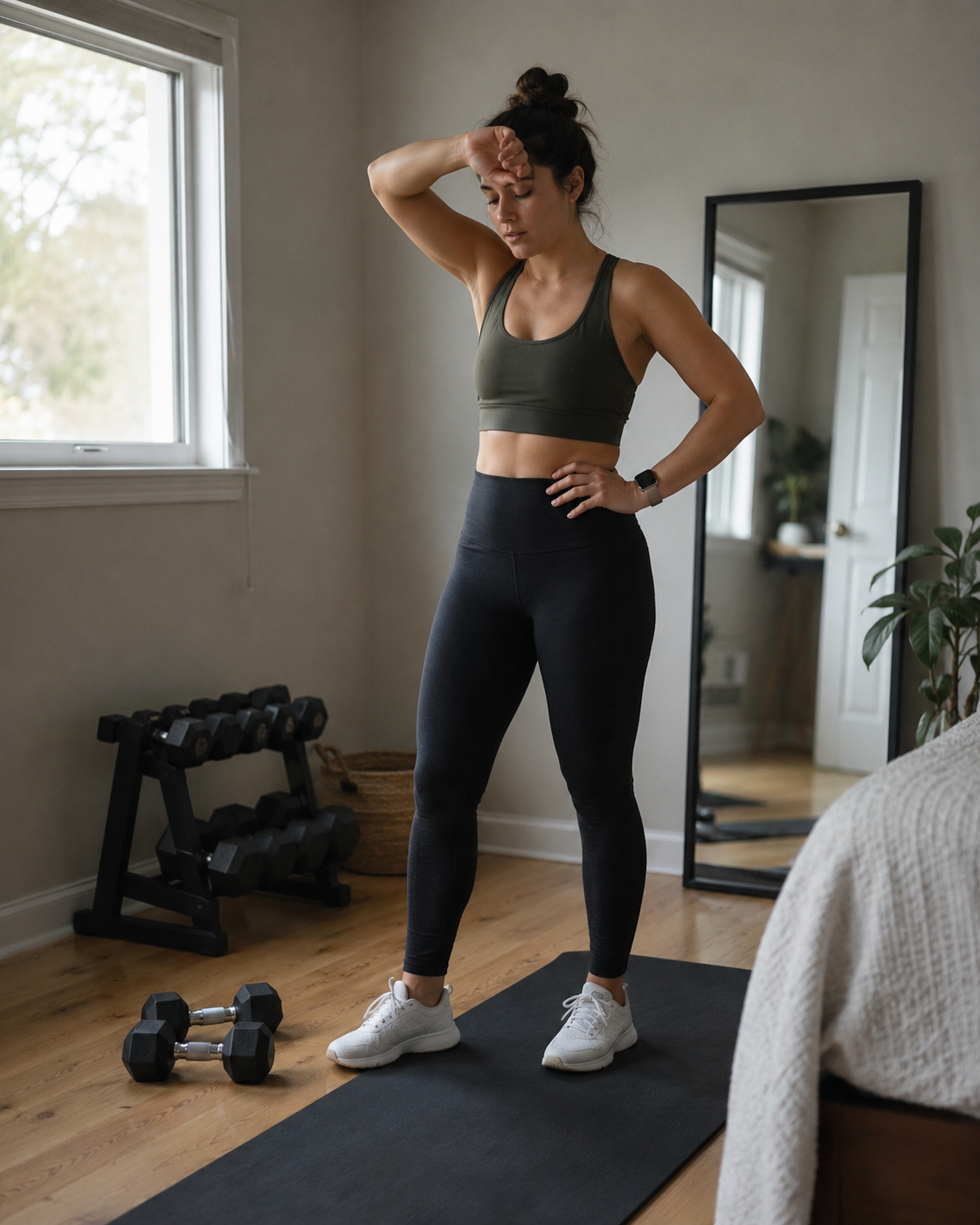
    A woman stands on a black workout mat in a quiet home workout space, looking tired but ready to begin. Dumbbells, a dumbbell rack, a mirror, and soft natural light from a nearby window create a calm, relatable fitness setting.

    Most people believe they need to feel ready before they work out. They wait for the right mindset, more energy, less stress, or even a clearer head before they even consider starting. On paper, that sounds reasonable. In reality, it’s one of the biggest reasons people stay stuck. The truth is, that moment rarely comes.

    Instead, people sit in that in-between space where they want to do something, but never quite feel right enough to begin. Days pass and workouts become something they’ll “get back to” later. The issue isn’t a lack of discipline. It’s the belief that mindset has to come first. In most cases, it doesn’t.

    Why You Don’t Need Motivation to Work Out

    A woman in black workout clothes ties her black sneakers before exercising in a clean home workout space. Dumbbells, a water bottle, and a yoga mat sit nearby, creating a calm scene of starting a workout before feeling fully ready.

    It’s easy to think that focus, motivation, and clarity should show up before a workout. That if you just felt a little better or less overwhelmed, everything would fall into place. Most workouts don’t begin with perfect focus. They create it.

    Energy tends to rise once you start moving. Mental clarity often shows up somewhere between the warm-up and your first real set. What feels like resistance at the beginning usually fades once you’re in motion. You can’t expect a result before you’ve taken the action that produces it. Mindset isn’t a prerequisite; it’s a byproduct.

    Feeling Unmotivated? You Might Be Mentally Overloaded

    A lot of the time, what people interpret as a lack of motivation is actually something else entirely. It’s not that they don’t want to work out. It’s that they’re mentally overloaded. Stress from work, responsibilities, and expectations all build throughout the day and by workout time, the mind is already crowded. That crowded feeling gets mistaken for low motivation, but it’s really a buildup of pressure with nowhere to go.

    A woman sits on a workout bench with her head lowered and hands clasped, appearing mentally tired before or after training. A gym bag, laptop, dumbbell rack, and soft window light create a quiet fitness space that reflects stress, focus, and the need to reset.

    If you’ve ever felt like your progress is slow or even invisible at first, that same buildup can make it feel like nothing is working. I break that down further in “Why Fitness Progress Feels Invisible at First (And What’s Actually Happening)”; it’s often more progress than you realize.

    How Exercise Helps You Relieve Stress and Reset Your Mind

    A workout isn’t just a physical activity. It’s a way to process everything you’ve been carrying.

    A woman in white leggings performs a controlled kneeling lunge while holding dumbbells in both hands. Soft window light, a quiet minimalist room, and her focused expression create a calm strength training scene centered on control, consistency, and movement.

    There’s an important distinction here. Working out isn’t about escaping your problems. It’s about giving them somewhere to go. Stress can turn into effort and frustration can turn into movement. The mental noise that’s been sitting in your head gets replaced with something simple and physical.

    Even a short session can completely change how you feel. Not because your problems disappear, but because you’re no longer holding onto them in the same way.

    If you’ve been feeling physically off during training, that disconnect might not be random. It could be tied to how your body is responding overall, which I cover in “Why Your Body Feels Older Than It Should (And How to Fix It)”.

    How Distractions Affect Your Workout Performance

    Your workouts aren’t only affected by your internal state. They’re also shaped by your environment. One conversation can shift your mood. One negative interaction can drain your energy. One distraction can pull your focus away before you even get started. Most workouts aren’t lost during the session itself. They’re lost in the moments leading up to it.

    If your attention is scattered, your effort will be too.
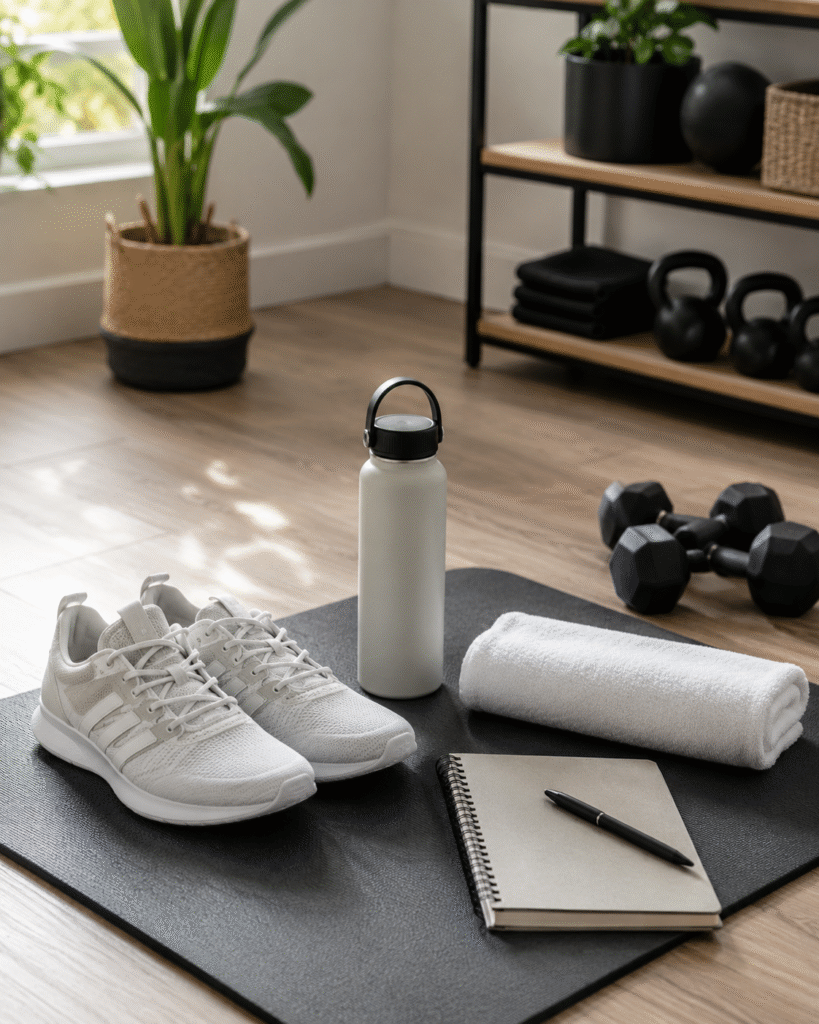
    A neatly organized home workout setup with white sneakers, a water bottle, towel, notebook, and pen placed on a black exercise mat. Dumbbells, kettlebells, plants, and soft daylight create a calm fitness space focused on structure, readiness, and consistency.

    How to Stay Consistent With Workouts (Even Without Motivation)

    Consistency isn’t just about effort. It’s about protecting your focus. If you rely on motivation, you’ll always be at the mercy of how you feel or what’s happening around you. If you treat your workout like a non-negotiable part of your day, you create structure around it.

    That might mean limiting distractions beforehand, keeping your pre-workout time quiet, or simply deciding ahead of time that you’re going regardless of how you feel. The goal isn’t to create a perfect mindset. It’s to give yourself the best chance to start.

    Why Some of Your Best Workouts Happen on Your Worst Days

    This doesn’t mean every workout will feel great. There will be days where your energy is low, your focus is off, and everything feels harder than it should. Those are often the days that matter most. Some of your best workouts will come from the ones you almost skipped.

    A woman performs a kettlebell deadlift in a gym, looking focused and determined as she pushes through the movement. Sweat, strong posture, and the dark gym setting create a gritty strength and conditioning scene about working through a hard day.

    Those are the moments where you stop overthinking and just move. Where you let the structure carry you instead of waiting to feel ready. Over time, those sessions build a level of consistency that doesn’t depend on motivation.

    Start Working Out Before You Feel Ready

    At the end of the day, waiting for the perfect mindset is what keeps most people from getting started.

    You don’t need to feel ready.
    You don’t need more motivation.
    You don’t need everything to line up perfectly.

    You need to begin.

    More often than not, the mindset you’re waiting for is built in the process itself.


    Interested in training with me or just want to connect?

    Fitness professional standing with arms crossed, wearing a black sleeveless hoodie and cap, calm confident expression against a clean neutral background.


    Send a DM to @ConditionedLiving or email Carlos@ConditionedLiving.com — I’d love to hear from you.

    Follow me on social media for reflections, tips, and updates on mindset, strength, and everyday wellness.

    Stay in the loop by joining my free mailing list for updates and inspiration.

    Additionally, download the free guide “A Sustainable Start” to begin your journey toward sustainable strength and wellness, with a focus on consistency and balance.

fb-share-icon
Instagram