

Taking time off from fitness happens more often than we admit. Illness, injury, burnout, travel, or major life stress can interrupt even the most consistent routines. When you start thinking about returning to fitness after time off, the hardest part often is not physical. It is mental.
Many people delay restarting because they feel behind, ashamed, or afraid of failing again. They worry they have lost progress, momentum, or even discipline. They worry that coming back will only highlight how far they feel from where they used to be.
Here is the truth that matters most: Fitness does not disappear when life gets busy or overwhelming.
It waits for you.
Why Returning to Fitness After Time Off Feels So Hard
Time away from fitness is often framed as “losing progress.” That framing creates guilt before you even start. Instead of seeing the break as part of life, it gets labeled as failure. Physiologically, your body is not starting from zero. Muscle memory, coordination, cardiovascular adaptations, and movement patterns will still be there. What usually fades first is confidence, not capability.

Psychologically, many people struggle to restart fitness because they associate it with all-or-nothing thinking. If they cannot train the way they once did, they assume something is wrong or that they lack discipline.
I explore this mindset shift more deeply in Discipline from the Gym to Everyday Life: Making Fitness Part of Your Identity. I talk about how consistency should start being framed as something you carry with you rather than something you lose when routines change.
You Did Not Lose Fitness, You Paused
Time away allows the body to recover from cumulative stress, even if the break was unplanned. When you return thoughtfully, you often rebuild faster than expected because your foundation still exists.
What slows most people down is not the pause itself. It is the pressure to make up for lost time. That pressure often leads to doing too much too soon. That could increases injury risk, drains motivation, and frequently results in another forced break. The cycle repeats not because people return to fitness without patience.
Returning to Fitness Slowly Is an Act of Care
Coming back to fitness gradually is one of the most effective ways to protect long-term progress. Muscles may feel ready quickly, but joints, connective tissue, and the nervous system need time to re-adapt after time off.

This principle is reinforced in my Jump Rope Complex workout, which focuses on developing conditioning through pacing, structure, and repeatable effort rather than intensity alone.
Easing back in reduces injury risk, restores confidence in movement, and rebuilds consistency in a sustainable way. Most importantly, it creates positive feedback. You finish sessions feeling capable instead of defeated.
How A Sustainable Start Helps You Rebuild Fitness Safely
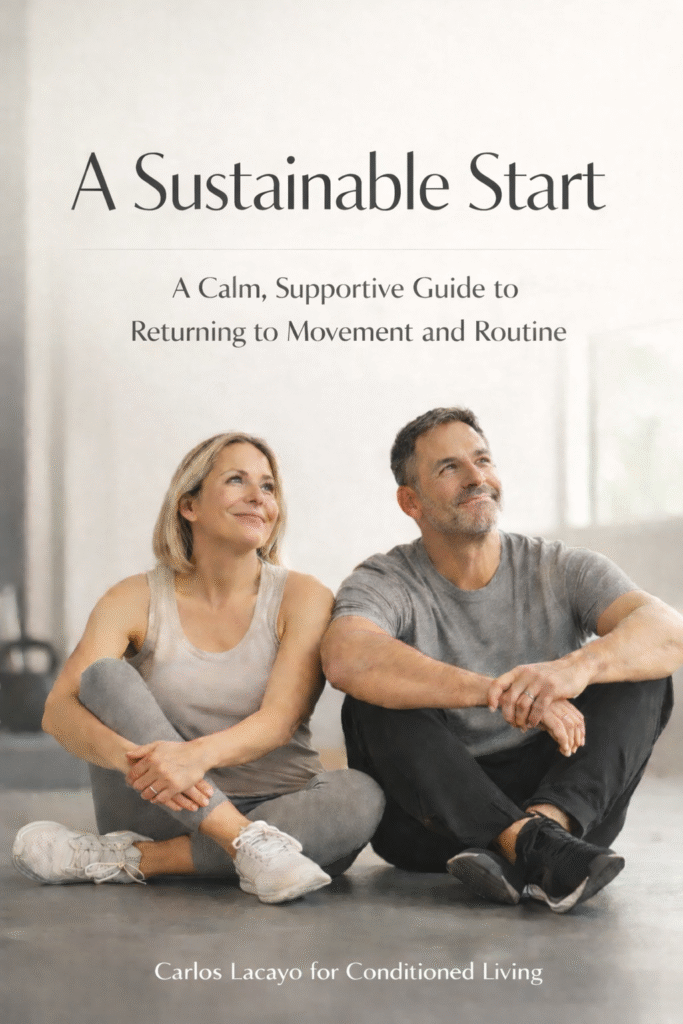
My free e-book A Sustainable Start fits intentionally into the process of returning to fitness after time off. Rather than functioning as a full training program, it serves as a re-entry guide. It helps you reconnect with movement without urgency, comparison, or pressure to perform.
It focuses on rebuilding trust with your body by establishing gentle and repeatable habits, and removing pressure-based motivation. For many people, this sense of safety is what makes consistency possible again. It’s designed for people who want to rebuild fitness without forcing themselves back into old expectations.
Signs You Are Returning to Fitness at the Right Pace

You don’t need performance metrics to know if your approach is working. Your body gives clear signals when you listen. When you are moving at the right pace:
- Soreness tends to be mild and short-lived
- Energy improves rather than crashes
- Motivation builds gradually instead of disappearing
- Movement leaves you calmer; not anxious
If training leaves you depleted or discouraged, that does not mean you failed. It means your current workload may be too high for this stage.
Adjusting pace is part of the process, not a setback.
Compassion-Based Consistency
Consistency does not require intensity to be effective. Compassion-based consistency means showing up in ways that respect your current capacity. Some days that might look like walking. Other days it might be light strength work, mobility, or gentle conditioning.
What matters is repetition without pressure. Over time, this approach rebuilds confidence, physical capacity, and trust. Those are the foundations needed for long-term fitness, conditioning, and health.
Support Long-Term Fitness
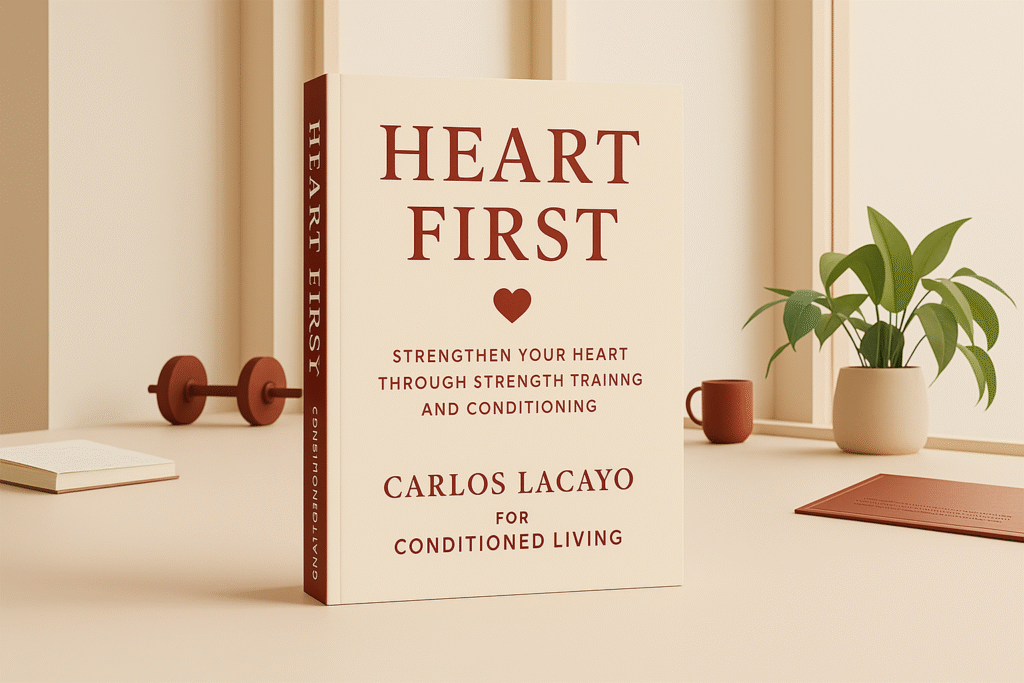
Once movement feels stable and safe again, Heart First, a practical framework for building strength and cardiovascular fitness without burnout, becomes the next supportive layer. Heart First helps you build structure, improve strength and conditioning gradually, and support cardiovascular health in a steady, grounded way. It doesn’t replace A Sustainable Start, it just builds on it.
Together, they create a progression that respects both physical readiness and emotional confidence.
Returning to Fitness Without Pressure or Guilt
Coming back to fitness after time off is not about proving discipline or redeeming past consistency. It is about meeting yourself where you are now and choosing a path that supports you long-term.
Your body has not abandoned you.
Your progress has not disappeared.
You are allowed to return gently.
Fitness will meet you there.
Ready to Take the Next Step?

Interested in training with me or just want to connect?
Send a DM to @Litoswaay, or email Carlos@ConditionedLiving.com. I would love to hear from you.
Follow @ConditionedLiving at ConditionedLiving.com for reflections, tips, and updates on mindset, strength, and everyday wellness.
Stay in the loop by joining my free mailing list for updates and inspiration.






Leave a Reply