
Tag: Sustainable Training

  • Interval Training vs Reps: What Most Workouts Get Wrong

    Interval Training vs Reps: What Most Workouts Get Wrong

    Most workouts are built around counting reps. Ten squats, ten pullups, twelve lunges or fifteen pushups sound normal. On the surface, this looks structured and effective, but when you look closer, the effort behind those numbers can vary dramatically. When comparing interval training vs counting reps, this is where the gap begins.

    One round might be slow and controlled. The next might be rushed. Another might feel easy, while the following one leaves you exhausted. The numbers stay the same, but the stimulus changes every time. Your body doesn’t respond to numbers; it responds to demand. When that demand changes from set to set, the adaptation becomes inconsistent. Over time, this makes progress harder to predict and harder to measure.

    This is the difference between going through the motions and actually creating a training effect, something I break down further when discussing whether you’re actually building strength or just exercising.

    How Interval Training Improves Workout Consistency

    Interval training removes much of that randomness by controlling time instead of reps. Instead of performing twelve squats, you might perform squats for thirty seconds followed by thirty seconds of rest. Now the structure stays the same every round. When you look at interval training vs reps, the biggest difference is consistency.
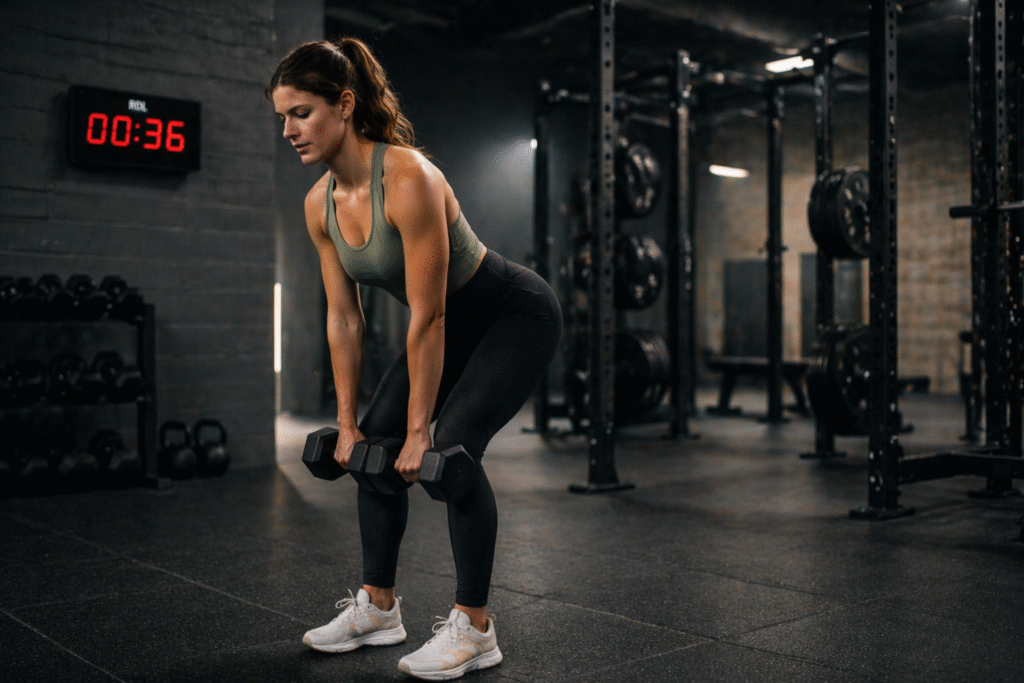
    Female athlete performing a controlled dumbbell Romanian deadlift in a modern gym, maintaining proper hip hinge form with a focused expression, while a red digital wall timer counts down in the background under cinematic lighting

    Pacing becomes part of the workout and effort becomes more predictable. Fatigue also follows a pattern instead of spiking randomly. Your heart rate rises and falls in a controlled way, which improves conditioning over time. This doesn’t necessarily make workouts harder. It makes them repeatable, and repeatable workouts are what lead to measurable progress.

    That’s also why progress can feel slow at first. Improvements are happening, but they’re subtle and consistent rather than dramatic and random. This idea connects closely to why fitness progress often feels invisible in the early stages.

    Over time, interval training creates a clearer signal for your body to adapt to. And clearer signals produce better results.

    When Counting Reps Is Better Than Interval Training

    Counting reps still plays a critical role, especially in strength training. Reps allow you to slow down and focus on quality. Eight squats, six presses, or seven rows encourage control, proper mechanics, and muscle engagement. You’re not racing the clock. You’re focusing on execution. When comparing interval training vs counting reps, this is where reps win.

    Strength training benefits from deliberate pacing. You want controlled movement, consistent form, and the ability to gradually increase resistance over time. Intervals can sometimes push you to rush, which reduces stability and technique.

    Female athlete holding a paused lunge position in a modern gym, resting her arm on her front knee with a fatigued expression, wearing a purple top and black shorts, surrounded by weights and equipment under soft cinematic lighting

    Rep-based training works best for:

    • Strength development
    • Muscle control
    • Progressive overload
    • Technique refinement

    Reps create structure for strength. Intervals create structure for conditioning. They serve different purposes. The problem isn’t counting reps. It’s using them for everything.

    Structure Is What Actually Drives Results

    This isn’t really about choosing between interval training and counting reps. It’s about structure versus randomness. Many workouts mix the two without intention. People rush through strength work, slow down when they should maintain effort, and rest inconsistently between sets. The result is unpredictable fatigue and unclear progress.

    Male athlete performing jump rope outdoors on a park path, maintaining a smooth and consistent rhythm with a focused expression, wearing green shorts and a light grey shirt, surrounded by trees and greenery in a bright spring environment

    When comparing interval training vs counting reps, the real advantage comes down to structure. Intervals create structured conditioning. Reps create structured strength training. When each is used correctly, workouts become repeatable. When workouts are repeatable, progress becomes measurable.

    Research consistently shows that structured training improves both cardiovascular efficiency and performance over time. The common factor isn’t the method, it’s consistency; which…comes from structure.

    Choosing the Right Approach

    Interval training builds conditioning. Counting reps builds strength. The best approach isn’t choosing one over the other. It’s understanding when to use each method and applying it with intention. If your workouts feel random, inconsistent, or hard to track, the issue usually isn’t effort; it’s structure.

    Give your body a clear and repeatable signal, and it will adapt. Progress isn’t just about what you do, it’s about how consistently you do it.


    Interested in Training with Me or Just Want to Connect?

    Fitness professional standing with arms crossed, wearing a black sleeveless hoodie and cap, calm confident expression against a clean neutral background.

    Send a DM to @Litoswaay, or email Carlos@ConditionedLiving.com; I’d love to hear from you!
    Follow @ConditionedLiving for reflections, tips, and updates on mindset, strength, and everyday wellness.

    Stay in the loop by joining my free mailing list for updates and inspiration.

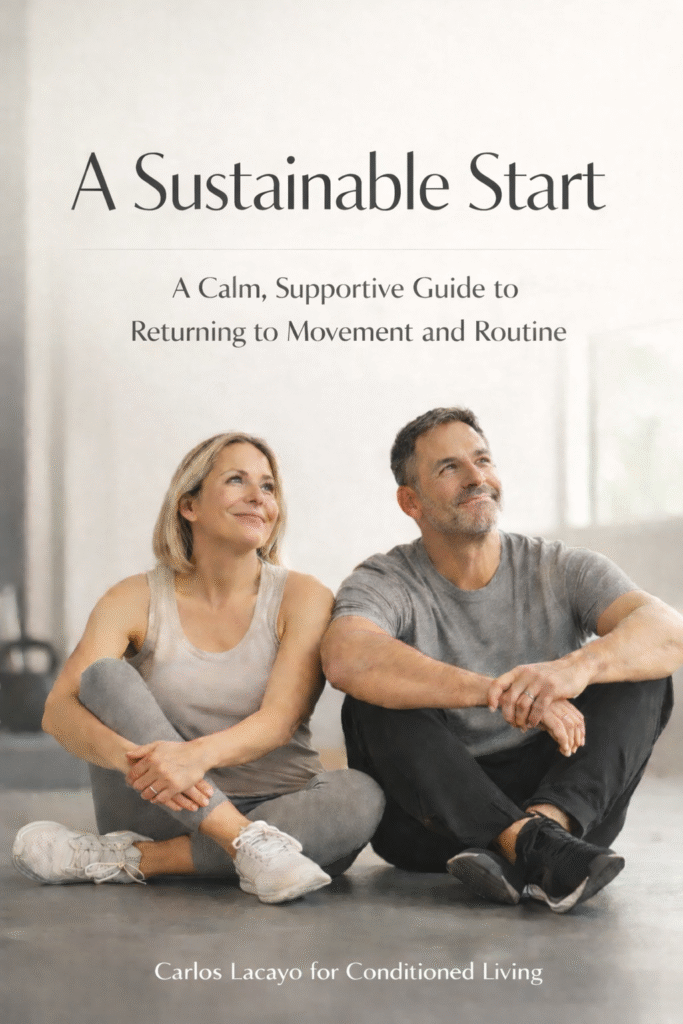
    Additionally, download the free guide/e-book “A Sustainable Start” to begin your journey toward sustainable strength and wellness, with a focus on consistency and balance.

    Conditioned Living is about realistic fitness and training advice. Real progress takes time; stay consistent.


  • How to Return to Fitness After Time Off Without Pressure or Guilt

    How to Return to Fitness After Time Off Without Pressure or Guilt

    Taking time off from fitness happens more often than we admit. Illness, injury, burnout, travel, or major life stress can interrupt even the most consistent routines. When you start thinking about returning to fitness after time off, the hardest part often is not physical. It is mental.

    Many people delay restarting because they feel behind, ashamed, or afraid of failing again. They worry they have lost progress, momentum, or even discipline. They worry that coming back will only highlight how far they feel from where they used to be.

    Here is the truth that matters most: Fitness does not disappear when life gets busy or overwhelming.
    It waits for you.

    Why Returning to Fitness After Time Off Feels So Hard

    Time away from fitness is often framed as “losing progress.” That framing creates guilt before you even start. Instead of seeing the break as part of life, it gets labeled as failure. Physiologically, your body is not starting from zero. Muscle memory, coordination, cardiovascular adaptations, and movement patterns will still be there. What usually fades first is confidence, not capability.

    A reflective moment in the gym illustrating the mental challenge of returning to fitness after time off.

    Psychologically, many people struggle to restart fitness because they associate it with all-or-nothing thinking. If they cannot train the way they once did, they assume something is wrong or that they lack discipline.

    I explore this mindset shift more deeply in Discipline from the Gym to Everyday Life: Making Fitness Part of Your Identity. I talk about how consistency should start being framed as something you carry with you rather than something you lose when routines change.

    You Did Not Lose Fitness, You Paused

    Time away allows the body to recover from cumulative stress, even if the break was unplanned. When you return thoughtfully, you often rebuild faster than expected because your foundation still exists.

    What slows most people down is not the pause itself. It is the pressure to make up for lost time. That pressure often leads to doing too much too soon. That could increases injury risk, drains motivation, and frequently results in another forced break. The cycle repeats not because people return to fitness without patience.

    Returning to Fitness Slowly Is an Act of Care

    Coming back to fitness gradually is one of the most effective ways to protect long-term progress. Muscles may feel ready quickly, but joints, connective tissue, and the nervous system need time to re-adapt after time off.

    A controlled gym exercise representing rebuilding fitness gradually and safely after time off.

    This principle is reinforced in my Jump Rope Complex workout, which focuses on developing conditioning through pacing, structure, and repeatable effort rather than intensity alone.

    Easing back in reduces injury risk, restores confidence in movement, and rebuilds consistency in a sustainable way. Most importantly, it creates positive feedback. You finish sessions feeling capable instead of defeated.

    How A Sustainable Start Helps You Rebuild Fitness Safely

    Cover image titled ‘A Sustainable Start,’ showing two adults sitting on a gym floor in casual workout clothes, smiling and looking ahead, with colorful confetti around the border.

    My free e-book A Sustainable Start fits intentionally into the process of returning to fitness after time off. Rather than functioning as a full training program, it serves as a re-entry guide. It helps you reconnect with movement without urgency, comparison, or pressure to perform.

    It focuses on rebuilding trust with your body by establishing gentle and repeatable habits, and removing pressure-based motivation. For many people, this sense of safety is what makes consistency possible again. It’s designed for people who want to rebuild fitness without forcing themselves back into old expectations.

    Signs You Are Returning to Fitness at the Right Pace

    A calm post-workout moment in the gym showing a balanced return to fitness.

    You don’t need performance metrics to know if your approach is working. Your body gives clear signals when you listen. When you are moving at the right pace:

    • Soreness tends to be mild and short-lived
    • Energy improves rather than crashes
    • Motivation builds gradually instead of disappearing
    • Movement leaves you calmer; not anxious

    If training leaves you depleted or discouraged, that does not mean you failed. It means your current workload may be too high for this stage.

    Adjusting pace is part of the process, not a setback.

    Compassion-Based Consistency

    Consistency does not require intensity to be effective. Compassion-based consistency means showing up in ways that respect your current capacity. Some days that might look like walking. Other days it might be light strength work, mobility, or gentle conditioning.

    What matters is repetition without pressure. Over time, this approach rebuilds confidence, physical capacity, and trust. Those are the foundations needed for long-term fitness, conditioning, and health.

    Support Long-Term Fitness

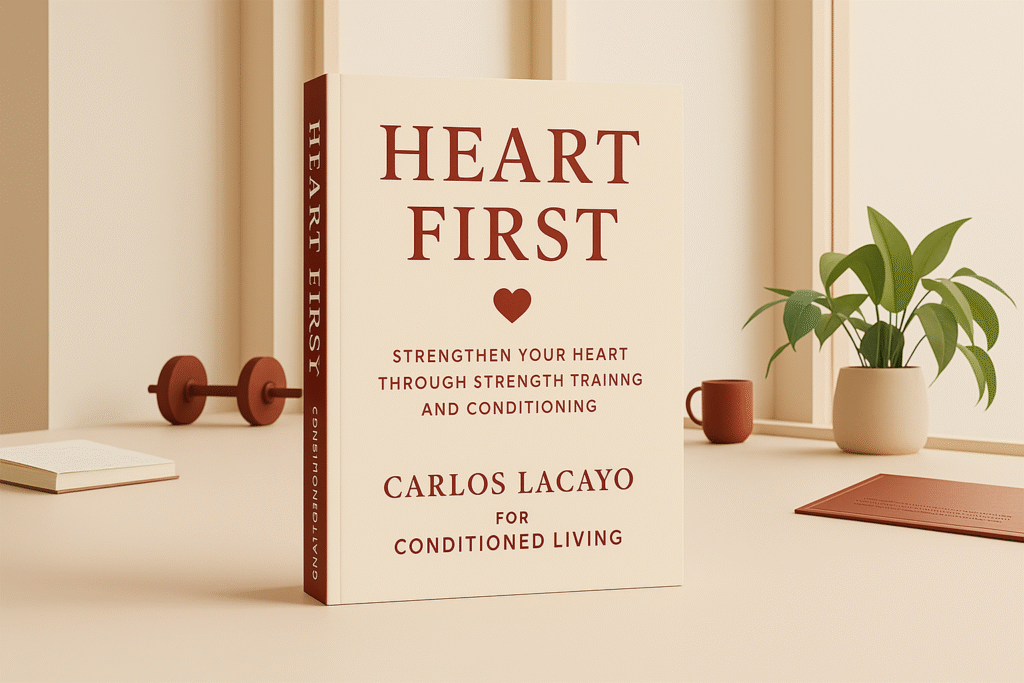
    Heart First fitness and wellness guide book cover by Carlos Lacayo, styled on a warm, minimalist workspace with strength training equipment and plants.

    Once movement feels stable and safe again, Heart First, a practical framework for building strength and cardiovascular fitness without burnout, becomes the next supportive layer. Heart First helps you build structure, improve strength and conditioning gradually, and support cardiovascular health in a steady, grounded way. It doesn’t replace A Sustainable Start, it just builds on it.

    Together, they create a progression that respects both physical readiness and emotional confidence.

    Returning to Fitness Without Pressure or Guilt

    Coming back to fitness after time off is not about proving discipline or redeeming past consistency. It is about meeting yourself where you are now and choosing a path that supports you long-term.

    Your body has not abandoned you.
    Your progress has not disappeared.
    You are allowed to return gently.

    Fitness will meet you there.


    Ready to Take the Next Step?

    Person wearing a black sleeveless hoodie and cap, arms crossed, photographed against a light background with a composed expression

    Interested in training with me or just want to connect?

    Send a DM to @Litoswaay, or email Carlos@ConditionedLiving.com. I would love to hear from you.

    Follow @ConditionedLiving at ConditionedLiving.com for reflections, tips, and updates on mindset, strength, and everyday wellness.

    Stay in the loop by joining my free mailing list for updates and inspiration.

fb-share-icon
Instagram