Tag: workout routine

  • You Don’t Need the Right Mindset to Work Out. You Need This Instead

    You Don’t Need the Right Mindset to Work Out. You Need This Instead

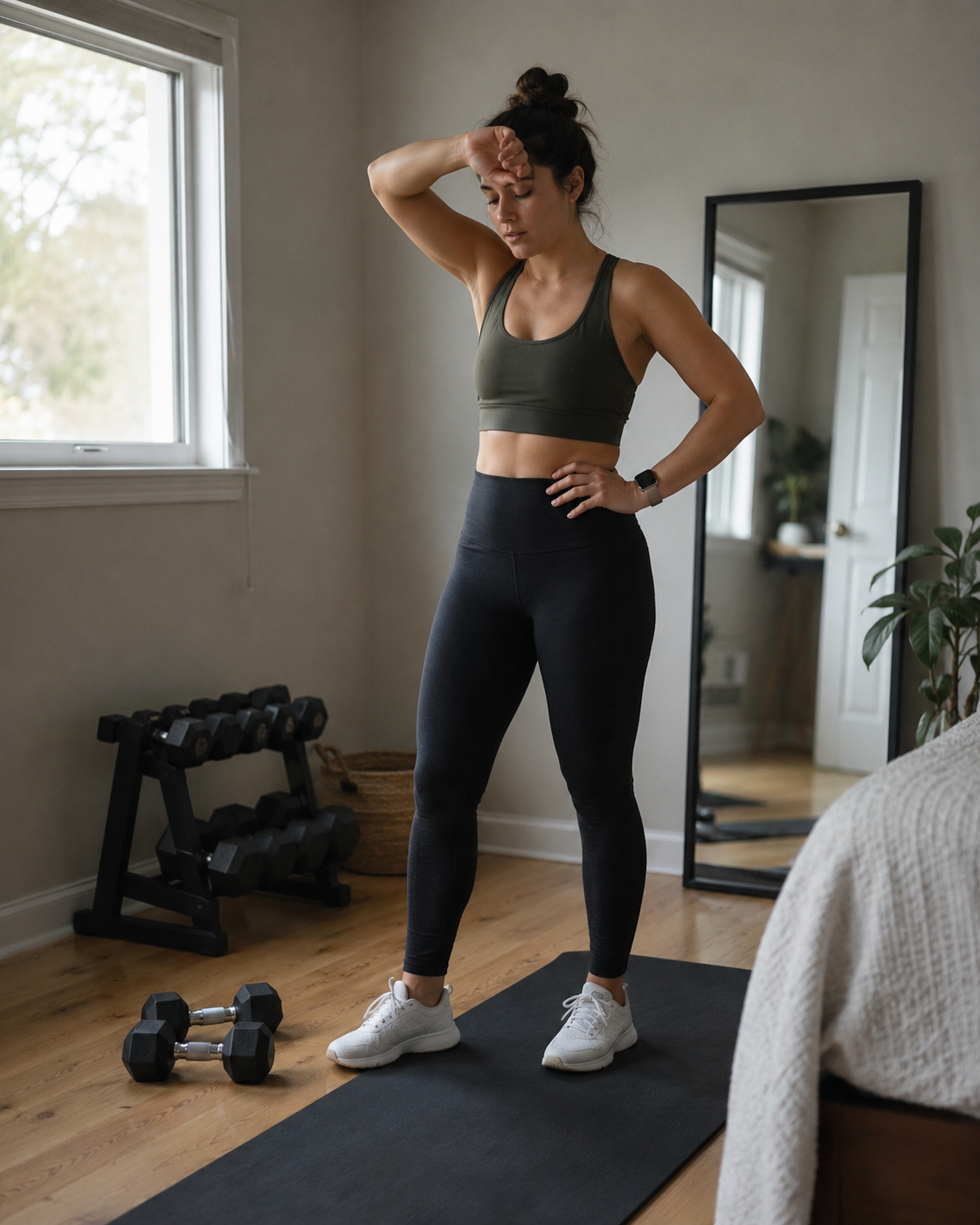
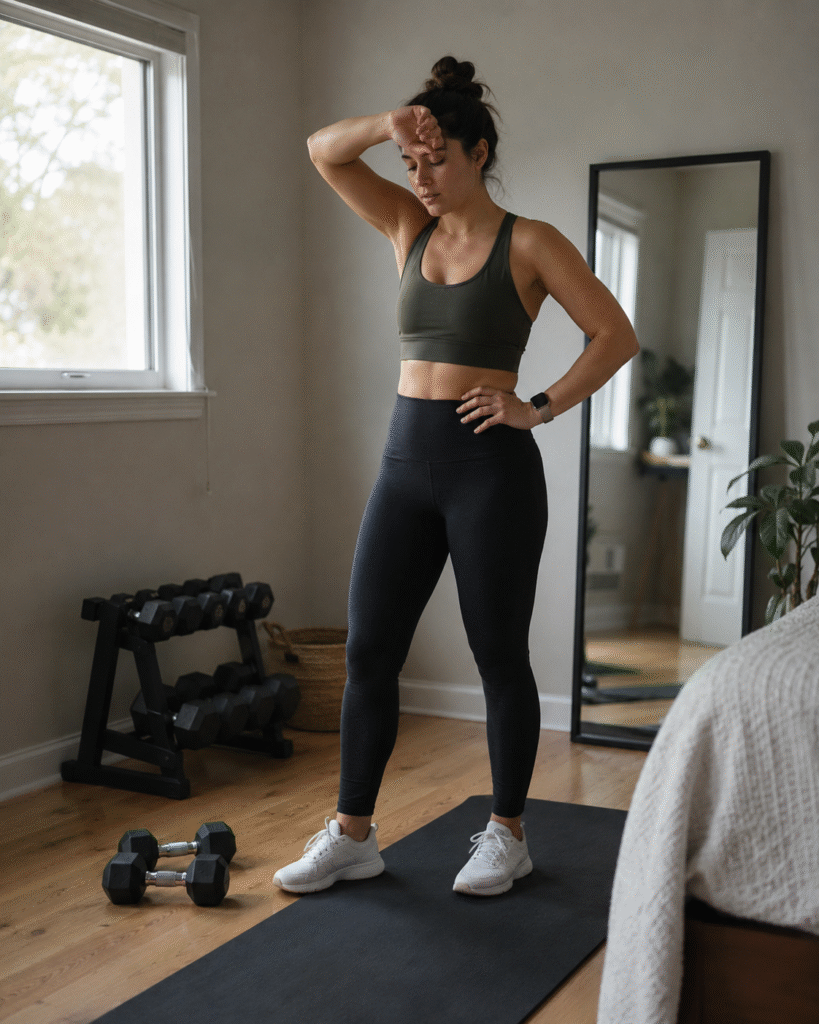
    A woman stands on a black workout mat in a quiet home workout space, looking tired but ready to begin. Dumbbells, a dumbbell rack, a mirror, and soft natural light from a nearby window create a calm, relatable fitness setting.

    Most people believe they need to feel ready before they work out. They wait for the right mindset, more energy, less stress, or even a clearer head before they even consider starting. On paper, that sounds reasonable. In reality, it’s one of the biggest reasons people stay stuck. The truth is, that moment rarely comes.

    Instead, people sit in that in-between space where they want to do something, but never quite feel right enough to begin. Days pass and workouts become something they’ll “get back to” later. The issue isn’t a lack of discipline. It’s the belief that mindset has to come first. In most cases, it doesn’t.

    Why You Don’t Need Motivation to Work Out
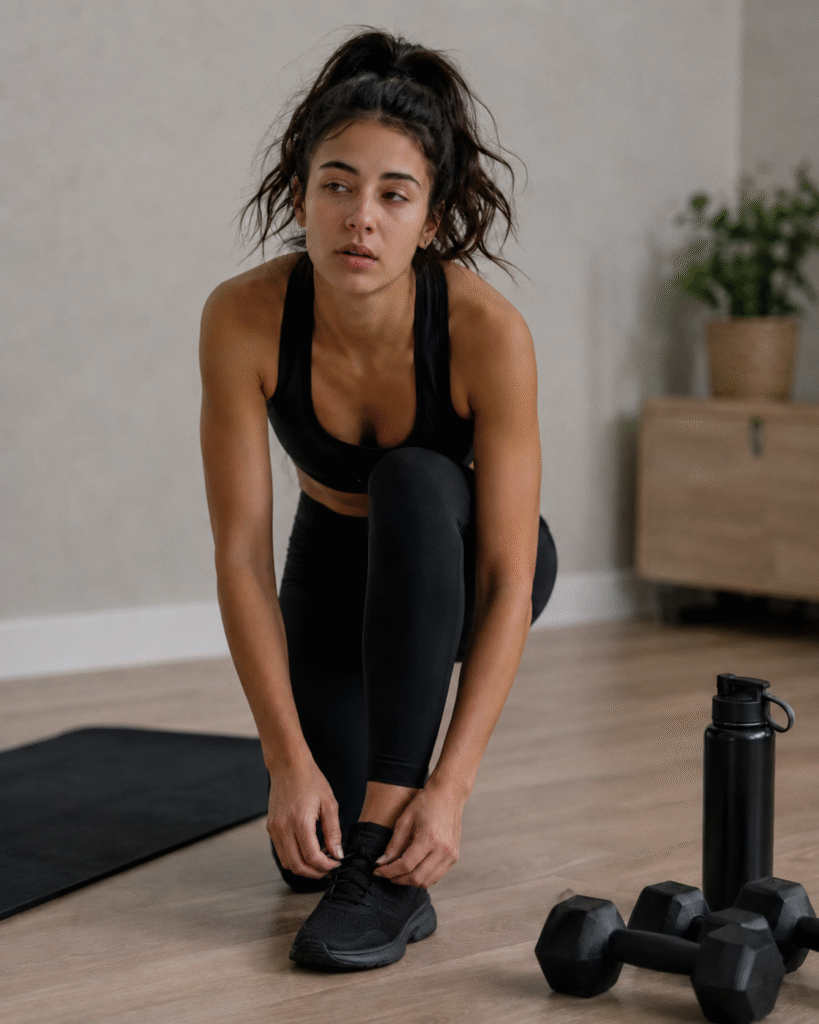
    A woman in black workout clothes ties her black sneakers before exercising in a clean home workout space. Dumbbells, a water bottle, and a yoga mat sit nearby, creating a calm scene of starting a workout before feeling fully ready.

    It’s easy to think that focus, motivation, and clarity should show up before a workout. That if you just felt a little better or less overwhelmed, everything would fall into place. Most workouts don’t begin with perfect focus. They create it.

    Energy tends to rise once you start moving. Mental clarity often shows up somewhere between the warm-up and your first real set. What feels like resistance at the beginning usually fades once you’re in motion. You can’t expect a result before you’ve taken the action that produces it. Mindset isn’t a prerequisite; it’s a byproduct.

    Feeling Unmotivated? You Might Be Mentally Overloaded

    A lot of the time, what people interpret as a lack of motivation is actually something else entirely. It’s not that they don’t want to work out. It’s that they’re mentally overloaded. Stress from work, responsibilities, and expectations all build throughout the day and by workout time, the mind is already crowded. That crowded feeling gets mistaken for low motivation, but it’s really a buildup of pressure with nowhere to go.

    A woman sits on a workout bench with her head lowered and hands clasped, appearing mentally tired before or after training. A gym bag, laptop, dumbbell rack, and soft window light create a quiet fitness space that reflects stress, focus, and the need to reset.

    If you’ve ever felt like your progress is slow or even invisible at first, that same buildup can make it feel like nothing is working. I break that down further in “Why Fitness Progress Feels Invisible at First (And What’s Actually Happening)”; it’s often more progress than you realize.

    How Exercise Helps You Relieve Stress and Reset Your Mind

    A workout isn’t just a physical activity. It’s a way to process everything you’ve been carrying.
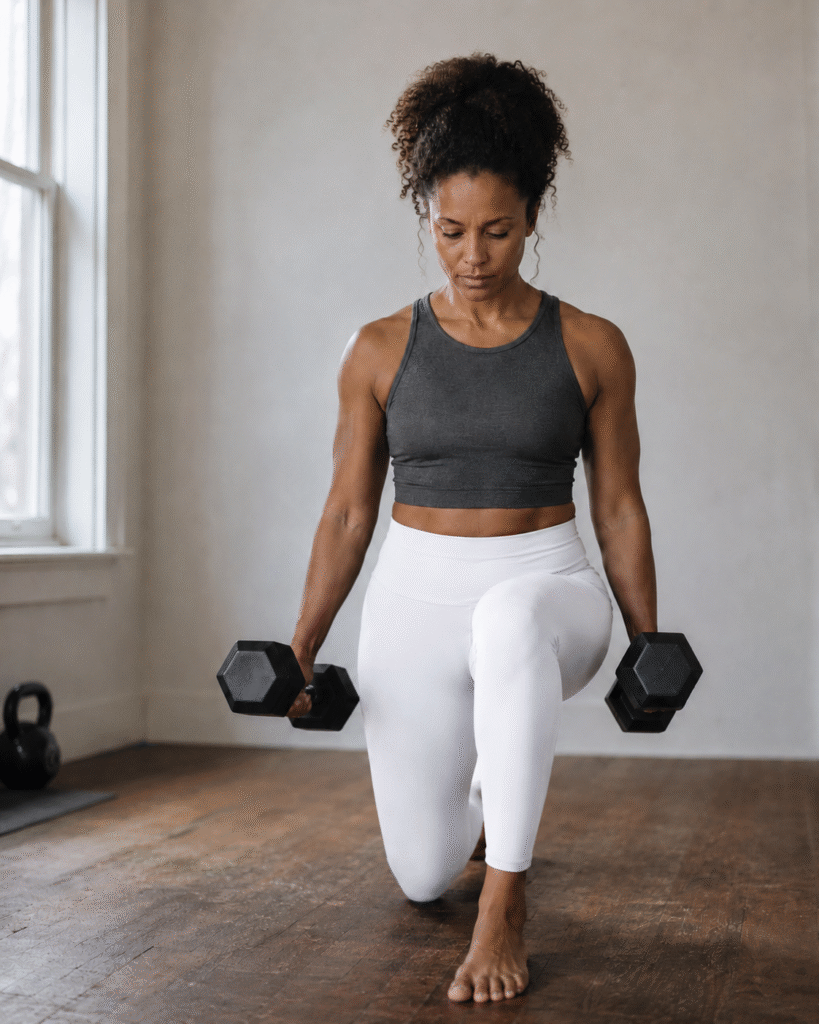
    A woman in white leggings performs a controlled kneeling lunge while holding dumbbells in both hands. Soft window light, a quiet minimalist room, and her focused expression create a calm strength training scene centered on control, consistency, and movement.

    There’s an important distinction here. Working out isn’t about escaping your problems. It’s about giving them somewhere to go. Stress can turn into effort and frustration can turn into movement. The mental noise that’s been sitting in your head gets replaced with something simple and physical.

    Even a short session can completely change how you feel. Not because your problems disappear, but because you’re no longer holding onto them in the same way.

    If you’ve been feeling physically off during training, that disconnect might not be random. It could be tied to how your body is responding overall, which I cover in “Why Your Body Feels Older Than It Should (And How to Fix It)”.

    How Distractions Affect Your Workout Performance

    Your workouts aren’t only affected by your internal state. They’re also shaped by your environment. One conversation can shift your mood. One negative interaction can drain your energy. One distraction can pull your focus away before you even get started. Most workouts aren’t lost during the session itself. They’re lost in the moments leading up to it.

    If your attention is scattered, your effort will be too.
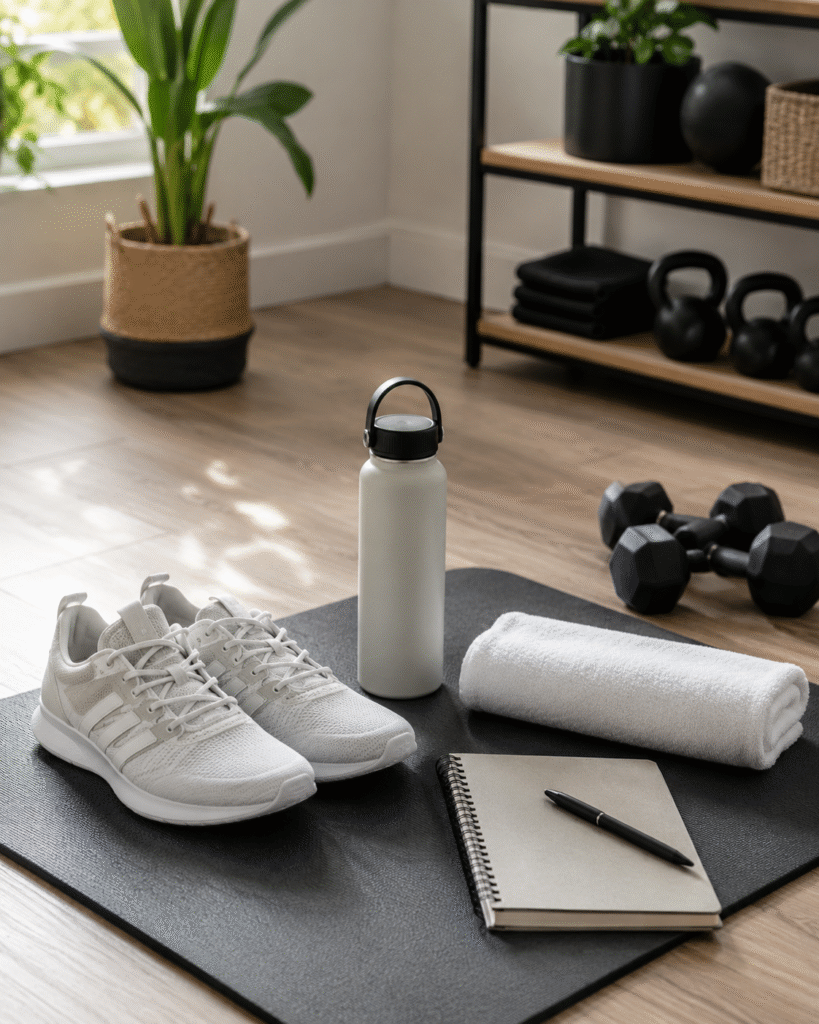
    A neatly organized home workout setup with white sneakers, a water bottle, towel, notebook, and pen placed on a black exercise mat. Dumbbells, kettlebells, plants, and soft daylight create a calm fitness space focused on structure, readiness, and consistency.

    How to Stay Consistent With Workouts (Even Without Motivation)

    Consistency isn’t just about effort. It’s about protecting your focus. If you rely on motivation, you’ll always be at the mercy of how you feel or what’s happening around you. If you treat your workout like a non-negotiable part of your day, you create structure around it.

    That might mean limiting distractions beforehand, keeping your pre-workout time quiet, or simply deciding ahead of time that you’re going regardless of how you feel. The goal isn’t to create a perfect mindset. It’s to give yourself the best chance to start.

    Why Some of Your Best Workouts Happen on Your Worst Days

    This doesn’t mean every workout will feel great. There will be days where your energy is low, your focus is off, and everything feels harder than it should. Those are often the days that matter most. Some of your best workouts will come from the ones you almost skipped.
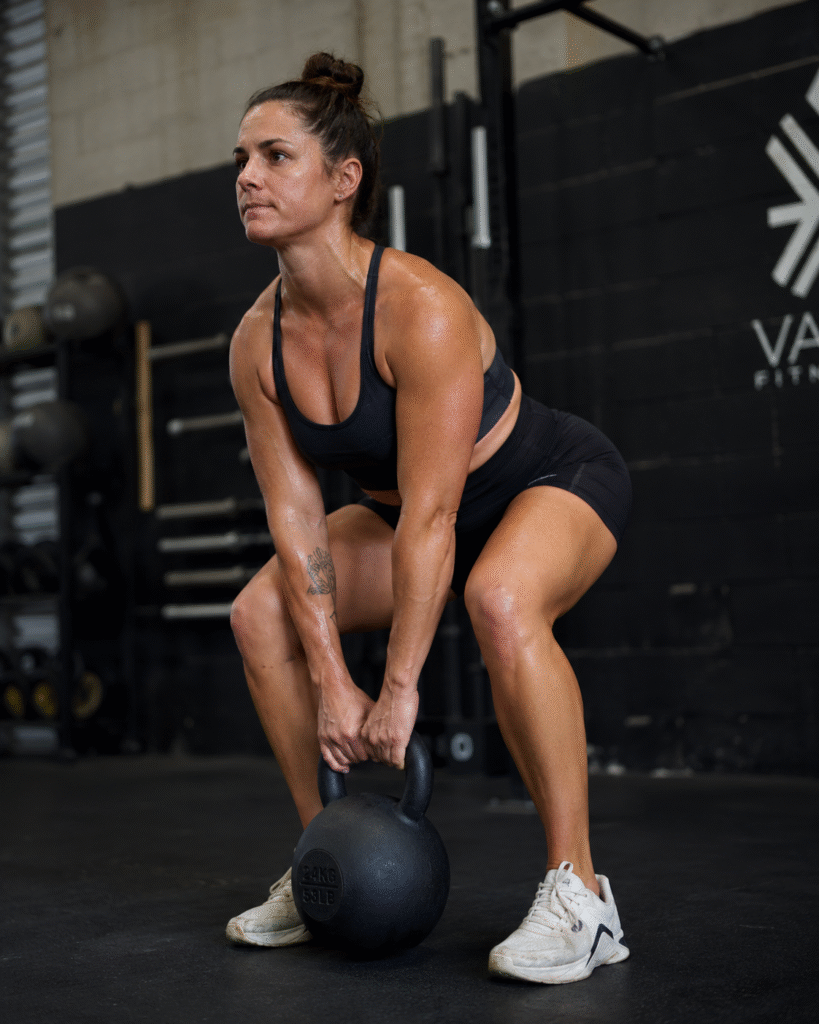
    A woman performs a kettlebell deadlift in a gym, looking focused and determined as she pushes through the movement. Sweat, strong posture, and the dark gym setting create a gritty strength and conditioning scene about working through a hard day.

    Those are the moments where you stop overthinking and just move. Where you let the structure carry you instead of waiting to feel ready. Over time, those sessions build a level of consistency that doesn’t depend on motivation.

    Start Working Out Before You Feel Ready

    At the end of the day, waiting for the perfect mindset is what keeps most people from getting started.

    You don’t need to feel ready.
    You don’t need more motivation.
    You don’t need everything to line up perfectly.

    You need to begin.

    More often than not, the mindset you’re waiting for is built in the process itself.


    Interested in training with me or just want to connect?

    Fitness professional standing with arms crossed, wearing a black sleeveless hoodie and cap, calm confident expression against a clean neutral background.


    Send a DM to @ConditionedLiving or email Carlos@ConditionedLiving.com — I’d love to hear from you.

    Follow me on social media for reflections, tips, and updates on mindset, strength, and everyday wellness.

    Stay in the loop by joining my free mailing list for updates and inspiration.

    Additionally, download the free guide “A Sustainable Start” to begin your journey toward sustainable strength and wellness, with a focus on consistency and balance.


  • Why Spring Is Perfect for Strength and Conditioning Training

    Why Spring Is Perfect for Strength and Conditioning Training

    Average woman jogging on a paved park path in early spring, wearing a light windbreaker and leggings, with cloudy bright sky and trees with new leaves in the background.

    Spring is right around the corner, and every year when people feel the urge to start training again. The weather improves, the days get longer, and energy levels seem to come back after the slower winter months. Gyms get more crowded, parks fill up with runners, and motivation feels easier to find.

    The problem is that many people return to the same routines that never worked for them before. Some go back to doing only cardio, hoping to lose weight quickly. Others focus only on lifting weights, but never challenge themselves enough to see real change. If you are unsure whether your workouts are actually difficult enough to create progress, you may want to read Are You Lifting Heavy Enough? A Simple Guide to Muscle Growth and Fat Loss, which explains why many people train consistently but never see the results they expect. These approaches can work for a short time, but they often lead to burnout, frustration, or progress that stalls.

    Spring is actually the perfect time to train differently. Instead of choosing between lifting and cardio, this season is ideal for combining both. Strength and conditioning training, sometimes called hybrid training, allows you to build real fitness without feeling stuck in one extreme or the other.

    What Strength and Conditioning Training Actually Means

    Man with an average build performing dumbbell lunges in a clean, modern gym, holding moderate-weight dumbbells, wearing a gray t-shirt and black shorts, natural lighting, realistic training environment, focused expression, documentary fitness photography style

    Strength and conditioning training means developing muscle, endurance, and work capacity at the same time. It does not mean doing random workouts or exhausting yourself every day. It means using a structured approach that includes resistance training, conditioning work, and enough recovery to allow the body to adapt.

    When done correctly, training like this improves body composition, increases strength, and builds cardiovascular fitness without forcing you to sacrifice one for the other. You become stronger, but you also move better and feel more capable in everyday life.

    Why Spring Is the Best Time to Start a Strength and Conditioning Routine

    Spring is the perfect season to train this way because it naturally encourages more movement. After spending months indoors during the winter, most people feel ready to be active again. The weather makes it easier to walk, run, or do conditioning work outside, and the change in season often brings a mental reset that makes new routines easier to stick to.

    Woman stretching outdoors near a running track in early spring, holding a quad stretch with a hoodie tied around her waist, sunlight on green grass, natural lighting, realistic fitness lifestyle scene with a calm and motivated mood.

    This time of year also sits between two extremes that many people fall into. During the winter, people often focus on lifting heavier while moving less. In the summer, many switch to doing more cardio and stop strength training altogether. Spring creates a natural middle ground where both can exist together.

    Instead of chasing short-term results, you can start building a balanced routine that carries into the rest of the year. One reason this matters is that real fitness progress often happens more slowly than people expect. Early improvements are not always visible, which is why many people quit before results appear. If that sounds familiar, you may want to read Why Fitness Progress Feels Invisible at First (And Why That’s Normal), which explains why the body often changes beneath the surface before you notice it in the mirror.

    What Hybrid Training Looks Like in Real Workouts

    In real life, strength and conditioning training does not need to be complicated. A workout might include lifting weights followed by jump rope, sled pushes, running intervals, or simple conditioning circuits. Some days may focus more on strength, while others emphasize movement and endurance. The goal is not to destroy yourself every session. The goal is to build a body that can handle more over time.

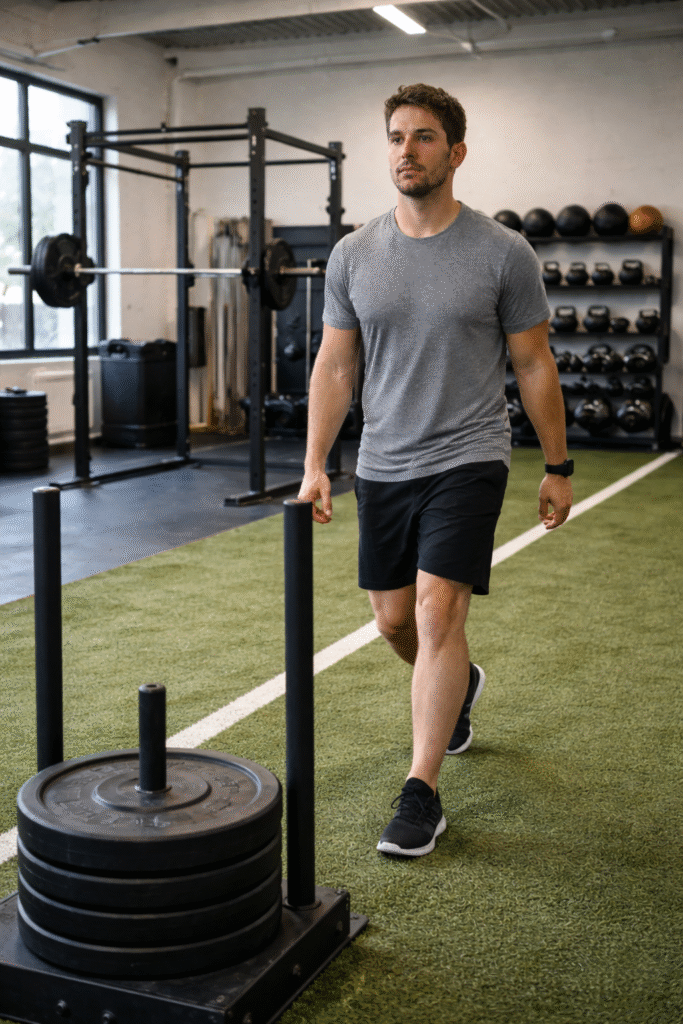
    Athlete walking on turf gym floor toward a sled push after finishing a weightlifting set, modern strength and conditioning gym with racks and weights in the background, natural lighting, realistic functional fitness training environment, documentary photography style.

    This type of hybrid training helps improve endurance, strength, and overall fitness without forcing you to choose between looking strong and feeling athletic.

    Why Most People Avoid Strength and Conditioning Training

    Many people avoid this type of training because they think they have to choose one path. Lifters sometimes worry that conditioning will make them lose muscle. People who prefer cardio may avoid weights because they think strength training will slow them down. In reality, combining both usually leads to better results than focusing on only one.

    Most people train for comfort, not for capability. They stay with what feels familiar, even if it is not helping them progress. Strength and conditioning training requires more balance and patience, but it builds the kind of fitness that lasts longer than any short-term program.

    Build a Spring Fitness Routine That Lasts All Year

    Man and woman walking out of a gym together after a workout, gym bags over their shoulders, warm sunset lighting, relaxed and accomplished mood, modern gym exterior, realistic fitness lifestyle photography with a spring atmosphere, documentary style.

    Spring is indeed when motivation starts to come back, but motivation alone does not create results. What matters is what you build when that motivation shows up. This season is the perfect opportunity to start training in a way that develops strength, endurance, and consistency at the same time.

    Instead of repeating the same cycle every year, spring can be the moment you begin building a routine that actually carries forward. Strength and conditioning training is not just a way to get in shape for the season. It is a way to create a level of fitness you can keep year-round.


    Fitness professional standing with arms crossed, wearing a black sleeveless hoodie and cap, calm confident expression against a clean neutral background.

    Interested in training with me or just want to connect?
    Send a DM to @Litoswaay, or email Carlos@ConditionedLiving.com, I’d love to hear from you!
    Follow @ConditionedLiving for reflections, tips, and updates on mindset, strength, and everyday wellness.
    Stay in the loop by joining my free mailing list for updates and inspiration.

    Additionally, download the free guide A Sustainable Start to begin your journey toward sustainable strength and wellness, with a focus on consistency and balance.

fb-share-icon
Instagram