In 2023, I underwent triple bypass surgery. After heart surgery, I took my blood pressure twice a day, every day, for about a year and a half, morning and night. Same cuff, same routine. The goal was to make sure my blood pressure didn’t get too high, but I also wanted to understand my body a little better.

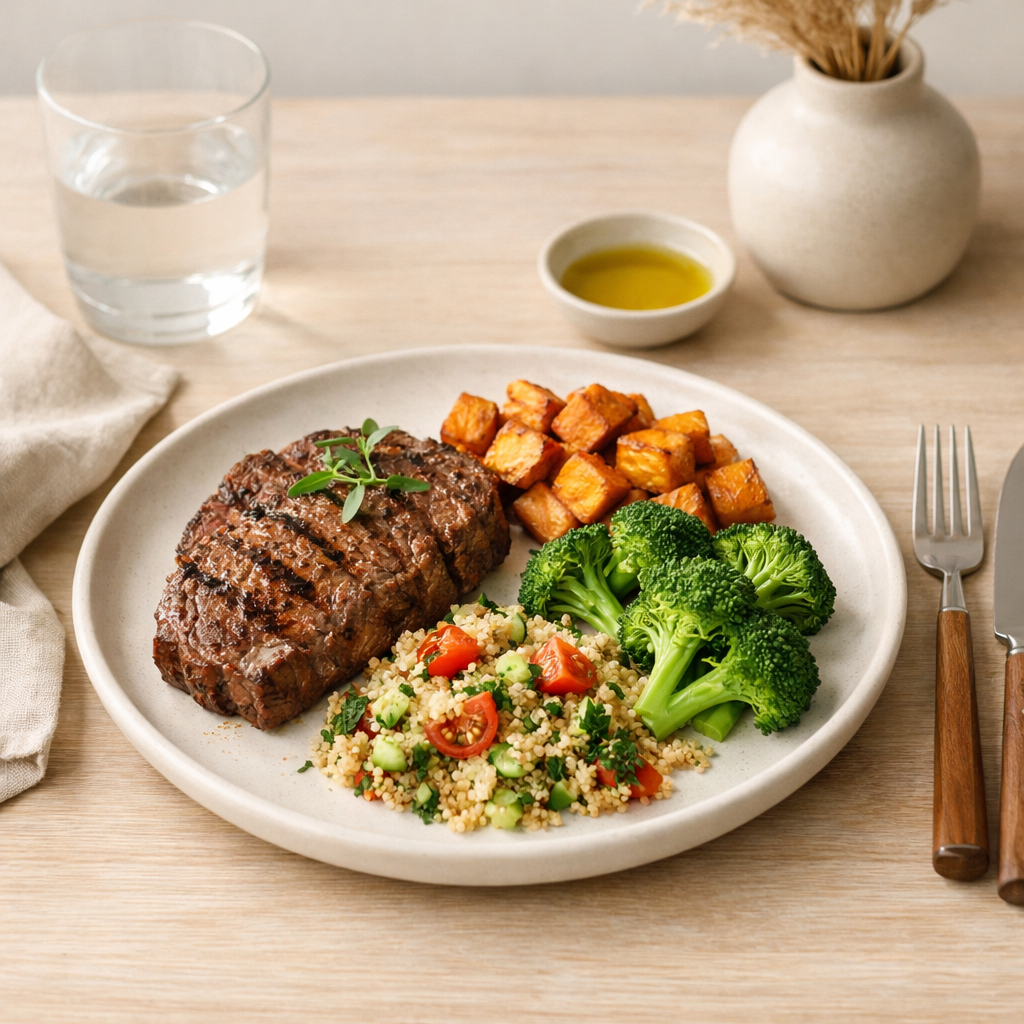
Over time, a pattern started to show up that didn’t fit neatly into the nutrition rules I’d heard for years. Some of my best blood pressure readings followed meals like burgers or steak.
That’s not a recommendation or a claim that red meat lowers blood pressure. It’s simply an observation that forced me to question how confidently we label foods as “good” or “bad” without context.
How Diet Culture Shapes Food Rules
Diet culture thrives on simplicity. Foods are either clean or dirty, safe or dangerous, disciplined or indulgent. Red meat, burgers, and foods associated with enjoyment often land on the “bad” list by default.

The problem is that this framing ignores the variables that actually matter: portion size, ingredient quality, frequency, stress, movement, and recovery. A burger eaten mindfully within a balanced lifestyle is not the same thing as chronic overconsumption in a sedentary, high-stress environment.
When food becomes a moral test, people don’t eat better. They eat more anxiously, and anxiety has consequences of its own. This same pattern shows up in training, where discipline is often misunderstood as restriction rather than alignment, something I explored in Discipline from the Gym to Everyday Life.
Eating Red Meat With Context
When I started eating red meat again post-surgery, it wasn’t daily and it wasn’t mindless. It was usually part of a normal lunch or dinner.
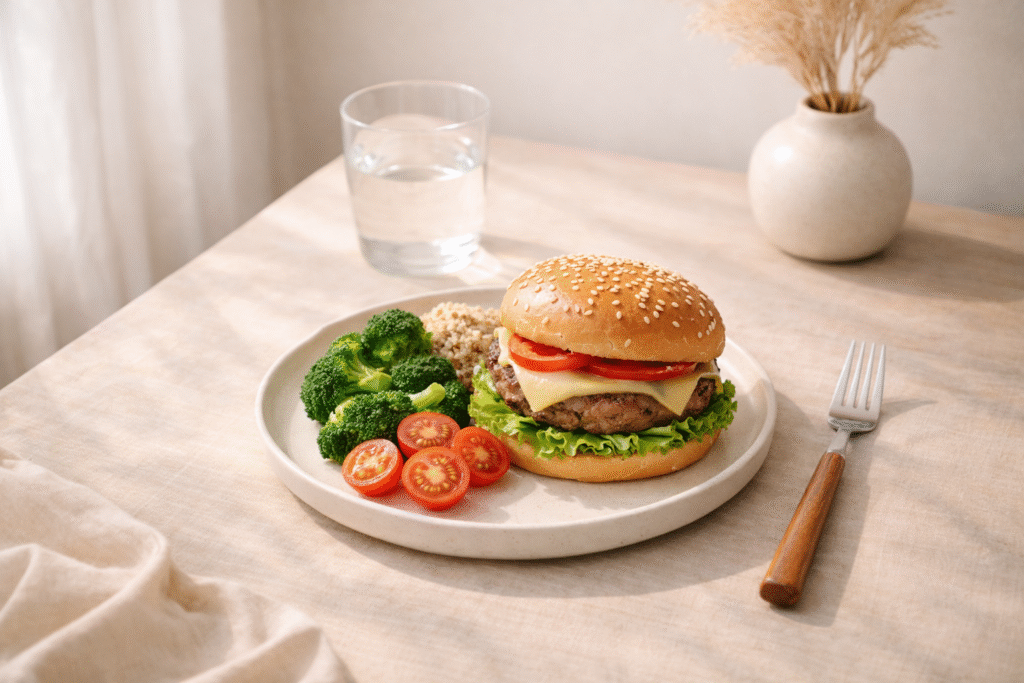
I had red meat roughly once every week to week and a half, paired with training, walking, sleep, and consistency. It felt supportive rather than restrictive.
I’m not saying red meat caused better readings. I’m saying that when food felt supportive instead of stressful, my body responded more calmly. That distinction matters.
Processed Meat, Cancer Risk, and What WHO Classifications Mean
This is where nuance often gets lost.
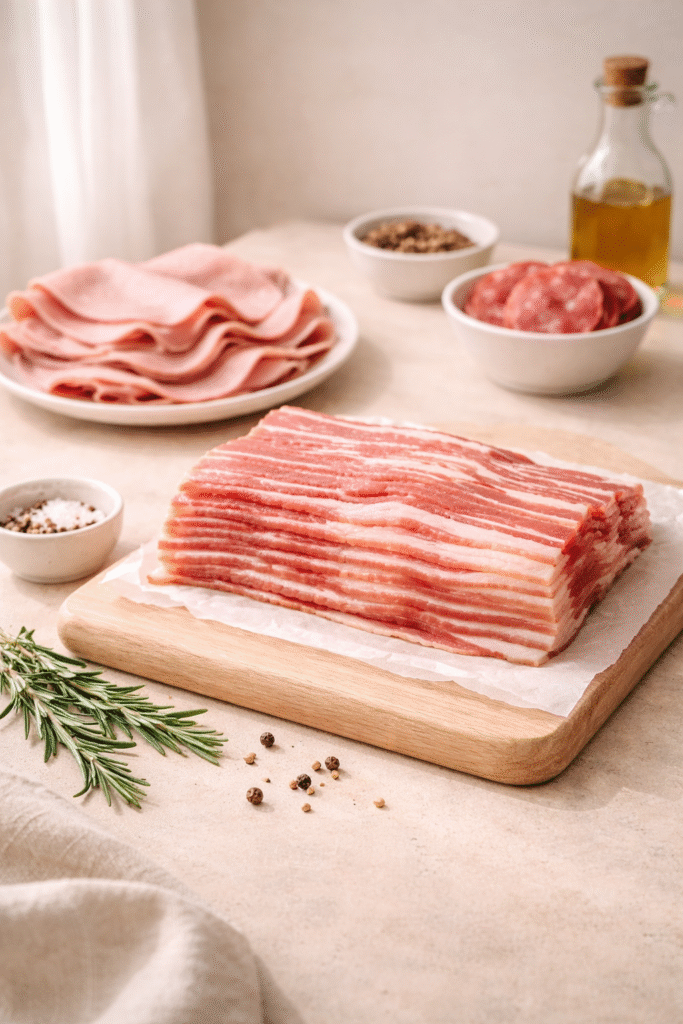
Bacon is classified as a processed meat because it’s preserved through curing, smoking, salting, or added preservatives. In 2015, the World Health Organization, through the International Agency for Research on Cancer, classified processed meats as Group 1 carcinogens.
That classification reflects the strength of evidence, not the magnitude of risk.
Tobacco smoke and asbestos are also Group 1 carcinogens. They’re grouped together because evidence exists, not because they carry the same level of danger. For processed meats, the primary association identified is colorectal cancer, and the risk is dose-dependent, increasing with higher and more frequent consumption.
Many commonly cited figures reference roughly 50 grams per day, consumed regularly over time.
What these classifications do not fully capture is individual lifestyle context. They don’t measure physical activity levels, cardiovascular health markers, metabolic health, or overall dietary patterns.
Nutrition research continues moving away from single-food fear and toward pattern-based thinking, a shift explored in depth by Harvard’s Nutrition Source.
Modern Nutrition Guidelines
Nutrition guidance continues to evolve.
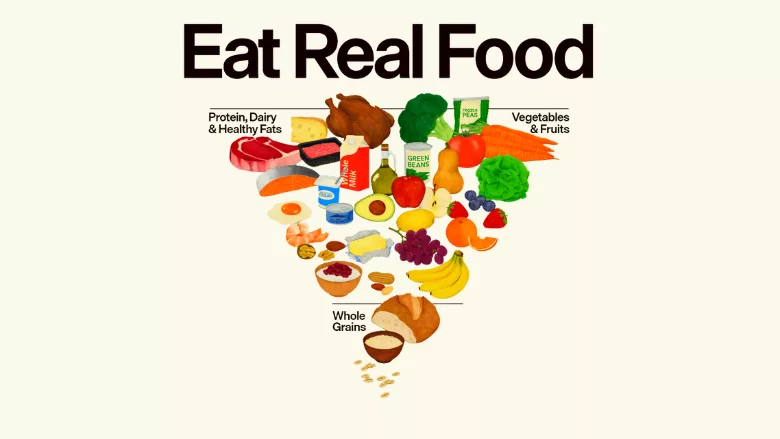
While MyPlate remains the dominant USDA visual model, broader dietary discussions increasingly emphasize balance, protein adequacy, healthy fats, and limiting highly processed foods.
Protein intake plays a critical role in recovery, strength development, and long-term resilience, something I discussed in Strength-Aware Conditioning: How to Improve Cardio Without Losing Strength.
Most people remember visuals more than fine print. And visually, modern nutrition frameworks reflect a move away from rigid macronutrient hierarchies and toward balance, quality, and sustainability.
For a broader public health interpretation of these shifts, see the Association of State and Territorial Health Officials.
Health tracking didn’t give me definitive nutrition answers. It gave me perspective.
Health isn’t built on perfect food choices. It’s built on patterns that support your life. Awareness beats fear, and context beats rigid rules.
Food works best when it’s supportive, not moral.
Interested in training with me or just want to connect?

Send a DM to @Litoswaay, or email Carlos@ConditionedLiving.com — I’d love to hear from you.
Follow @ConditionedLiving for reflections, tips, and updates on mindset, strength, and everyday wellness.
Stay in the loop by joining my free mailing list for updates and inspiration.
You can also download my free guide, A Sustainable Start, to begin building consistency and supporting your health with a calm, sustainable approach.