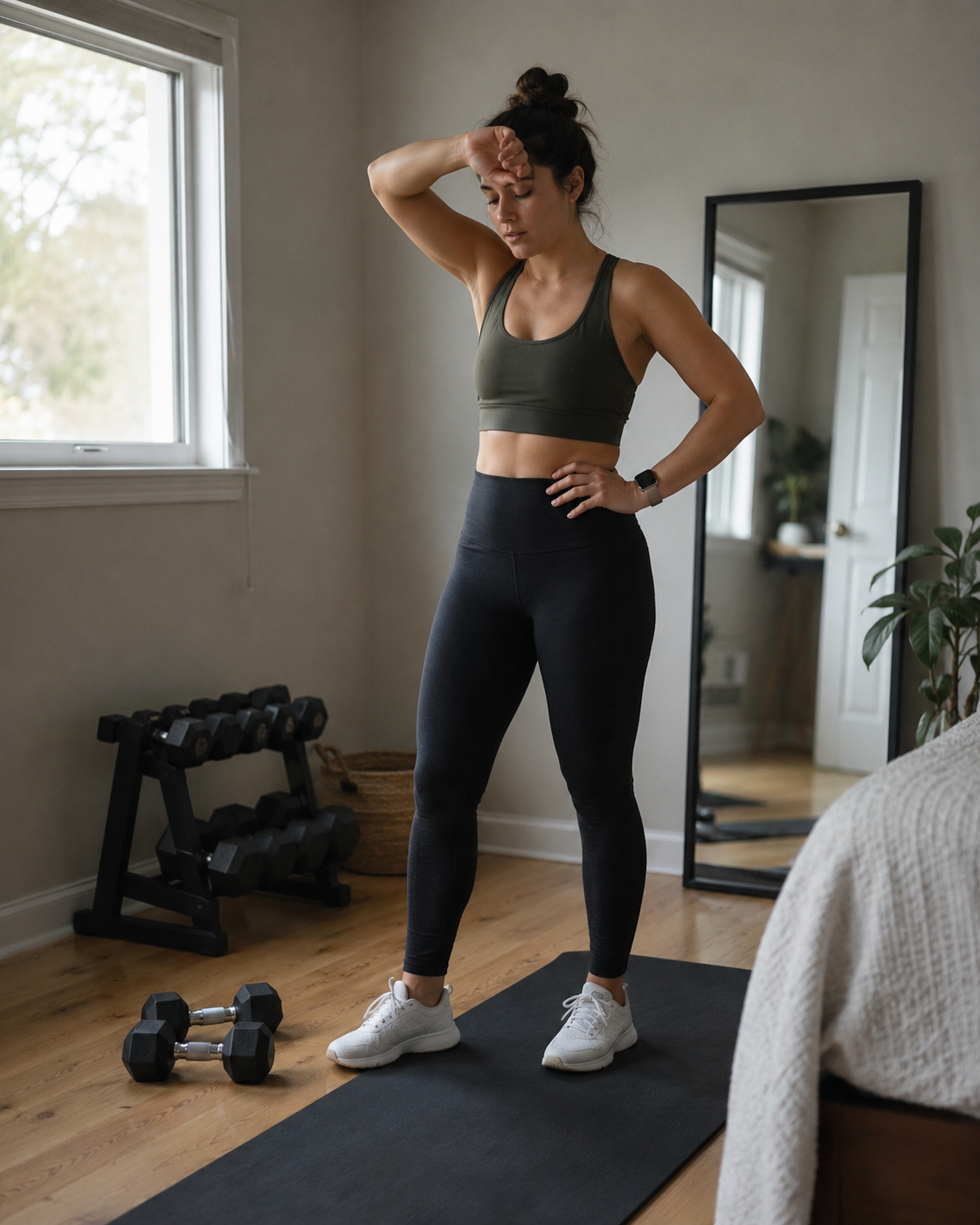

Most people believe they need to feel ready before they work out. They wait for the right mindset, more energy, less stress, or even a clearer head before they even consider starting. On paper, that sounds reasonable. In reality, it’s one of the biggest reasons people stay stuck. The truth is, that moment rarely comes.
Instead, people sit in that in-between space where they want to do something, but never quite feel right enough to begin. Days pass and workouts become something they’ll “get back to” later. The issue isn’t a lack of discipline. It’s the belief that mindset has to come first. In most cases, it doesn’t.
Why You Don’t Need Motivation to Work Out

It’s easy to think that focus, motivation, and clarity should show up before a workout. That if you just felt a little better or less overwhelmed, everything would fall into place. Most workouts don’t begin with perfect focus. They create it.
Energy tends to rise once you start moving. Mental clarity often shows up somewhere between the warm-up and your first real set. What feels like resistance at the beginning usually fades once you’re in motion. You can’t expect a result before you’ve taken the action that produces it. Mindset isn’t a prerequisite; it’s a byproduct.
Feeling Unmotivated? You Might Be Mentally Overloaded
A lot of the time, what people interpret as a lack of motivation is actually something else entirely. It’s not that they don’t want to work out. It’s that they’re mentally overloaded. Stress from work, responsibilities, and expectations all build throughout the day and by workout time, the mind is already crowded. That crowded feeling gets mistaken for low motivation, but it’s really a buildup of pressure with nowhere to go.

If you’ve ever felt like your progress is slow or even invisible at first, that same buildup can make it feel like nothing is working. I break that down further in “Why Fitness Progress Feels Invisible at First (And What’s Actually Happening)”; it’s often more progress than you realize.
How Exercise Helps You Relieve Stress and Reset Your Mind
A workout isn’t just a physical activity. It’s a way to process everything you’ve been carrying.

There’s an important distinction here. Working out isn’t about escaping your problems. It’s about giving them somewhere to go. Stress can turn into effort and frustration can turn into movement. The mental noise that’s been sitting in your head gets replaced with something simple and physical.
Even a short session can completely change how you feel. Not because your problems disappear, but because you’re no longer holding onto them in the same way.
If you’ve been feeling physically off during training, that disconnect might not be random. It could be tied to how your body is responding overall, which I cover in “Why Your Body Feels Older Than It Should (And How to Fix It)”.
How Distractions Affect Your Workout Performance
Your workouts aren’t only affected by your internal state. They’re also shaped by your environment. One conversation can shift your mood. One negative interaction can drain your energy. One distraction can pull your focus away before you even get started. Most workouts aren’t lost during the session itself. They’re lost in the moments leading up to it.
If your attention is scattered, your effort will be too.

How to Stay Consistent With Workouts (Even Without Motivation)
Consistency isn’t just about effort. It’s about protecting your focus. If you rely on motivation, you’ll always be at the mercy of how you feel or what’s happening around you. If you treat your workout like a non-negotiable part of your day, you create structure around it.
That might mean limiting distractions beforehand, keeping your pre-workout time quiet, or simply deciding ahead of time that you’re going regardless of how you feel. The goal isn’t to create a perfect mindset. It’s to give yourself the best chance to start.
Why Some of Your Best Workouts Happen on Your Worst Days
This doesn’t mean every workout will feel great. There will be days where your energy is low, your focus is off, and everything feels harder than it should. Those are often the days that matter most. Some of your best workouts will come from the ones you almost skipped.

Those are the moments where you stop overthinking and just move. Where you let the structure carry you instead of waiting to feel ready. Over time, those sessions build a level of consistency that doesn’t depend on motivation.
Start Working Out Before You Feel Ready
At the end of the day, waiting for the perfect mindset is what keeps most people from getting started.
You don’t need to feel ready.
You don’t need more motivation.
You don’t need everything to line up perfectly.
You need to begin.
More often than not, the mindset you’re waiting for is built in the process itself.
Interested in training with me or just want to connect?

Send a DM to @ConditionedLiving or email Carlos@ConditionedLiving.com — I’d love to hear from you.
Follow me on social media for reflections, tips, and updates on mindset, strength, and everyday wellness.
Stay in the loop by joining my free mailing list for updates and inspiration.
Additionally, download the free guide “A Sustainable Start” to begin your journey toward sustainable strength and wellness, with a focus on consistency and balance.