Tag: Fitness Motivation

  • Why Fitness Progress Feels Invisible at First (And What’s Actually Happening)

    Why Fitness Progress Feels Invisible at First (And What’s Actually Happening)

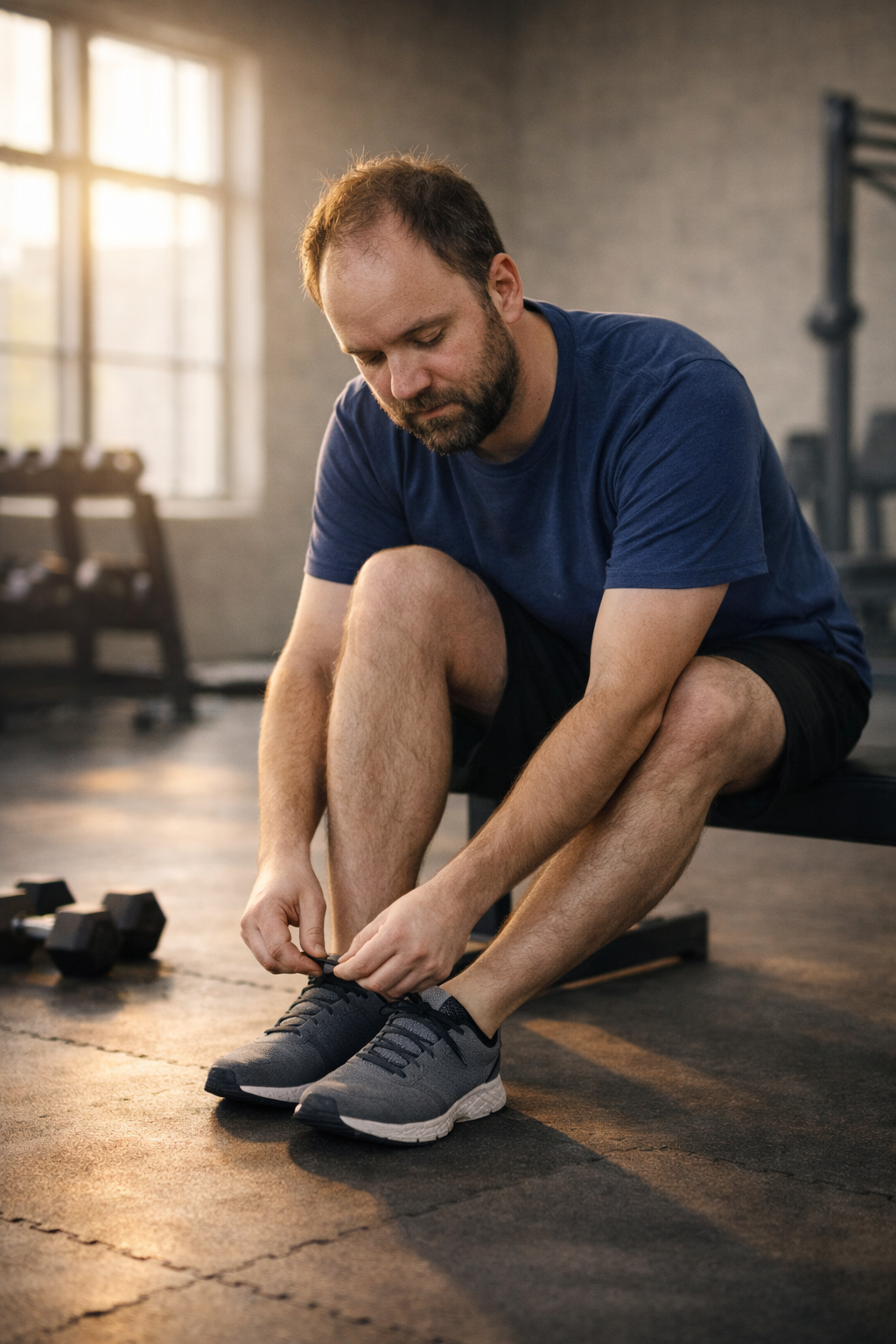
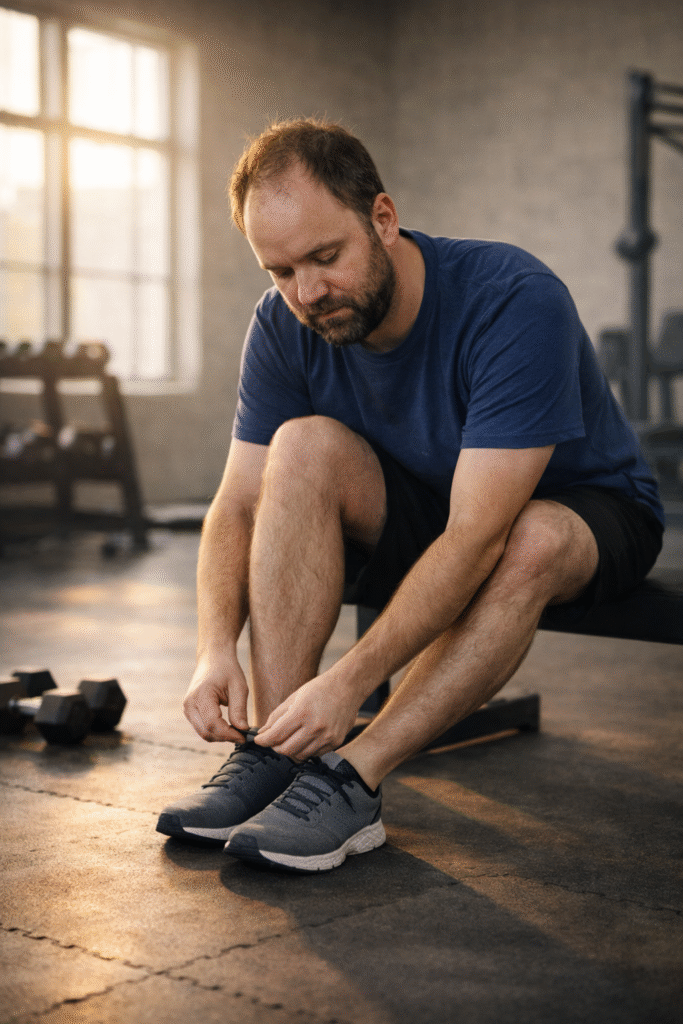
    Man with an average build tying his running shoes while sitting on a gym bench, soft morning light coming through large windows in a quiet gym, dumbbells resting on the floor nearby, calm and reflective pre-workout moment.

    Many people expect noticeable fitness results within a few weeks of starting a training program. They anticipate visible changes in the mirror or dramatic improvements in performance almost immediately. When those changes do not appear right away, the experience can feel confusing or discouraging.

    The reality is that the early phase of training rarely looks dramatic from the outside. Workouts begin to happen regularly, routines take shape, effort is being applied consistently, and yet, the results are often subtle or difficult to notice.

    Because of this, many people believe something is wrong with their program or their body. In truth, the process is unfolding exactly the way it should. Early progress simply tends to happen beneath the surface before it becomes visible.

    Why Early Fitness Progress Happens Inside the Body

    When someone begins training, the body starts adapting almost immediately. However, the first changes rarely involve visible muscle growth or dramatic improvements in endurance.

    Female athlete performing a controlled dumbbell curl while seated on a bench in a quiet gym, wearing a gray sleeveless top, focused expression, soft natural lighting with blurred gym equipment in the background.

    Instead, the nervous system is often the first system to adapt. The brain becomes more efficient at recruiting muscle fibers and coordinating movement patterns. This is why exercises that initially feel awkward or difficult often start to feel smoother within a few weeks.

    Movements become more controlled. Balance improves. The body learns how to perform exercises more efficiently.

    These neurological adaptations create the foundation for future improvements in strength, conditioning, and physical performance. Even though these changes are not always visible, they represent an important part of the training process.

    Many people confuse fatigue with progress during this phase. Understanding the difference between simply working hard and actually building strength is essential, which is explored further in Are You Actually Building Strength or Just Exercising?

    Why Workout Results Take Time to Appear

    One of the most confusing aspects of fitness progress is the delay between effort and visible results.

    Each workout acts as a small stimulus that encourages the body to adapt. Muscles, connective tissue, and the nervous system all respond to the stress placed on them during training. However, these adaptations do not happen instantly. Instead, they accumulate gradually over time.

    Female athlete holding a controlled forearm plank on a workout mat in a quiet minimalist gym, wearing an olive green athletic top and black shorts, focused expression, soft natural lighting with blurred gym equipment in the background.

    This delay creates the impression that nothing is happening. People continue to train, but because the visible results have not appeared yet, it can feel like their efforts are not producing real progress.

    In reality, the body is constantly responding to the training stimulus. The changes are simply unfolding more gradually than many people expect.

    Small Signs of Fitness Progress Most People Miss

    Progress often appears in subtle ways that are easy to overlook.

    Exercises may begin to feel easier to perform even though the weight has not changed. Balance or coordination may improve. Recovery between sets might become slightly faster. Movements that once felt uncomfortable may start to feel more natural.

    Another important signal of progress is consistency. When workouts begin to feel like a normal part of the week rather than something that requires constant motivation, it often means the body and mind are adapting to the training process. These signals indicate the body is building capacity and improving its ability to handle training stress.

    How Unrealistic Fitness Expectations Distort Progress
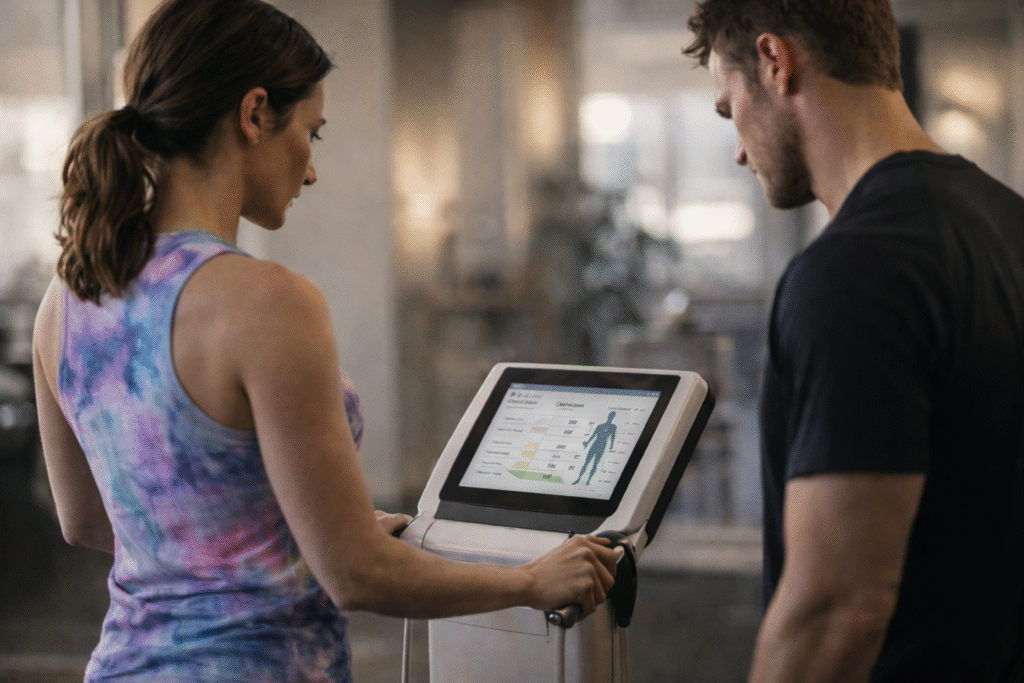
    Female athlete standing on a body composition scanner while looking at the results on a screen, wearing a tie-dye athletic top, with a trainer beside her in a modern wellness facility with soft lighting and neutral tones.

    Fitness culture often highlights dramatic transformation stories. Before and after photos suggest that major changes can happen quickly and effortlessly. These stories can be motivating but they often compress months or years of work into a simplified narrative. The slower phases of progress aren’t shown as much. In reality, sustainable improvements in strength and conditioning occur gradually. The body needs time to adapt safely and effectively.

    This is also why relying on simple measurements like BMI can be misleading when evaluating fitness progress. Weight alone does not always reflect improvements in strength, conditioning, or overall health. This topic is explored further in BMI and Fitness: Why the Number Doesn’t Tell the Whole Story.

    Why Consistency Becomes the Turning Point

    Over time, consistent training begins to compound. Strength gains become more noticeable; endurance improves, workouts become more productive and physical changes gradually begin to appear. The turning point often arrives quietly. What once felt difficult and required intense effort becomes manageable and routine. None of this happens without the early stage of training where progress feels slow or invisible. Consistency during this phase is what allows improvements to show up later.

    Why Real Fitness Progress Takes Time

    Woman leaving the gym with a gym bag over her shoulder and a water bottle in hand, wearing a pink athletic top and black leggings, warm natural light coming through the windows, calm and relaxed post-workout moment.

    The early stage of training often feels quiet and uneventful. Progress may seem slow, and visible changes can take time to appear. Beneath the surface the body is building the foundation for long term improvement. The nervous system is learning new movement patterns. On top of that, muscles and connective tissues are adapting to the demands of training. These early changes prepare the body for future gains in strength, endurance, and overall fitness.

    Real progress develops gradually through consistent effort. When patience is maintained during the early phase, those hidden improvements eventually begin to show.


    Interested in training with me or just want to connect?
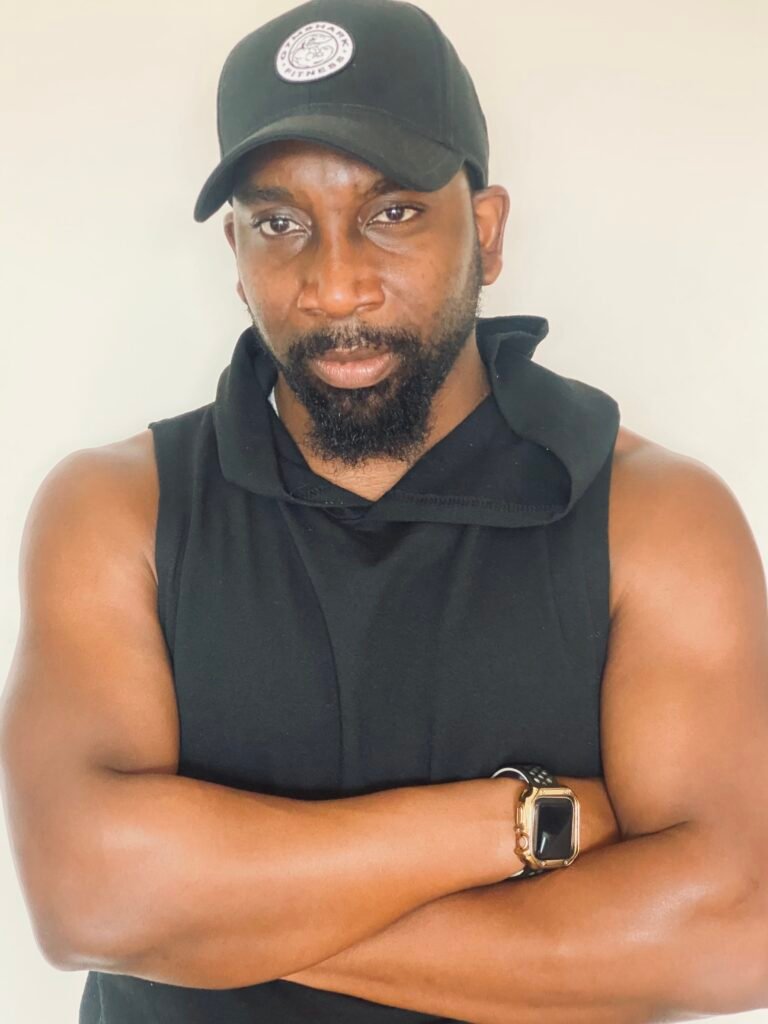
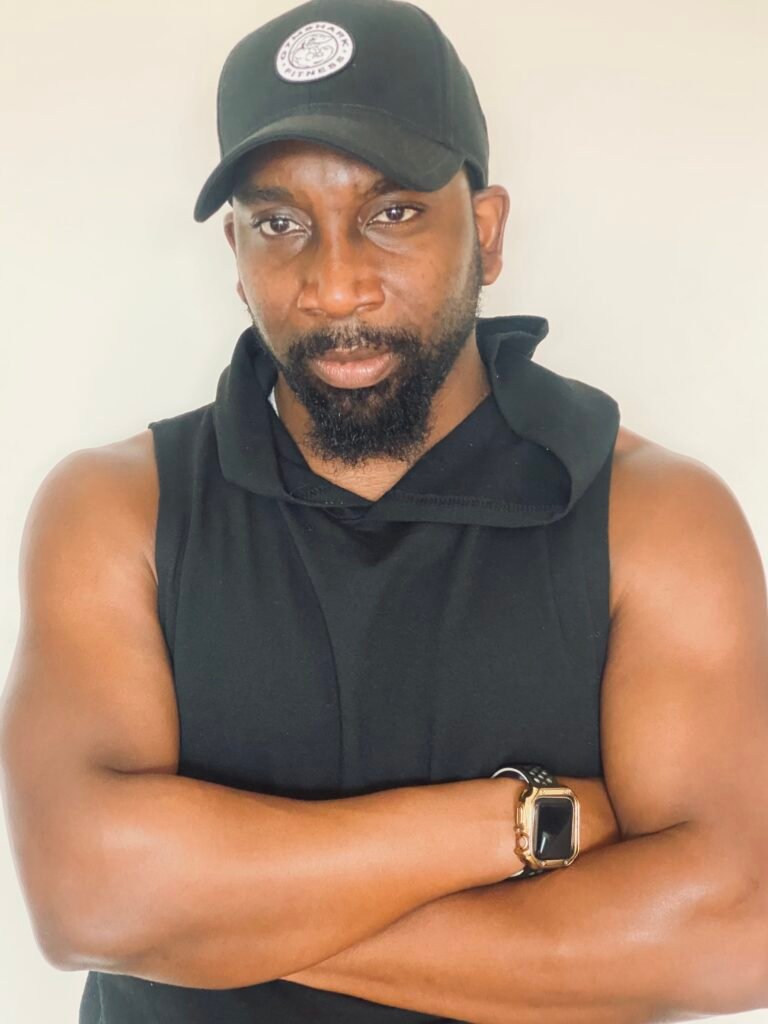
    Fitness professional standing with arms crossed, wearing a black sleeveless hoodie and cap, calm confident expression against a clean neutral background.


    Send a DM to @Litoswaay, or email Carlos@ConditionedLiving.com — I’d love to hear from you!
    Follow @ConditionedLiving for reflections, tips, and updates on mindset, strength, and everyday wellness.

    Stay in the loop by joining my free mailing list for updates and inspiration.

    Additionally, download the free guide/e-book “A Sustainable Start” to begin your journey toward sustainable strength and wellness, with a focus on consistency and balance.


  • Discipline from the Gym to Everyday Life: Making Fitness Part of Your Identity

    Discipline from the Gym to Everyday Life: Making Fitness Part of Your Identity

    You hit your workouts consistently, but the moment you step outside the gym, that discipline fades.
    Ever notice how some people just live their fitness, while for others it’s just another box to check?

    I’ll be the first to admit, I’ve had my own struggles with discipline. I can get my workout done, but then something like writing a blog post suddenly feels like the most tedious thing in the world. It’s funny how we can power through a tough set but stall on the small things that move us forward. I’ve learned that discipline isn’t just about doing the hard thing; it’s about showing up for yourself, no matter the context.

    Turning Exercise Into a Lifestyle, Not a Task

    For me, exercise is non-negotiable. I love training first thing in the morning, but life doesn’t always make that possible. After about noon, it gets a little harder; motivation dips and distractions pile up,  but I still make sure I get it done. The difference? I’ve made fitness part of my identity. When something becomes who you are, not just what you do, you stop giving yourself ways to back out.

    Many people separate “workout life” and “real life,” but the truth is, sustainable health happens when movement, mindfulness, and nutrition blend seamlessly into daily living. Fitness shouldn’t live in a silo. It should show up in small, natural ways that remind you you’re living actively.

    Maybe it’s:

    • Taking the stairs instead of the elevator.
    • Doing walking meetings instead of sitting all day.
    • Treating meal prep as an act of self-care, not a chore.

    Weaving fitness into your routine, as a form of alignment as opposed to punishment, can help with the transformation from effort into identity.

    Discipline and Intention: The Foundation of Lasting Change

    It always amazes me how, the moment a consultation starts, people assume a trainer’s goal is to “train them half to death.” Some even want me to be a drill sergeant of sorts. Somewhere along the way, fitness became akin to boot camp. People crave discipline but expect it to come through force, not trust. Discipline isn’t punishment. It’s a conversation between your mind and your body.

    Good habits are hard to build and easy to lose, but they’re never born from shame. When clients realize that I’m not here to manipulate or degrade them but to teach them how to fall in love with the process, something shifts.

    That’s when the magic happens because the transformation doesn’t start in the gym. It starts in the mind. They move with passion. They fall in love with the process. That’s when fitness becomes a part of you forever.

    Intention + Discipline = Sustainable Fitness

    Intention setting is about clarity and purpose. Deciding why you want to do something and how you want to show up in the process. For example, “I intend to prioritize my health by moving my body daily” creates a mental and emotional anchor, a guiding principle rather than a strict rule.

    Discipline is about follow-through; the structure, consistency, and self-control that turn intention into daily action, even when motivation dips. Discipline makes your intention tangible.

    Think of it like this:

    • Intention = direction (your “why”)
    • Discipline = momentum (your “how”)

    Without intention, discipline can feel rigid or empty, like forcing yourself through routines without meaning. Without discipline, intention stays in the realm of good ideas. When the two align, you create a sustainable, meaningful practice.

    For example:
    “I intend to feel strong and grounded in my body.”
    → leads to →
    “I discipline myself to show up for strength training three times a week.”

    That’s where transformation takes root; not just in your muscles, but in your mindset.

    What “Making Fitness Part of Your Identity” Really Means

    Making fitness part of your identity means reframing how you think about yourself and your habits. Instead of “I have to work out,” try “I’m someone who trains.” It’s a subtle but powerful shift.

    When your actions align with who you believe yourself to be, consistency follows naturally. You no longer negotiate with yourself about whether you’ll work out; it’s just what you do.

    Fitness also supports who you want to be: strong, focused, and confident. It’s not just about how you look. When your goals align with your values, showing up becomes easier.

    To help build that connection:

    • Anchor your routines in purpose (a morning ritual, journaling progress).
    • Keep accountability partners who share your goals.
    • Focus on progress markers beyond aesthetics such as endurance, strength, energy and mindset.

    Training is a mirror. What you practice under the bar shows up in your real life such as resilience, patience and commitment.


    Integrating Fitness Into Everyday Life

    If you want to make fitness second nature, build systems that support it. These aren’t hacks, they’re habits that reinforce who you are:

    • Schedule movement like a meeting. It’s not optional, it’s on the calendar.
    • Eat to fuel, not restrict. Nutrition supports performance, not punishment.
    • Set goals beyond looks. Maybe it’s running a 5K, hiking a new trail, or improving your deadlift.
    • Surround yourself with people who live actively. Energy is contagious.

    The goal isn’t perfection; it’s consistency with compassion. The best fitness identity is one that is strong, flexible, adaptable and blends with who you are.

    Mindset & Reflection

    When fitness becomes who you are, not just what you do,  you start to carry that strength into every part of your life. It shows up in how you handle stress, how you speak to yourself, and how you show up for others.

    At Conditioned Living, we believe in training for the long game. This is a place where strength, cardio, recovery, and mindset all work together to create lasting wellness.

    The gym is the training ground. But the real work?
    That’s how you live when you walk out the door.


    If this story resonated, I’d love to hear from you.
    You can DM me on Instagram @Litoswaay or @ConditionedLiving; or send an email to Lacayo.Carlos1@gmail.com, I’d love to connect.
    Also, follow @ConditionedLiving for updates, tips, and all things mindset and movement.

  • Try This Outdoor Workout to Maximize the Last Days of Summer

    Try This Outdoor Workout to Maximize the Last Days of Summer

    As summer winds down and the cooler months are around the corner, there’s no better time to take your workouts outside. Outdoor fitness isn’t just refreshing; it’s proven to boost mood, increase vitamin D, and add variety to your routine. You can take this workout anywhere, at the park, on a trail, or right in your backyard.

    It’s just four moves, no equipment needed, and it’ll take you about 30–40 minutes. Not only is it simple and  efficient, it’s a great way to get in a solid full-body session while enjoying the fresh air.

    Why Outdoor Workouts Work

    Before jumping into the routine, here are a few benefits of taking your training outdoors:

    • Fresh air and Sunlight: Outdoor workouts boost serotonin and vitamin D, both linked to improved mood and energy.
    • More Calorie Burn: Uneven terrain, wind, and natural surfaces make your body work harder than an indoor treadmill or gym floor.
    • Stress Relief: Exercising outdoors can help reduce stress and improves mental clarity.

    All of this makes outdoor workouts a perfect way to close out summer and carry into those early fall days

    Full-Body Outdoor Workout (No Equipment Required)

    Perform the following moves in a circuit. Complete 3–4 rounds, resting 60–90 seconds between each round.

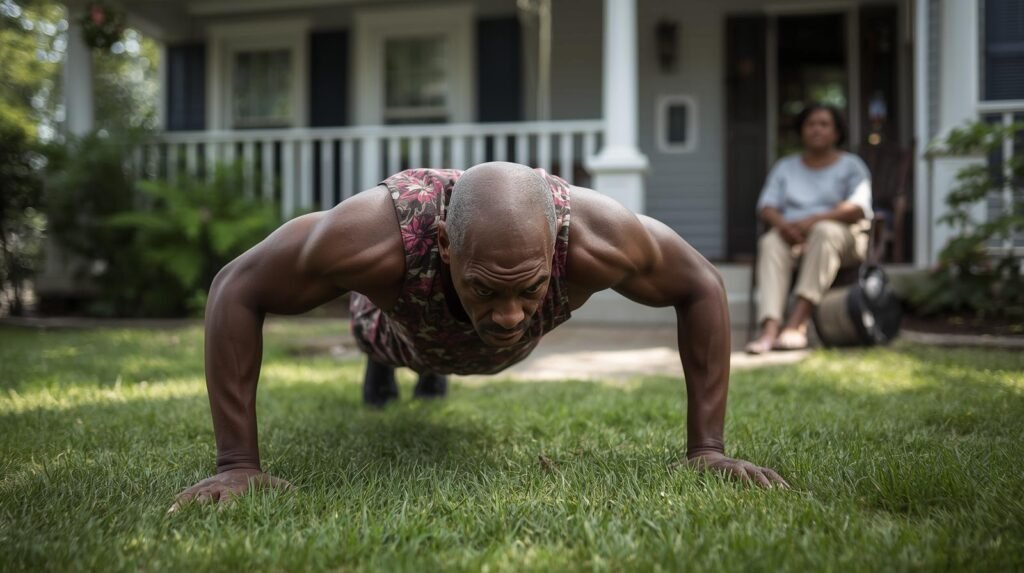
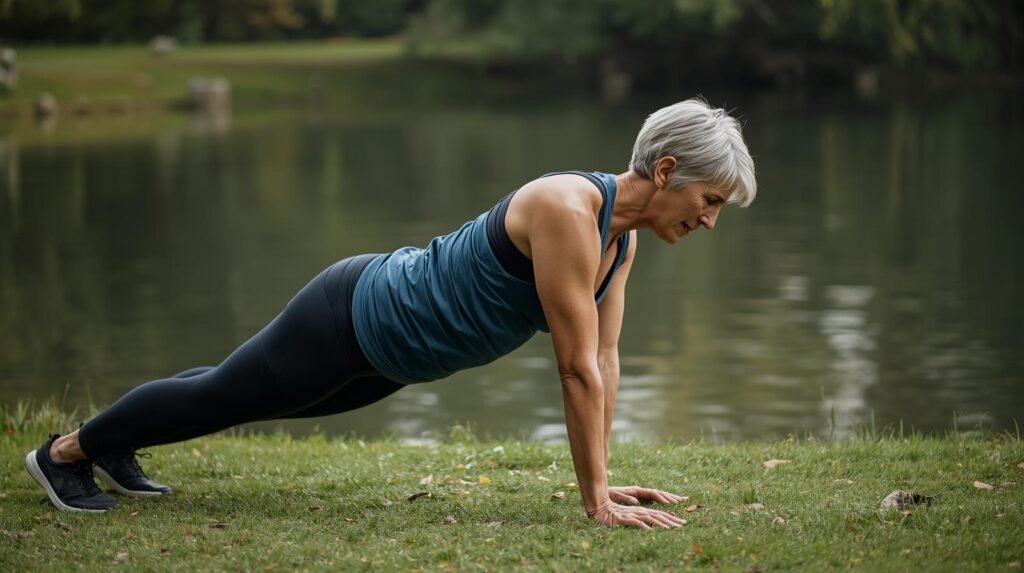
    1. Push-Ups (10–15 reps)

    A classic for building upper-body strength in the chest, shoulders, and triceps.

    • Pro tip: Try incline push-ups on a bench or decline push-ups with feet elevated for variety.

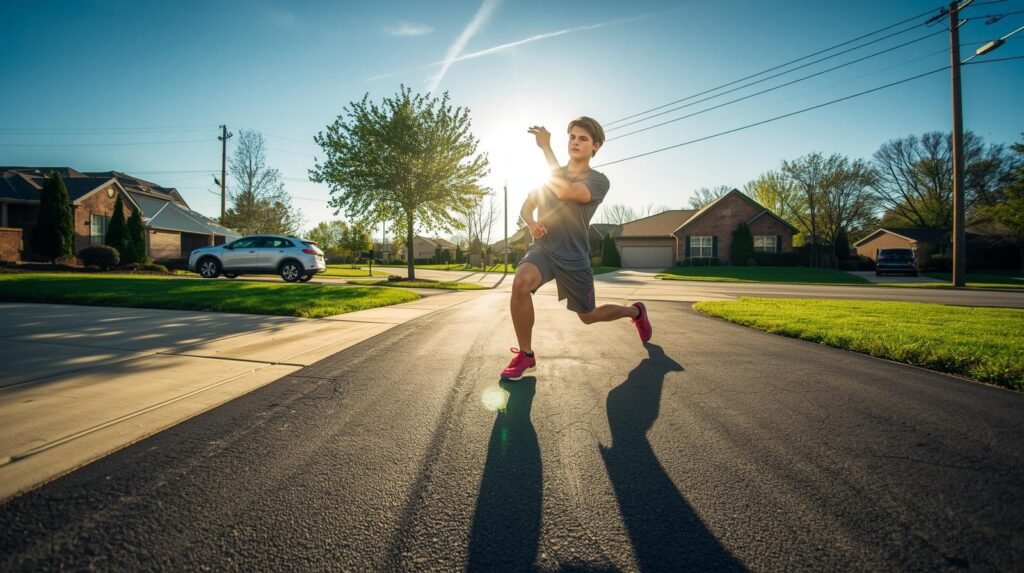
    2. Walking Lunges (10–12 steps per leg)

    Strengthens legs and glutes while improving balance.

    • Pro tip: Focus on long, controlled steps to stretch and activate the hips.

    3. Plank-to-Shoulder Taps (10-second plank, 10–12 taps per side)

    Challenges core stability while also working shoulders and coordination.

    • Pro tip: Keep hips steady and avoid rotating; quality over speed.

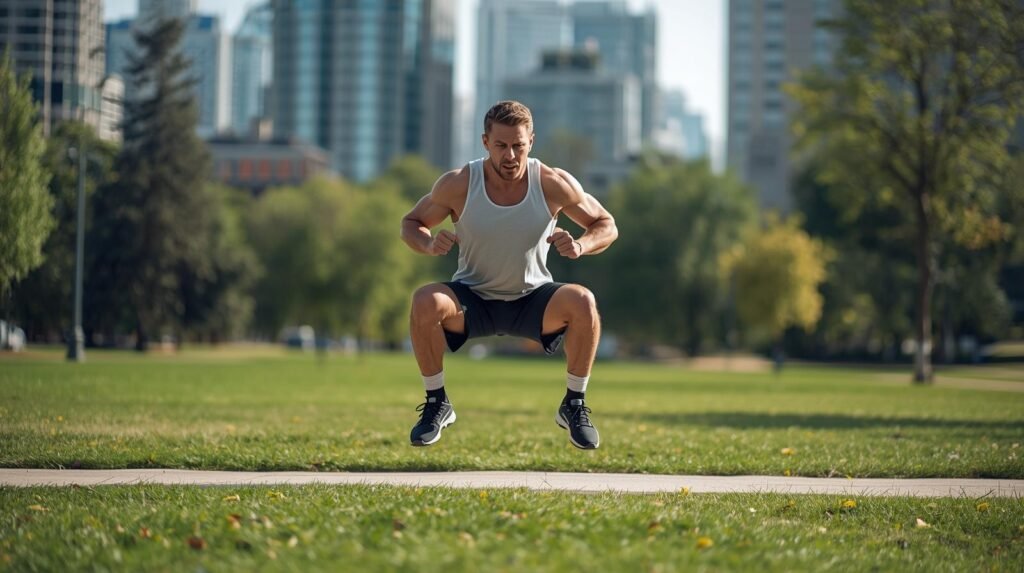
    4. Squat Jumps (8–12 reps)

    Adds power and conditioning to the circuit.

    • Pro tip: Land softly with knees slightly bent to protect your joints.

    Outdoor Run Finisher

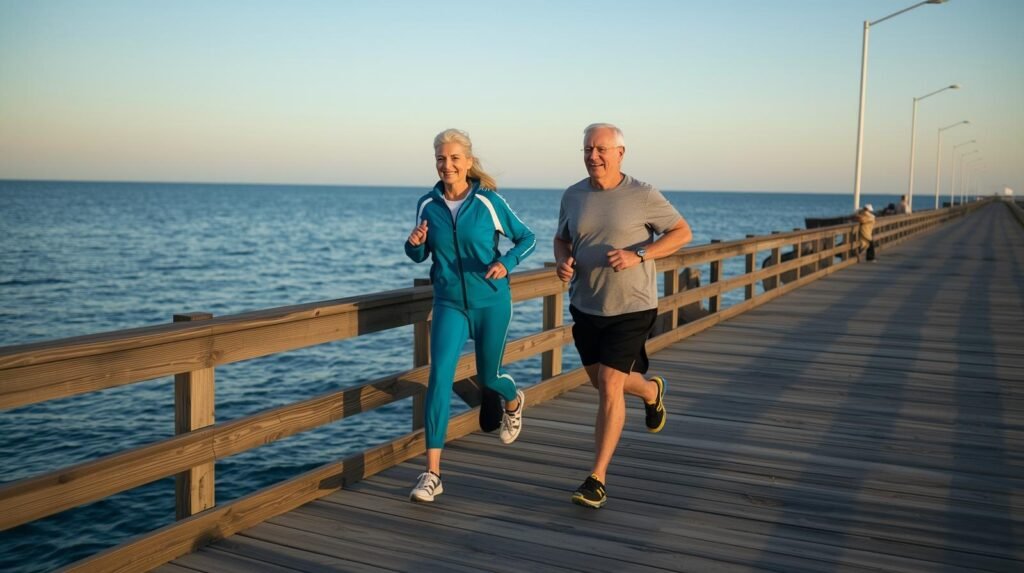
    Once the circuit is complete, finish strong with a run.

    • Steady Jog: 10–15 minutes at a moderate pace.
    • Intervals: 1 minute fast / 1 minute easy jog, repeated 6–10 times.

    This adds endurance and cardiovascular conditioning to round out the workout.


    Wrapping Up Summer Strong

    As the last warm days of the season slip away, outdoor workouts are a great way to balance strength, conditioning, and endurance while soaking in fresh air. This bodyweight-focused session requires no equipment, can be done anywhere, and leaves you with that energized feeling only an outdoor workout can provide.

    Make the most of these final warm, sunny days.

fb-share-icon
Instagram