Category: Uncategorized

  • Red Meat, Diet Culture, and Blood Pressure: What Heart Surgery Taught Me About Balance

    Red Meat, Diet Culture, and Blood Pressure: What Heart Surgery Taught Me About Balance

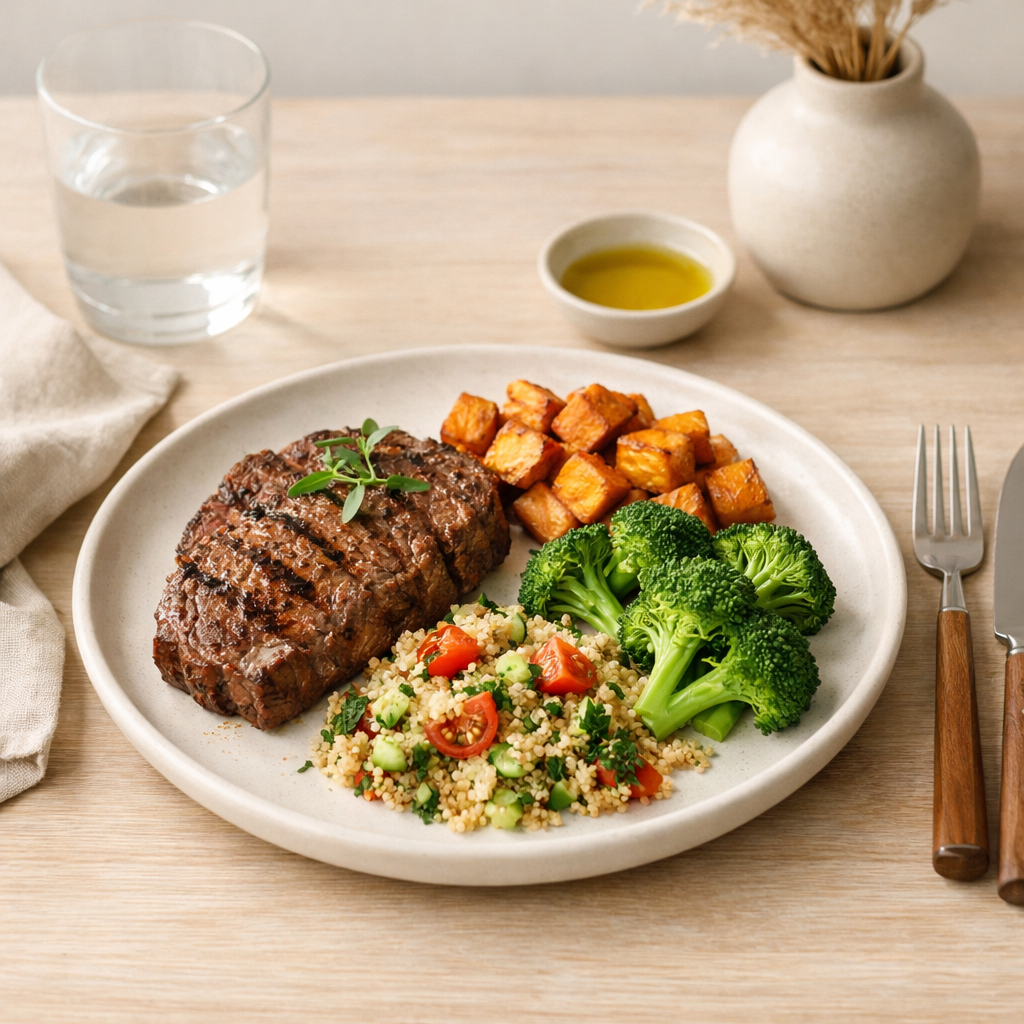
    Balanced whole-food meal featuring a grilled steak, roasted sweet potatoes, steamed broccoli, and quinoa salad on a neutral ceramic plate, set on a light wooden table with soft natural lighting in a minimal, modern dining setting.

    In 2023, I underwent triple bypass surgery. After heart surgery, I took my blood pressure twice a day, every day, for about a year and a half, morning and night. Same cuff, same routine. The goal was to make sure my blood pressure didn’t get too high, but I also wanted to understand my body a little better.

    Digital blood pressure monitor with cuff resting on a light wooden bedside table beside a glass of water and a small dish, illuminated by soft natural morning light in a minimal, neutral-toned wellness setting.

    Over time, a pattern started to show up that didn’t fit neatly into the nutrition rules I’d heard for years. Some of my best blood pressure readings followed meals like burgers or steak.

    That’s not a recommendation or a claim that red meat lowers blood pressure. It’s simply an observation that forced me to question how confidently we label foods as “good” or “bad” without context.

    How Diet Culture Shapes Food Rules

    Diet culture thrives on simplicity. Foods are either clean or dirty, safe or dangerous, disciplined or indulgent. Red meat, burgers, and foods associated with enjoyment often land on the “bad” list by default.

    Person seated at a light wooden table, viewed from the side/back, gazing at an empty ceramic plate with fork and knife, soft natural light creating a calm, reflective minimalist dining atmosphere.

    The problem is that this framing ignores the variables that actually matter: portion size, ingredient quality, frequency, stress, movement, and recovery. A burger eaten mindfully within a balanced lifestyle is not the same thing as chronic overconsumption in a sedentary, high-stress environment.

    When food becomes a moral test, people don’t eat better. They eat more anxiously, and anxiety has consequences of its own. This same pattern shows up in training, where discipline is often misunderstood as restriction rather than alignment, something I explored in Discipline from the Gym to Everyday Life.

    Eating Red Meat With Context

    When I started eating red meat again post-surgery, it wasn’t daily and it wasn’t mindless. It was usually part of a normal lunch or dinner.
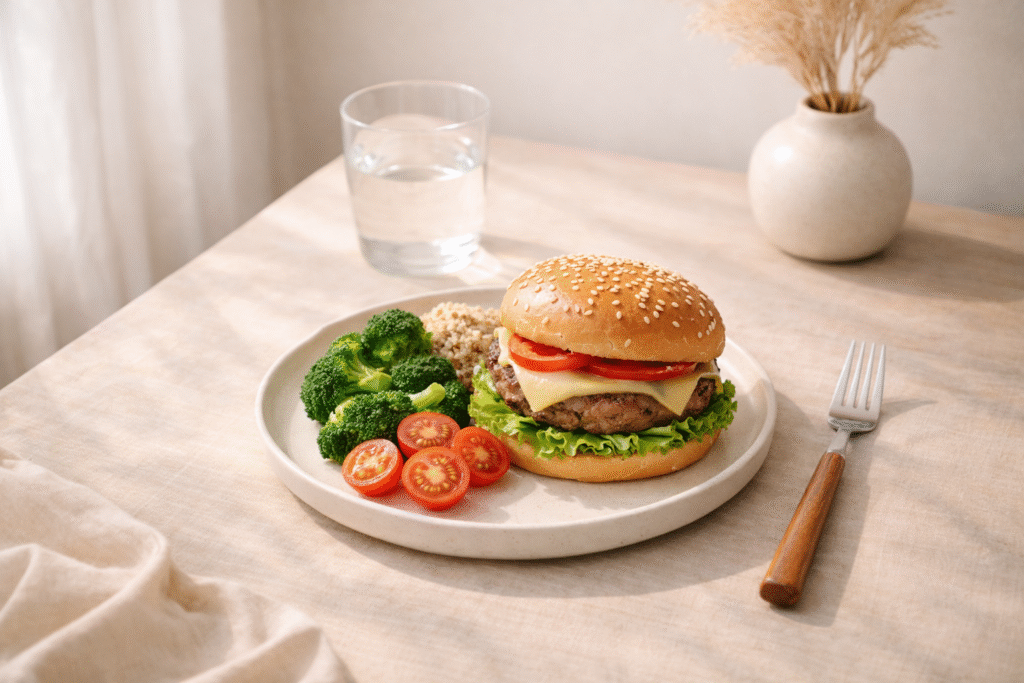
    Balanced burger meal with whole-food sides including broccoli, cherry tomatoes, and grains, plated on a neutral ceramic dish with fork beside it, set on a light wooden table in soft natural light, clean minimalist wellness setting.

    I had red meat roughly once every week to week and a half, paired with training, walking, sleep, and consistency. It felt supportive rather than restrictive.

    I’m not saying red meat caused better readings. I’m saying that when food felt supportive instead of stressful, my body responded more calmly. That distinction matters.

    Processed Meat, Cancer Risk, and What WHO Classifications Mean
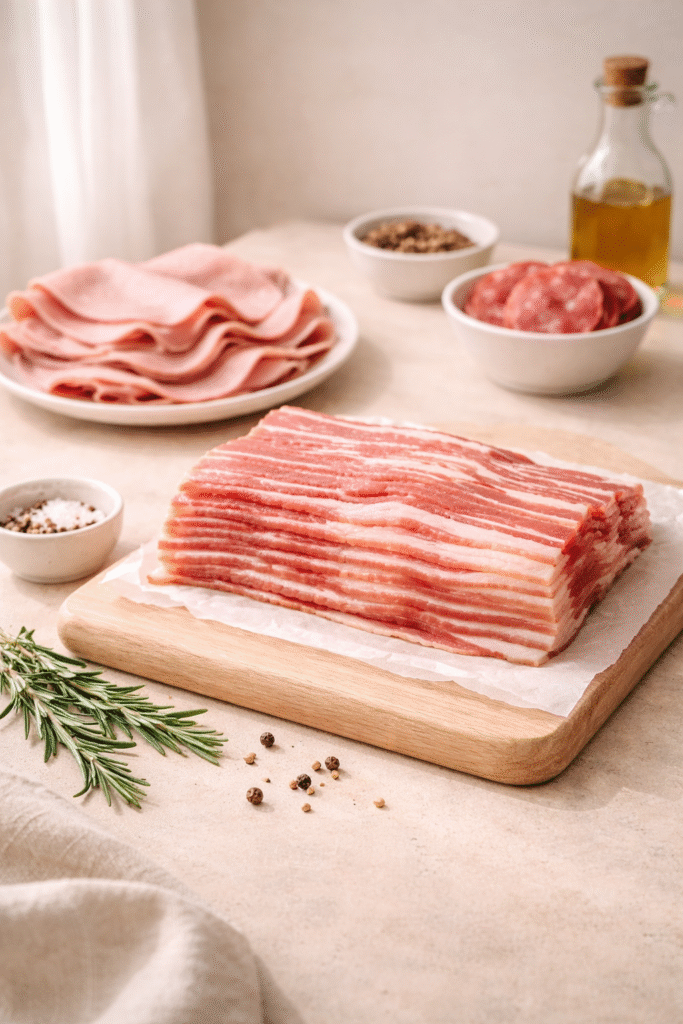
    Uncooked bacon arranged on parchment paper over a light wooden cutting board, styled with muted tones, soft natural lighting, and minimal editorial food photography composition.

    This is where nuance often gets lost.

    Bacon is classified as a processed meat because it’s preserved through curing, smoking, salting, or added preservatives. In 2015, the World Health Organization, through the International Agency for Research on Cancer, classified processed meats as Group 1 carcinogens.

    That classification reflects the strength of evidence, not the magnitude of risk.

    Tobacco smoke and asbestos are also Group 1 carcinogens. They’re grouped together because evidence exists, not because they carry the same level of danger. For processed meats, the primary association identified is colorectal cancer, and the risk is dose-dependent, increasing with higher and more frequent consumption.

    Many commonly cited figures reference roughly 50 grams per day, consumed regularly over time.

    What these classifications do not fully capture is individual lifestyle context. They don’t measure physical activity levels, cardiovascular health markers, metabolic health, or overall dietary patterns.

    Nutrition research continues moving away from single-food fear and toward pattern-based thinking, a shift explored in depth by Harvard’s Nutrition Source.

    Modern Nutrition Guidelines

    Nutrition guidance continues to evolve.

    While MyPlate remains the dominant USDA visual model, broader dietary discussions increasingly emphasize balance, protein adequacy, healthy fats, and limiting highly processed foods.

    Illustrated inverted food pyramid beneath the headline “Eat Real Food,” showing whole grains at the top and grouped sections of vegetables, fruits, proteins, dairy, and healthy fats in a clean editorial graphic style.

    Protein intake plays a critical role in recovery, strength development, and long-term resilience, something I discussed in Strength-Aware Conditioning: How to Improve Cardio Without Losing Strength.

    Most people remember visuals more than fine print. And visually, modern nutrition frameworks reflect a move away from rigid macronutrient hierarchies and toward balance, quality, and sustainability.

    For a broader public health interpretation of these shifts, see the Association of State and Territorial Health Officials.

    Health tracking didn’t give me definitive nutrition answers. It gave me perspective.

    Health isn’t built on perfect food choices. It’s built on patterns that support your life. Awareness beats fear, and context beats rigid rules.

    Food works best when it’s supportive, not moral.


    Interested in training with me or just want to connect?

    Fitness professional standing with arms crossed, wearing a black sleeveless hoodie and cap, calm confident expression against a clean neutral background.

    Send a DM to @Litoswaay, or email Carlos@ConditionedLiving.com — I’d love to hear from you.
    Follow @ConditionedLiving for reflections, tips, and updates on mindset, strength, and everyday wellness.
    Stay in the loop by joining my free mailing list for updates and inspiration.
    You can also download my free guide, A Sustainable Start, to begin building consistency and supporting your health with a calm, sustainable approach.


  • Healthy Holiday Habits: Simple Daily Practices That Keep You Grounded All Season

    Healthy Holiday Habits: Simple Daily Practices That Keep You Grounded All Season

    The holidays come with a mix of excitement and pressure. Your routine shifts. Your calendar fills up. There are moments of joy, moments of stress, and moments where you are just trying to keep up. It is easy to feel pulled in every direction. It is also easy to feel like you have to choose between enjoying the season and staying on track with your health.

    Well, the good news is you do not have to choose. You can enjoy the season and still feel grounded, steady, and energized. The key is not perfection; it’s small habits that bring you back to yourself each day. When everything around you speeds up, these simple practices help your mind and body slow down just enough to stay centered.

    This is the mindset behind healthy holiday habits. They are not meant to overhaul your life. They are meant to hold you in place while the season moves around you.

    Think Grounded, Not Perfect

    During the holidays, perfection is unrealistic. Consistency, however, is very possible, especially when it is flexible and bite-sized. When you shift your focus from doing everything to doing one or two small things that keep your energy steady, you set yourself up for a calmer and more enjoyable season.

    Think in terms of micro wins:

    • A five-minute stretch
    • One intentional meal
    • A moment without noise
    • A simple boundary that protects your peace

    These small actions are easier to repeat, and repetition is what keeps you grounded.

    Habit 1: A Five-Minute Movement Ritual

    A person wrapped in a knit sweater holding a warm mug near a window with soft winter light and a peaceful, cozy feeling.

    Movement is one of the fastest ways to reset your mind and warm up your body. It does not need to be long or intense. Five minutes is enough to get your blood flowing, loosen your joints, and remind your brain that you are taking care of yourself today.

    You can stretch, do some light mobility, take the stairs, some slow bodyweight reps or even walk around the block before your first cup of coffee. These easy practices support both strength and conditioning without overwhelming your day.

    If you want a simple conditioning routine that fits right into a short window, try the Jump Rope Complex. The goal is not to crush a workout every day. The goal is to stay connected to your body in small and doable ways.

    Habit 2: The One Warm Meal Rule

    This habit is simple. Anchor your day with one intentional, nourishing meal. It can be breakfast, lunch, or dinner. Choose whatever fits your schedule.

    A warm nourishing winter bowl with steam rising, set against cool neutral tones and soft cozy textures.

    During the holidays, eating patterns often shift. There are parties, family gatherings, treats, late dinners, and random snacks. Instead of trying to tighten up every meal, focus on grounding yourself with one warm and steadying plate of food. Something balanced, satisfying, and made with intention.

    It could be oatmeal with fruit. It could be eggs and greens. It could be a simple bowl with rice, protein, and vegetables. It could be warm soup that brings you back into your body after a long day.

    If you want ideas that keep things comforting but supportive, take a look at Classic Comfort Foods with a Healthier Twist.

    This practice is not about restriction. It is about nourishment. When you give your body one solid anchor each day, it handles the rest of the season with more ease.

    Habit 3: Protect One Daily Boundary

    Boundaries matter even more during the holidays because your attention gets pulled in every direction. You do not need a long list of rules. You only need one simple boundary that helps you stay steady.

    A ten-minute morning reset. A no-notifications window. A dedicated movement block. A nightly wind-down that you do not skip. A moment in the afternoon where you step away from everything, breathe, and regroup.

    A person enjoying quiet winter alone time with a warm mug while their phone sits aside, creating a peaceful, grounded moment.

    Boundaries work because they protect your energy. They give you space to pause instead of react. They help you enjoy the season without feeling drained by it.

    If you want a deeper mindset shift around discipline and daily structure, the ideas in Discipline from the Gym to Everyday Life connect perfectly.

    Habit 4: A Grounding Evening Ritual

    A cozy winter evening scene with soft warm candlelight, a journal, and blankets against cool surrounding tones.

    Evenings can easily turn into scrolling, snacking, or collapsing into bed without a transition. A grounding ritual helps you slow down, release stress, and prepare your mind for rest.

    This can be simple:

    • Light stretching
    • A warm shower
    • A cup of tea
    • Reading for a few minutes
    • Writing a short reflection

    These practices invite your body to shift out of the busyness of the day and into calm.

    If you want more winter-inspired ways to wind down, you will find great ideas in Cozy Conditioning. A steady evening ritual strengthens the other habits by helping you recover, reset, and breathe.

    How These Small Habits Add Up

    Healthy holiday habits work because they are consistent but not overwhelming. Small actions build real momentum. They make your day feel more structured. They help you stay anchored even when you cannot control your schedule. Over time, these tiny practices create a grounded rhythm that carries you through the New Year.

    You do not have to execute all of them at once. Start with one. Let it settle in. Let it support you. You can always add more as the season evolves.


    Gentle Encouragement

    Choose one small habit today. A stretch. A warm meal. A few quiet minutes. A simple boundary. Let that be your anchor. Let that be your win. The season will feel calmer and more intentional because of it.

    Interested in training with me or just want to connect?
    Send a DM to @Litoswaay, or email Carlos@ConditionedLiving.com. I would love to hear from you.
    Follow @ConditionedLiving for reflections, tips, and updates on mindset, strength, and everyday wellness.
    Stay in the loop by joining my free mailing list for updates and inspiration.

fb-share-icon
Instagram