Tag: Strength Training

  • BMI and Fitness: Why the Number Doesn’t Tell the Whole Story

    BMI and Fitness: Why the Number Doesn’t Tell the Whole Story

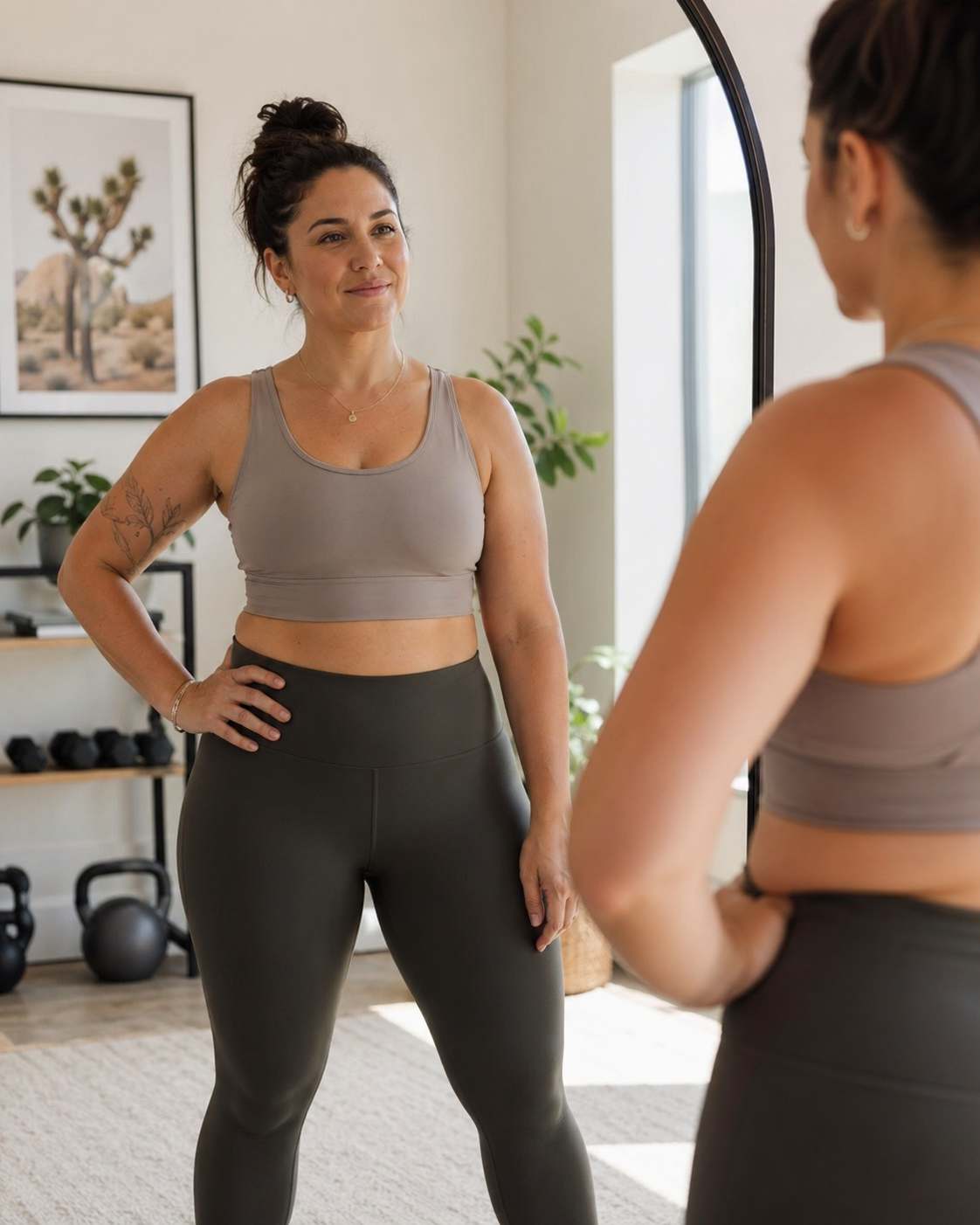
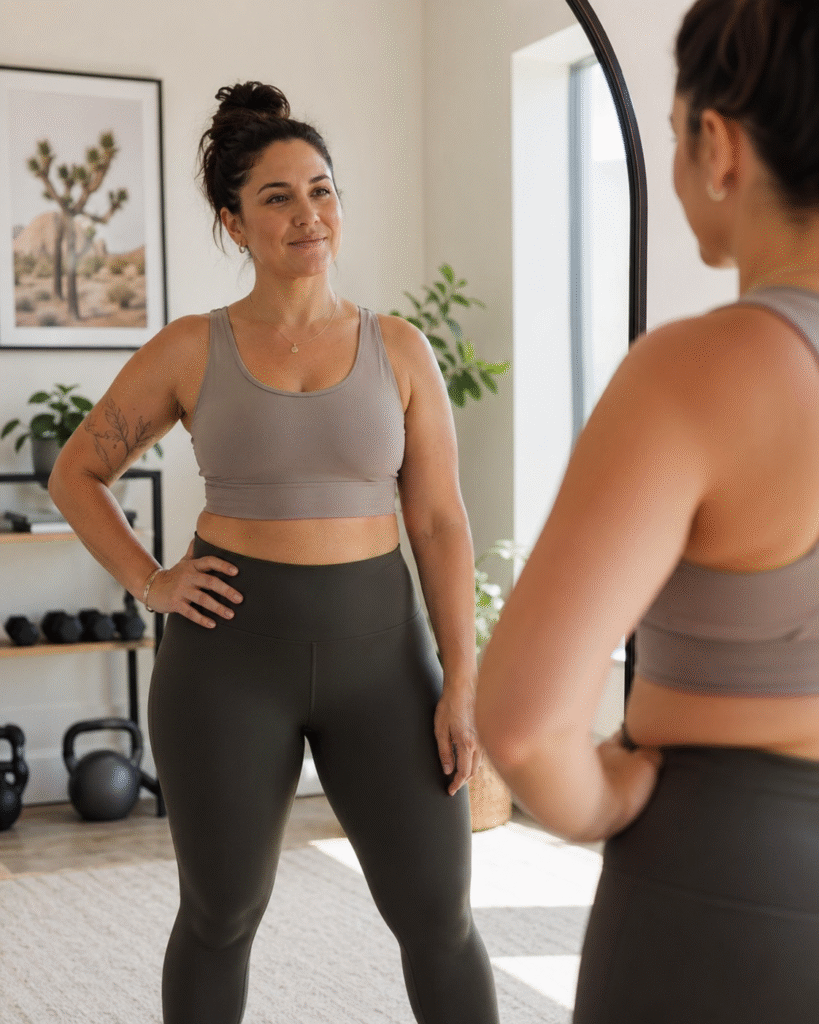
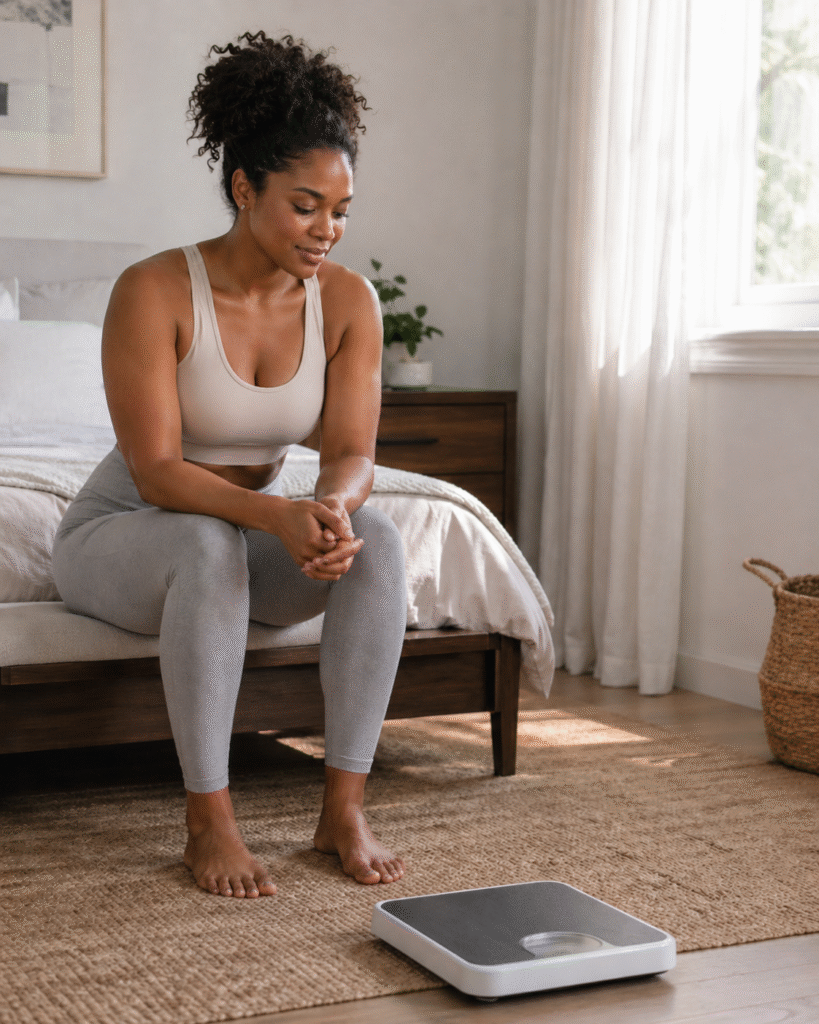
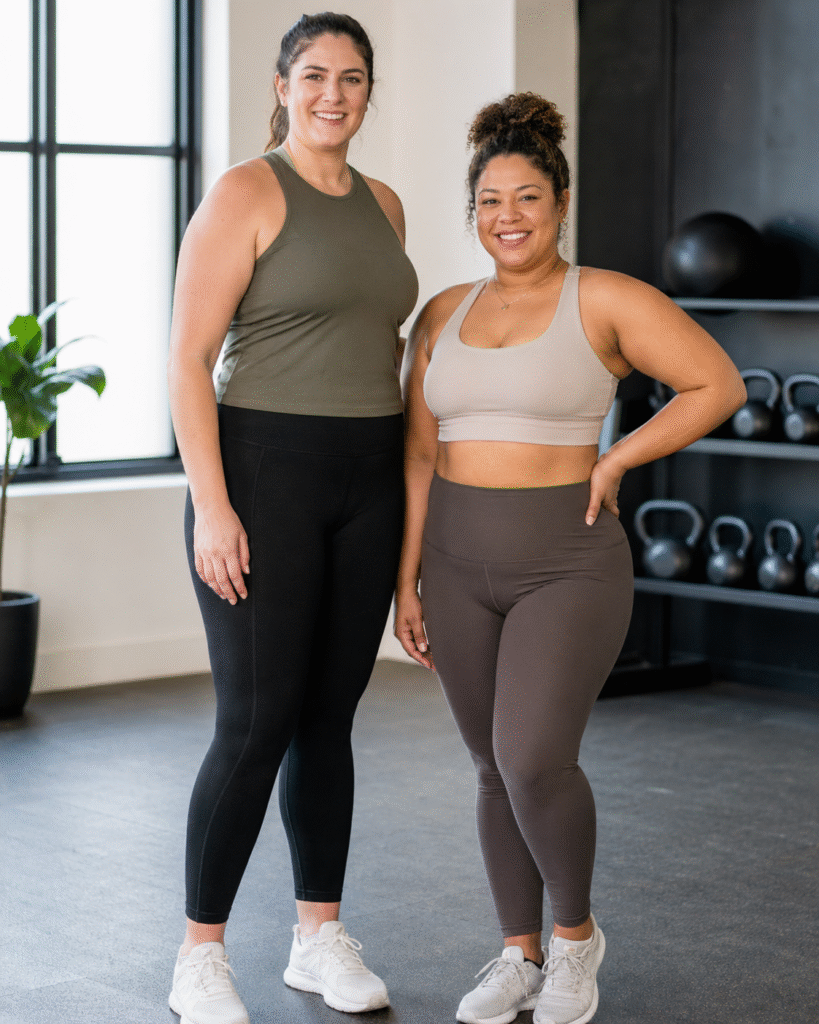
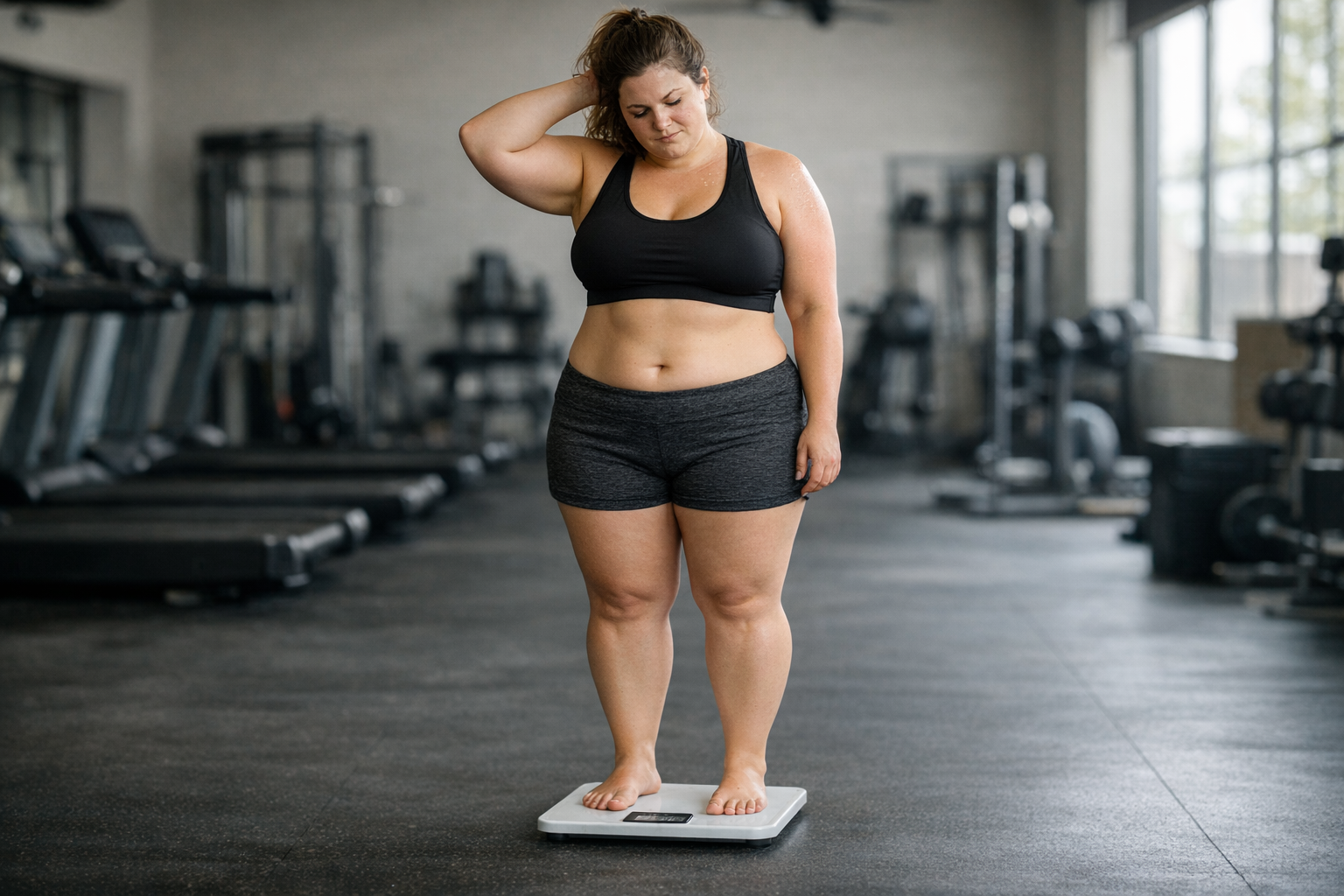
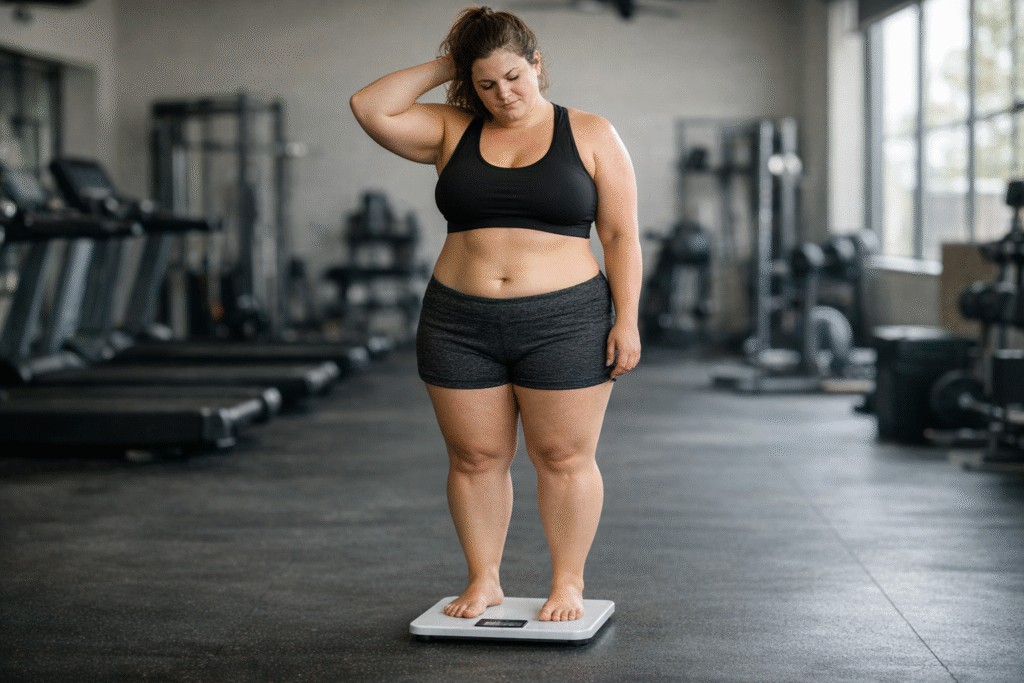
    Athletic woman with a slightly chubby build standing on a digital scale in a modern gym, looking thoughtfully at the number, illustrating confusion around weight, BMI, and fitness progress.

    Why BMI Can Be Confusing for People Who Exercise

    Many people begin exercising with the expectation that progress will show up clearly on a scale or through measurements like BMI. When those numbers don’t change the way they expect, it can create confusion about whether their efforts are actually working.

    Someone may begin strength training, improve their conditioning, and develop consistent exercise habits. They feel stronger, move better, and notice their workouts becoming more structured. Then they check their BMI and see little change, or sometimes even a higher number.

    Moments like this reveal an important truth about BMI: while it can provide general information about population health trends, it does not always capture what is happening within an individual fitness journey.

    Understanding where BMI is helpful and where it falls short can make it easier to interpret progress more realistically.

    What BMI Was Originally Designed to Measure

    BMI, or Body Mass Index, was created in the 1800s by a Belgian statistician named Adolphe Quetelet. His goal was not to evaluate individual fitness or health. Instead, the formula was designed as a simple way to study weight patterns across large populations.

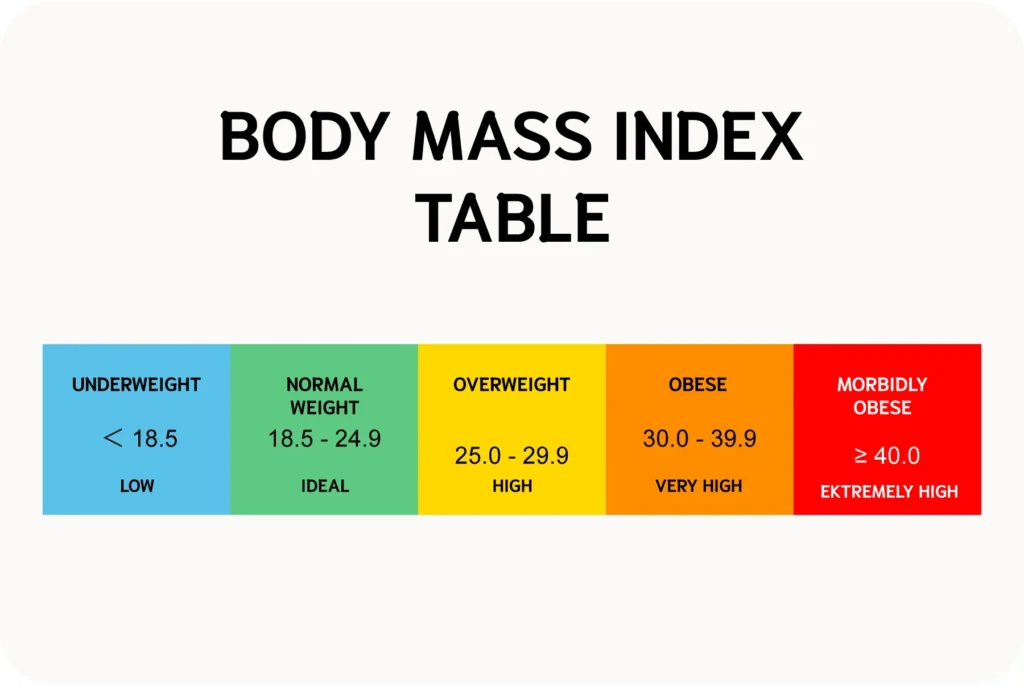
    Color-coded Body Mass Index (BMI) chart showing weight categories from underweight to morbidly obese with BMI ranges used to classify body weight.

    The calculation compares a person’s weight to their height and produces a number that places them into categories such as underweight, normal weight, overweight, or obese. Because the formula is simple and easy to apply, it has become widely used in public health and medical settings.

    However, BMI was never designed to evaluate body composition or athletic performance. It simplifies the body into a single number, which means it cannot capture the full complexity of how someone trains, moves, or builds strength.

    Why Muscle Mass Can Make BMI Misleading

    One of the biggest limitations of BMI becomes clear when people begin resistance training.

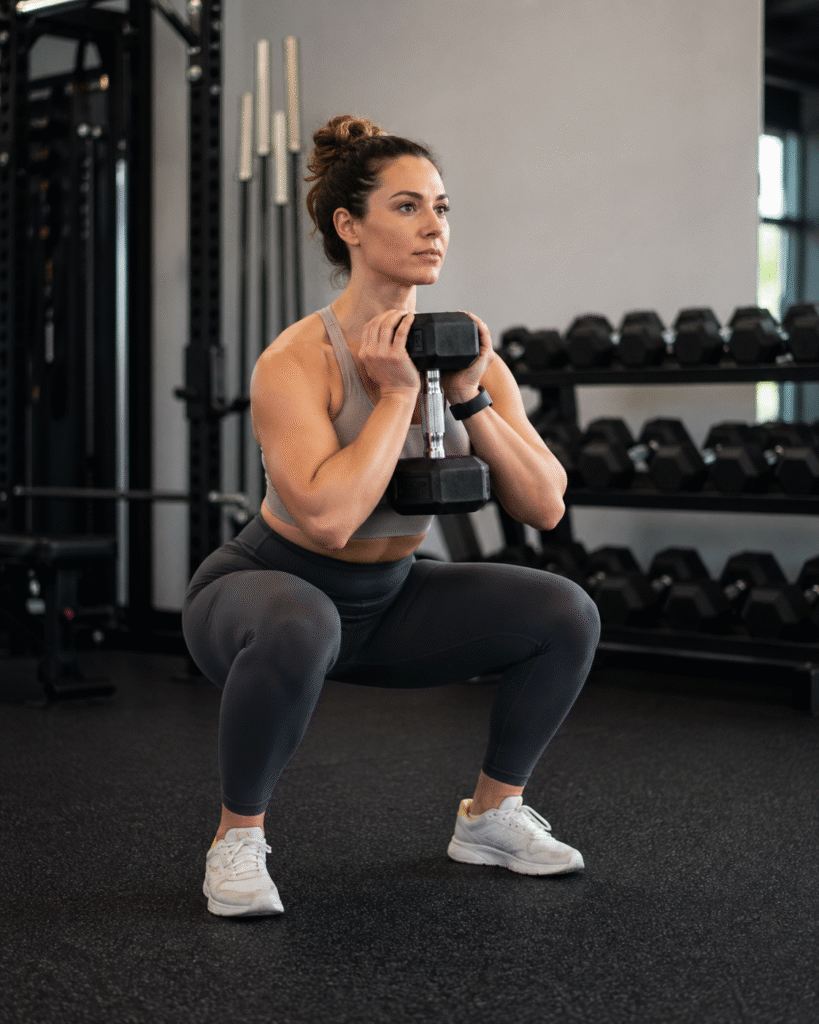
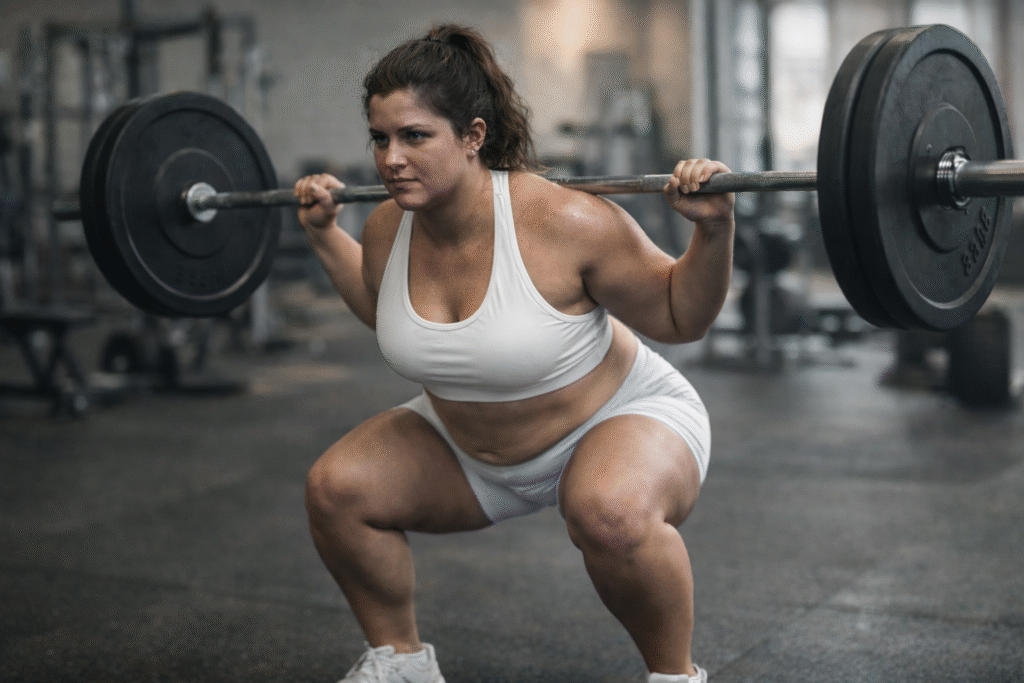
    Strong female athlete performing a barbell squat in a gym, illustrating strength training and how muscular fitness does not always align with BMI measurements.

    Muscle tissue weighs more than fat by volume. As someone begins lifting weights and building muscle, their body composition may improve even if their overall weight stays the same. In some cases, their weight may increase slightly as muscle develops. In fact, learning how to train with enough resistance to stimulate muscle growth is something I discuss in “Are You Lifting Heavy Enough? A Simple Guide to Muscle Growth and Fat Loss.”

    Because BMI only looks at total body weight relative to height, it cannot distinguish between muscle and fat. A person becoming stronger and leaner could technically move into a higher BMI category despite improving their physical fitness.

    Body Composition vs BMI: What the Number Misses

    Another limitation of BMI involves body composition.

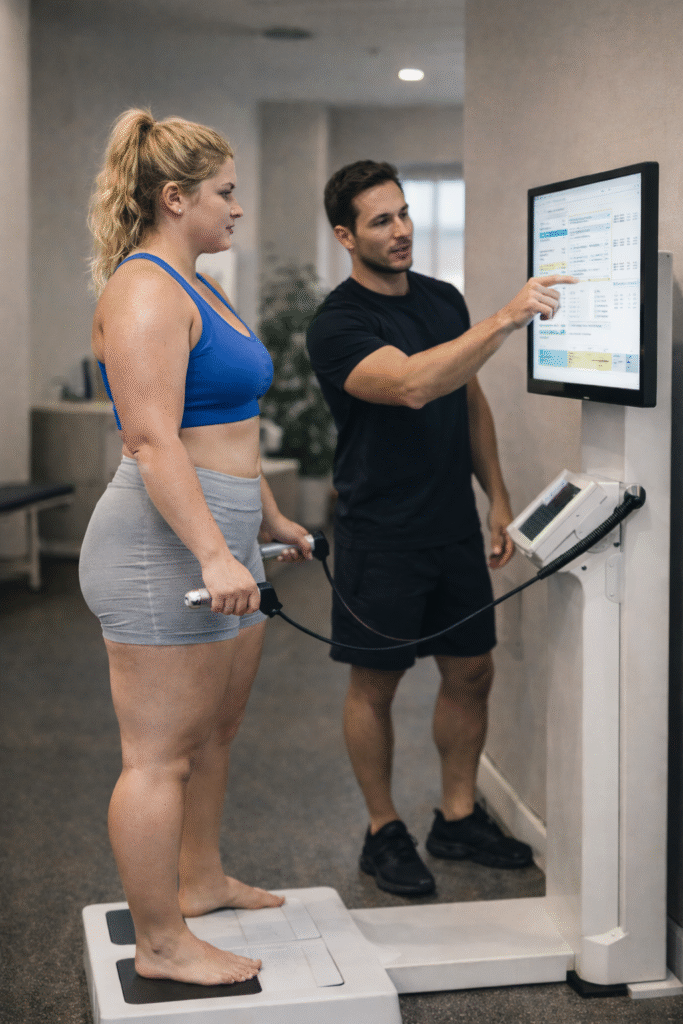
    Athlete undergoing a body composition scan while a trainer reviews results on a screen, illustrating modern fitness testing beyond BMI measurements.

    Two people can have identical BMI scores while having completely different physical profiles. One person may carry higher levels of muscle and lower body fat. Another person may have lower muscle mass and higher body fat.

    Even though their BMI numbers are identical, their strength levels, metabolic health, and physical resilience could be dramatically different. BMI measures total body mass, but it does not measure what that mass is made of.

    Real Fitness Progress Goes Beyond Body Weight

    Fitness progress often appears in ways BMI cannot measure.

    Strength improvements, better endurance, and faster recovery between workouts are all meaningful signs of physical adaptation. In fact, this difference between real training progress and simply going through the motions is something I explored more deeply in “Are You Actually Building Strength or Just Exercising?”

    Someone who consistently trains may find that exercises feel smoother, movements become more controlled, and their conditioning steadily improves.These changes reflect real progress even if they do not immediately change a height-to-weight ratio.

    Why BMI Is Still Widely Used in Health Guidelines

    BMI remains widely used because it is simple and inexpensive to calculate. Public health systems rely on metrics that can be applied quickly across large groups of people. For population-level trends, BMI can provide useful general insights.

    But for individuals who are actively training, the number often tells only part of the story.

    Trainer reviewing BMI and body composition data on a tablet with a client during a health consultation, illustrating modern fitness and health assessment.

    A better way to think about fitness progress is to consider a broader picture. Strength, conditioning, consistency, and sustainable habits all play important roles in long-term health.

    Charts and formulas may provide helpful context, but they rarely capture the full reality of someone’s training journey.

    In the long run, real progress is often reflected not just in numbers, but in how the body moves, performs, and adapts over time.


    Interested in training with me or just want to connect?
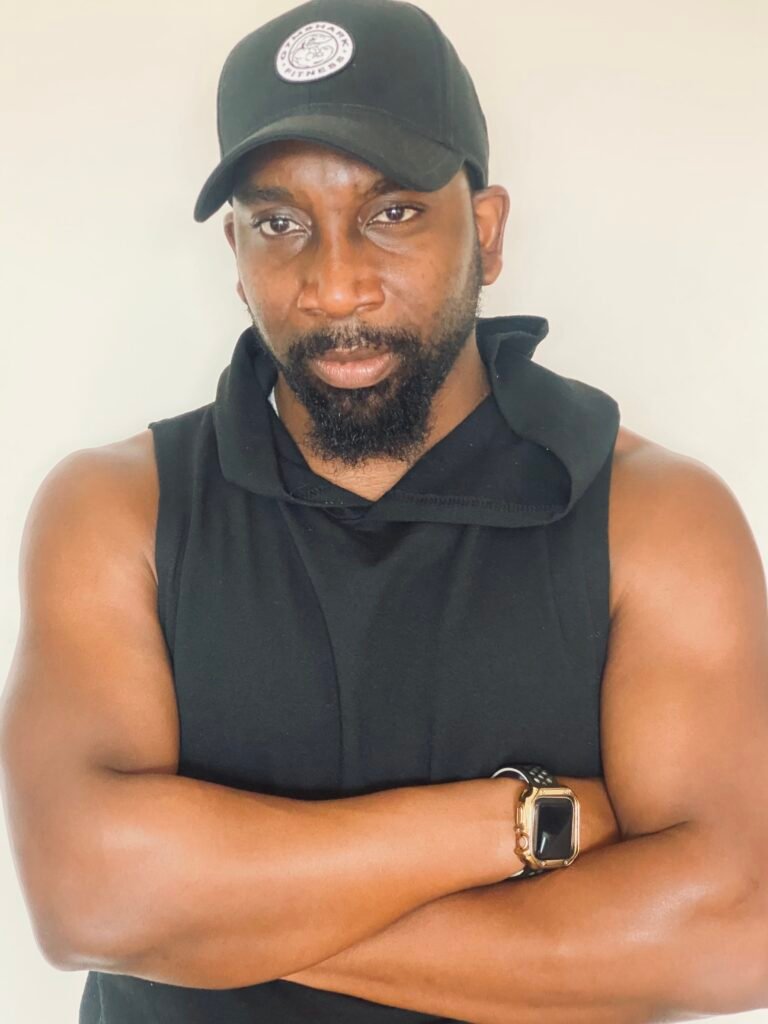
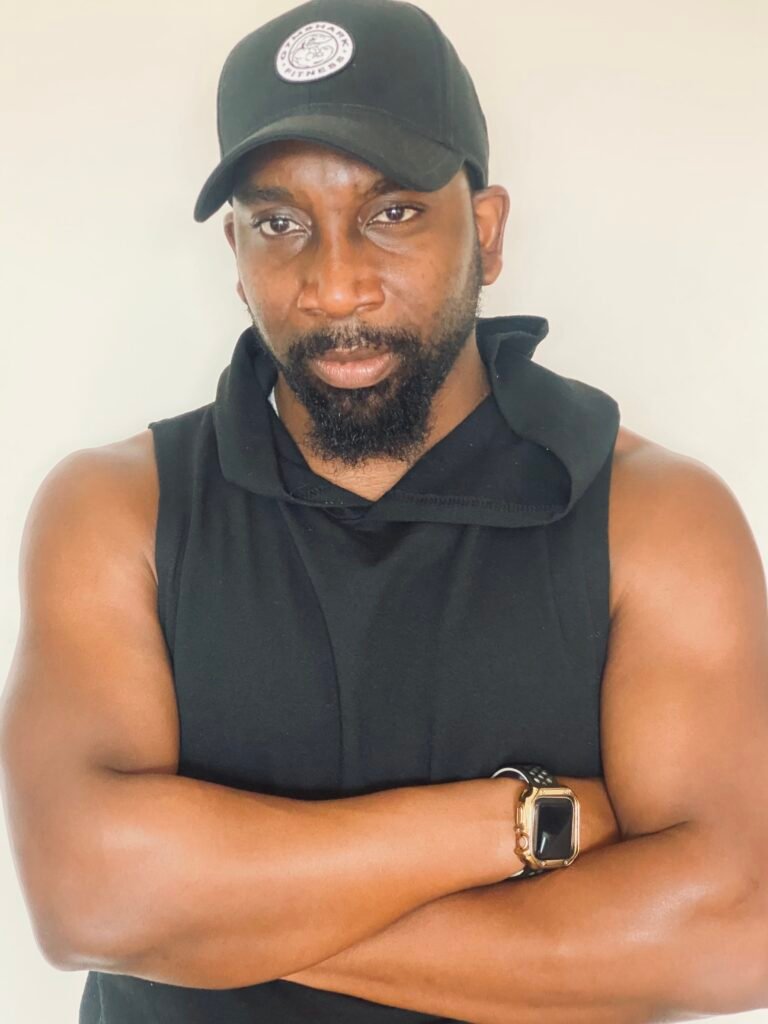
    Fitness professional standing with arms crossed, wearing a black sleeveless hoodie and cap, calm confident expression against a clean neutral background.

    Send a DM to @Litoswaay, or email Carlos@ConditionedLiving.com.

    If you’re looking for a calm, realistic way to get started, you can also download my free guide, A Sustainable Start, which walks you through building strength, conditioning, and consistency without burnout or pressure.

    Follow @ConditionedLiving for reflections, tips, and updates on mindset, strength, and everyday wellness. Stay in the loop by joining my free mailing list for updates and inspiration.

  • Are You Actually Building Strength or Just Exercising?

    Are You Actually Building Strength or Just Exercising?

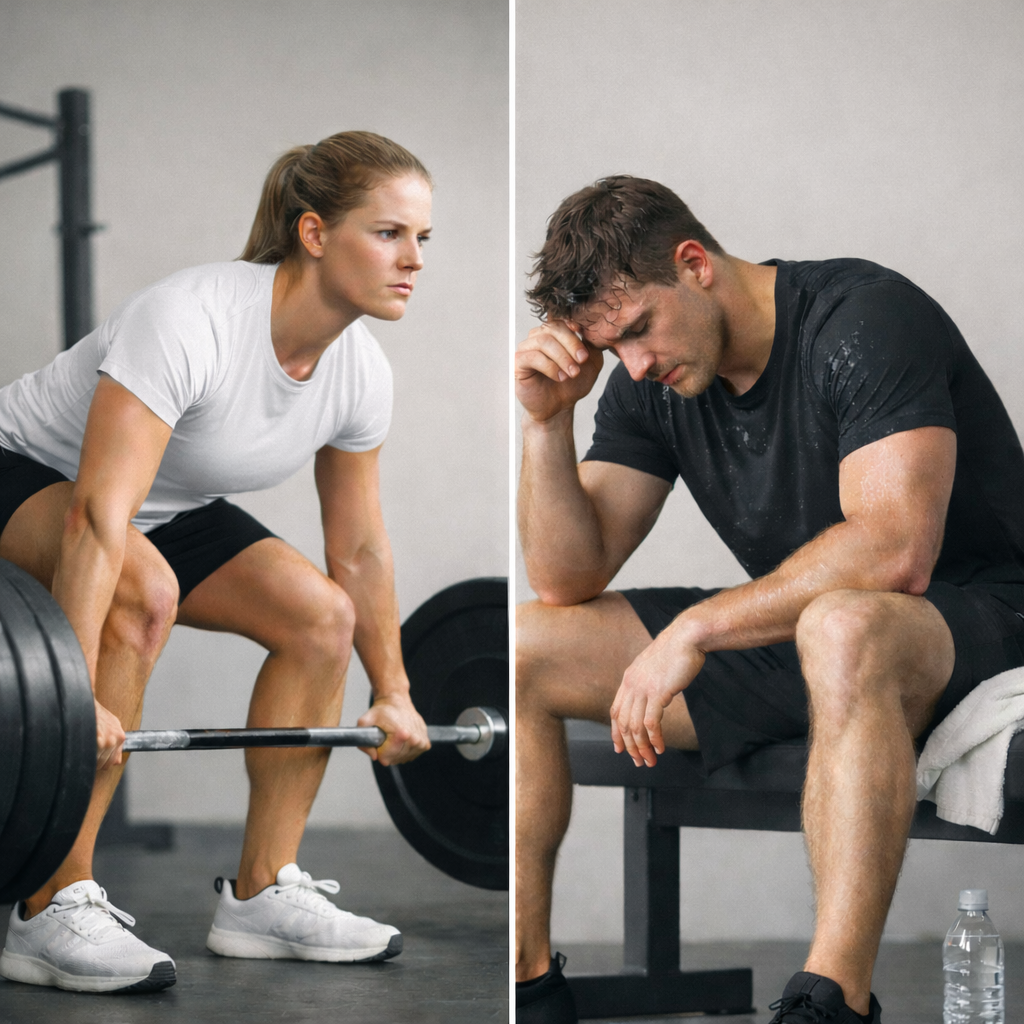
    Split-image editorial fitness photo in a minimalist modern gym. Left side shows a focused female athlete in a white shirt performing a heavy barbell deadlift. Right side shows an exhausted male athlete in a black shirt sitting on a bench, sweating, with a towel and water bottle nearby. Neutral tones and soft natural lighting create a calm, cinematic mood.

    There is a particular kind of satisfaction that comes from leaving the gym completely exhausted. You are sweating, your heart is pounding, your muscles feel heavy, and there is a comforting sense that you “did something.” For many people, that feeling becomes the primary measure of a good workout. If it was hard, it must have been effective. If you are tired, you must be making progress.

    That assumption deserves a closer look.

    Feeling worked and actually building strength are not the same thing. Yet the two are constantly confused. This misunderstanding is one of the most common reasons people train consistently for months, sometimes years, without seeing meaningful improvements in strength, body composition, or performance.

    Why Feeling Tired Doesn’t Always Mean You’re Getting Stronger

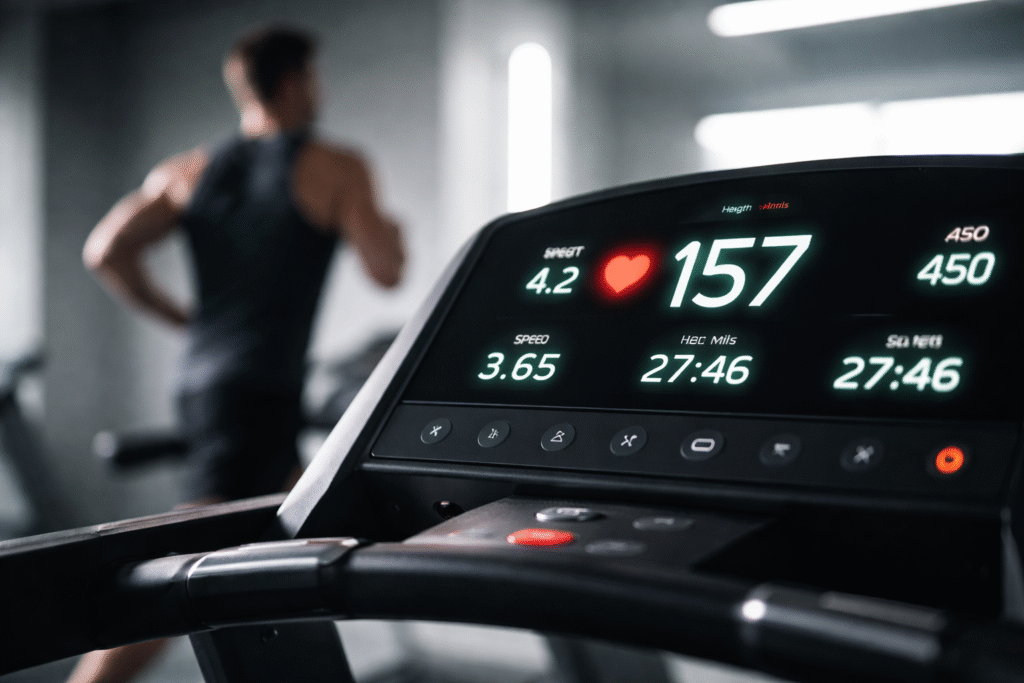
    Exercising is very good at creating the illusion of progress because it provides immediate feedback through physical sensations. A high heart rate feels athletic. Muscle burn feels productive. Next-day soreness feels like proof that something “worked.” These signals are loud, emotional, and convincing.

    Conceptual fitness image of a sleek treadmill console in a modern minimalist gym. The digital display glows, highlighting heart rate and workout metrics, while an athlete runs blurred in motion in the background. Neutral tones and soft lighting create a cinematic, editorial mood.

    The problem is that your body does not change based on how tired you feel. It changes in response to the stimulus you apply repeatedly and progressively. You can push yourself to exhaustion with random circuits or constantly varied workouts and still never build meaningful strength. Fatigue is easy to accumulate but adaptation is a little more specific.

    Strength Training vs Exercising: Understanding the Critical Difference

    Exercising is centered around activity. It is movement for calorie burn, stress relief, or general fitness. There is nothing inherently wrong with that. General exercise is beneficial for health and well-being.

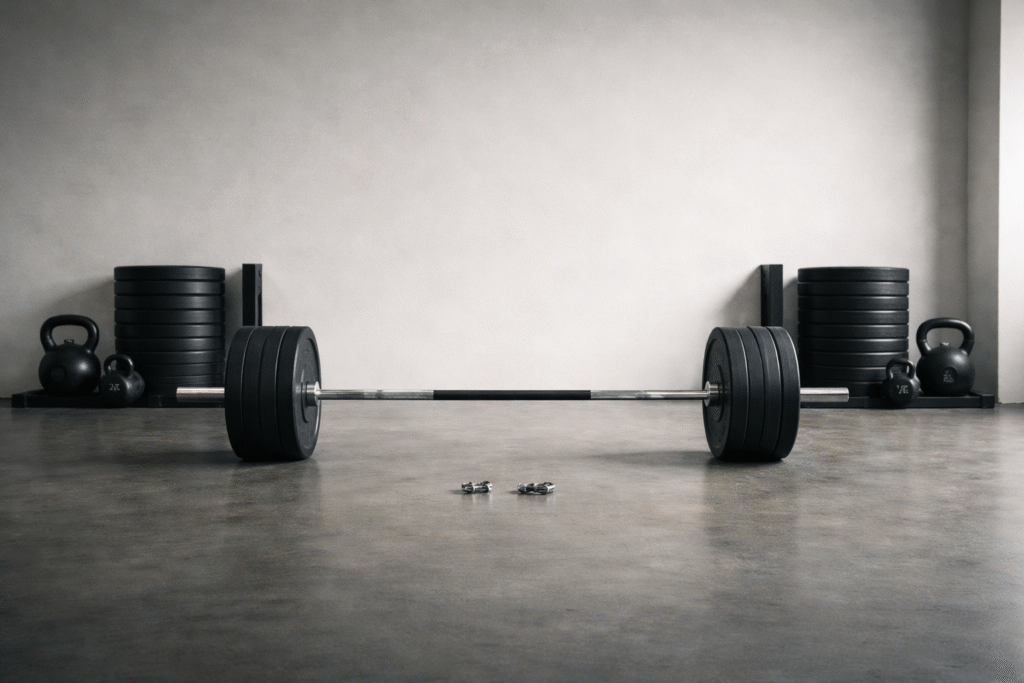
    Organized minimalist gym scene with a barbell centered symmetrically on a polished concrete floor. Neatly stacked black weight plates and kettlebells sit evenly on both sides. Soft natural lighting and neutral tones create a clean, structured, editorial fitness aesthetic conveying discipline and order.

    Training, however, is designed to produce adaptation. Strength training follows structure, uses measurable variables, and applies progressive overload over time. Instead of asking, “How hard did this feel?” training asks, “What is improving?”

    Exercising focuses on effort and training focuses on development. Confusing the two is where stagnation begins.

    Signs You’re Actually Building Strength in the Gym

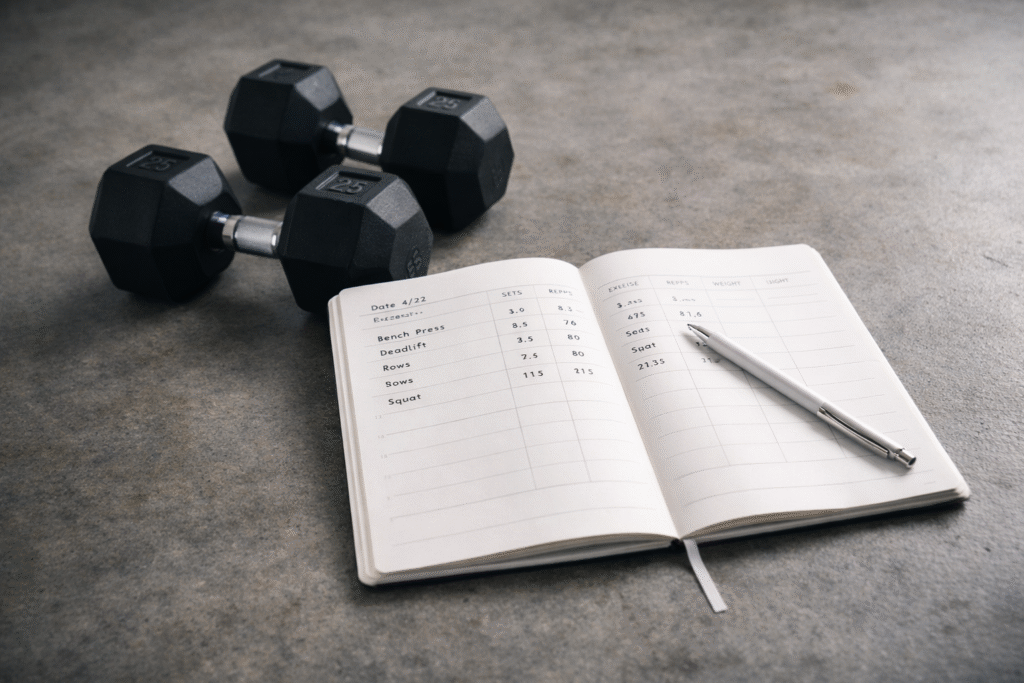
    Open fitness tracking journal on a gym floor beside black hex dumbbells. A pen rests on the page showing logged workouts with exercises, sets, and reps. Minimalist modern lifestyle editorial style with neutral tones and soft lighting.

    Real strength gains leave measurable clues, even when progress feels slow. You may be building strength if you notice that weights are gradually increasing, repetitions improve at the same load, movements feel more stable, and recovery becomes easier between sessions.

    Strength progress is rarely dramatic day to day. It accumulates quietly through consistency and progression. These are performance-based indicators rather than emotional ones.

    Without tracking, however, these improvements are easy to miss or may never occur at all.

    Signs You’re Exercising Without Making Strength Progress

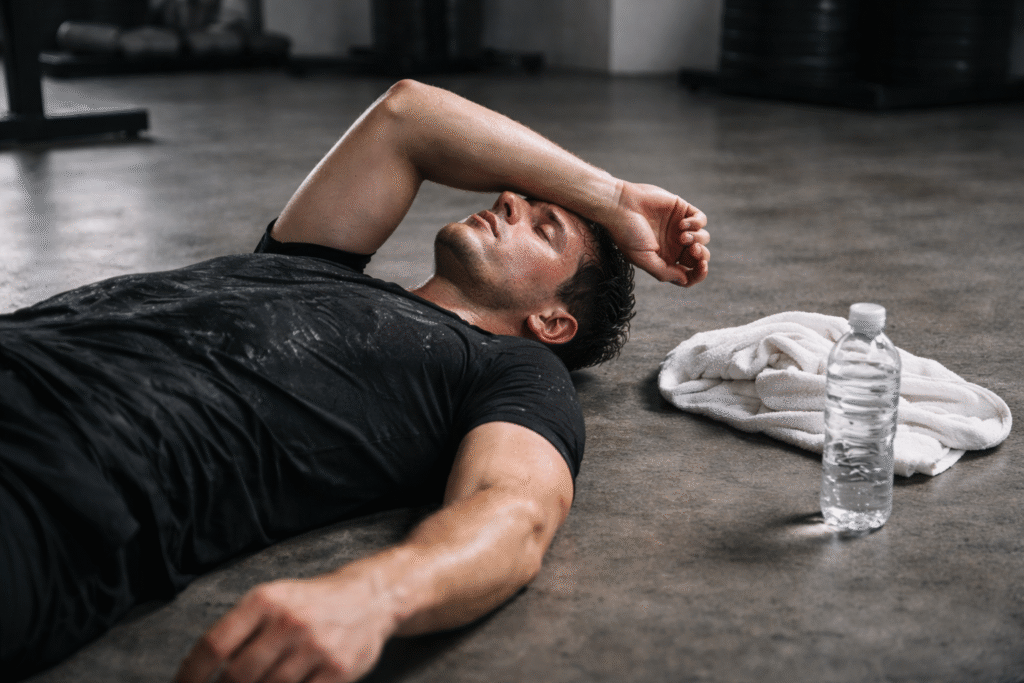
    Exhausted athlete lying on a gym floor after a workout, wearing black athletic clothing. A white towel and water bottle rest nearby. Dramatic, moody lighting creates a cinematic editorial feel, conveying fatigue and burnout rather than triumph.

    Many people drift unknowingly into a pattern of high effort without adaptation. Workouts feel consistently difficult, yet strength does not improve. There is little awareness of what was lifted last week. Programs change frequently. Sweat becomes the success marker. Fatigue becomes chronic.

    High effort without progressive overload is simply repeated stress. Repeated stress without adaptation becomes wear and tear rather than growth.

    Why Progressive Overload Matters for Muscle and Strength Gains

    Strength training works because it challenges the body in a way that demands change and that challenge must increase over time. If the load never progresses, the stimulus eventually becomes maintenance at best.

    Strong female athlete performing a heavy barbell back squat in a modern minimalist gym. Cinematic lighting highlights muscular definition and an intense, focused expression. Clean, editorial strength training aesthetic with neutral tones.

    This is why understanding intensity is essential. Many people work hard but not hard enough in a way that forces adaptation. If this sounds familiar, give Are You Lifting Heavy Enough? A Simple Guide to Muscle Growth and Fat Loss a read. It clarifies one of the biggest gaps in most training routines.

    Conditioning vs Strength Training: How to Balance Both

    Athlete riding an air bike in a modern minimalist gym, captured with cinematic lighting. The man wears black athletic clothing and shows intense focus. A loaded barbell sits blurred in the background, creating a dynamic editorial strength and conditioning aesthetic

    Conditioning workouts create strong sensations of effort, but they do not automatically build strength. Conditioning improves cardiovascular health, endurance, and work capacity. Strength training improves force production, muscle development, and structural resilience.

    These systems support each other when programmed intentionally. Structured pairings like those discussed in Spin Bike and Deadlift Combo: A Lower Body Strength and Conditioning Circuit succeed because they blend modalities with purpose instead of randomness.

    Always remember, random intensity scatters adaptation and structured intensity directs it.

    Reframing Your Workouts for Real Strength Progress

    When effort is high but results are missing, the solution is rarely “work harder.” More often, the answer is clarity and structure. Tracking lifts, anchoring workouts around compound movements, applying progressive overload, and reducing unnecessary randomness can dramatically change outcomes.

    Fatigue should not be confused with effectiveness.
    Exhaustion should not be the goal.
    Adaptation should.

    Many people believe they lack discipline when the real issue is direction. They often assume stagnation means they are not motivated enough or genetically gifted. In reality, they may be exercising consistently rather than training progressively.

    Effort may not be the problem, it could simply by direction.


    Interested in training with me or just want to connect?

    Fitness professional standing with arms crossed, wearing a black sleeveless hoodie and cap, calm confident expression against a clean neutral background.

    Send a DM to @Litoswaay, or email Carlos@ConditionedLiving.com.

    If you’re looking for a calm, realistic way to get started, you can also download my free guide, A Sustainable Start, which walks you through building strength, conditioning, and consistency without burnout or pressure.

    Follow @ConditionedLiving for reflections, tips, and updates on mindset, strength, and everyday wellness. Stay in the loop by joining my free mailing list for updates and inspiration.

  • About Me

    About Me

    Rebuilding Strength After Heart Surgery: How I Train

    Hi, I’m Carlos! I’m a certified personal trainer, nutritionist, and transformation specialist with years of experience helping people transform not just their bodies, but their lives. My training philosophy centers around building strength, improving cardiovascular endurance, and enhancing overall well-being through sustainable, personalized fitness routines.

    My background is rooted in strength and conditioning, with a strong emphasis on cardiovascular endurance. I specialize in helping clients move efficiently, build lean muscle, tone their bodies, and boost stamina. It doesn’t matter if you’re chasing performance goals, aesthetic results, or simply want to feel stronger and more capable in everyday life; I’m here to guide you every step of the way.

    My Turning Point

    In 2022, my fitness journey took an unexpected turn when I was diagnosed with coronary artery disease. Despite years of regular exercise, I underwent triple bypass surgery in early 2023; a life-changing experience that deepened my commitment to health and transformed how I approach fitness.

    This journey taught me the power of intentional breathing, focused strength training, and smart nutrition, not just for recovery, but for living fully. Today, I bring that personal insight into every session, guiding my clients with empathy, evidence-based strategies, and a renewed understanding of what it means to take control of your health.

    My Passion

    I’m passionate about working with anyone ready to improve their health and fitness, but I have a special place in my practice for individuals living with chronic or incurable conditions like cardiovascular disease, diabetes, or limb loss.

    Having gone through the emotional and physical challenges of heart surgery and recovery myself, I understand how overwhelming it can be to start (or restart) a fitness journey after a life-altering diagnosis. That experience fuels my desire to create a safe, empowering space for clients who want to rebuild their strength, confidence, and independence.

    My ideal client isn’t defined by experience or fitness level, it’s someone who’s committed to becoming stronger, more capable, and more resilient, no matter where they’re starting from.

    Specialties

    • Cardiovascular Endurance
    • Strength & Conditioning
    • Lean Muscle Development
    • Body Toning & Definition
    • Functional Fitness

    Journalism & Blogging Experience

    Beyond my passion for fitness and wellness, I bring over 15 years of experience in the editorial industry and a diverse freelance writing career spanning real estate, business, music, fashion, art, and food.

    I’ve coordinated and conducted interviews with high-profile figures such as Adrien Brody, Martha Stewart, and Candice Bushnell. As a music and entertainment journalist, I’ve interviewed artists including Mýa, The Veronicas, Carmit Bachar of The Pussycat Dolls, and the late Anne Heche. My work has been featured in both U.S. and U.K. publications, including several cover stories.

    My assignments have taken me to top restaurants and exclusive events in New York City and Los Angeles, where I’ve covered openings, cultural happenings, and written in-depth restaurant reviews.

    This storytelling foundation has deeply influenced the voice of my blog, my fitness brand, and the way I connect with clients. From writing a feature story or blog post to coaching a training session, I bring curiosity, clarity, and creativity to everything I do.

    Interested in training with me (in-person or virtually)? Just want to connect?

    DM me on Instagram @Litoswaay or send an email to Carlos@Conditionedliving.com. I’d love to hear from you.
    And don’t forget to follow @Conditionedliving for updates, tips, and all things mindset and movement.

fb-share-icon
Instagram