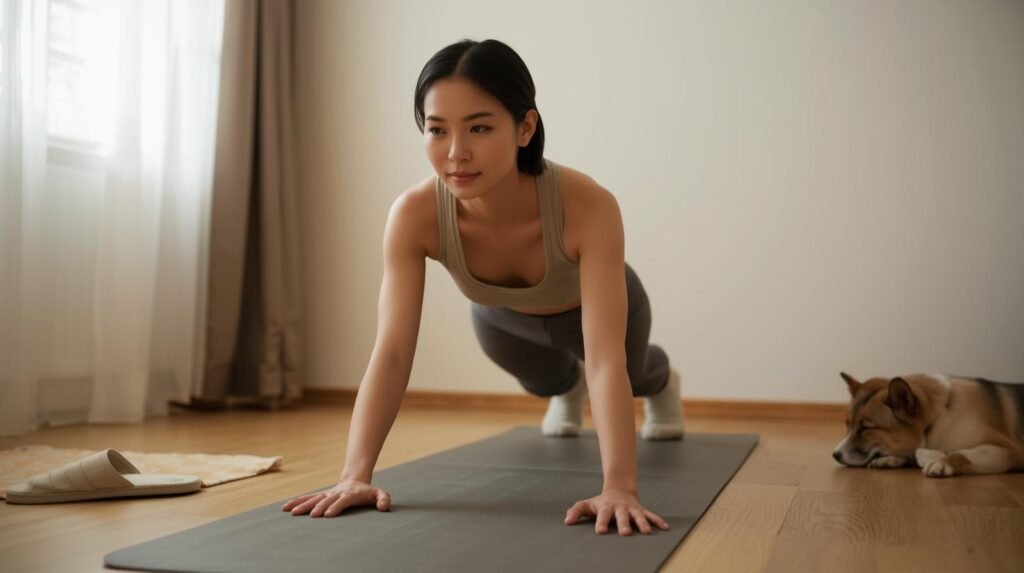

Tag: Mindset & Motivation

  • How to Return to Fitness After Time Off Without Pressure or Guilt

    How to Return to Fitness After Time Off Without Pressure or Guilt

    Taking time off from fitness happens more often than we admit. Illness, injury, burnout, travel, or major life stress can interrupt even the most consistent routines. When you start thinking about returning to fitness after time off, the hardest part often is not physical. It is mental.

    Many people delay restarting because they feel behind, ashamed, or afraid of failing again. They worry they have lost progress, momentum, or even discipline. They worry that coming back will only highlight how far they feel from where they used to be.

    Here is the truth that matters most: Fitness does not disappear when life gets busy or overwhelming.
    It waits for you.

    Why Returning to Fitness After Time Off Feels So Hard

    Time away from fitness is often framed as “losing progress.” That framing creates guilt before you even start. Instead of seeing the break as part of life, it gets labeled as failure. Physiologically, your body is not starting from zero. Muscle memory, coordination, cardiovascular adaptations, and movement patterns will still be there. What usually fades first is confidence, not capability.

    A reflective moment in the gym illustrating the mental challenge of returning to fitness after time off.

    Psychologically, many people struggle to restart fitness because they associate it with all-or-nothing thinking. If they cannot train the way they once did, they assume something is wrong or that they lack discipline.

    I explore this mindset shift more deeply in Discipline from the Gym to Everyday Life: Making Fitness Part of Your Identity. I talk about how consistency should start being framed as something you carry with you rather than something you lose when routines change.

    You Did Not Lose Fitness, You Paused

    Time away allows the body to recover from cumulative stress, even if the break was unplanned. When you return thoughtfully, you often rebuild faster than expected because your foundation still exists.

    What slows most people down is not the pause itself. It is the pressure to make up for lost time. That pressure often leads to doing too much too soon. That could increases injury risk, drains motivation, and frequently results in another forced break. The cycle repeats not because people return to fitness without patience.

    Returning to Fitness Slowly Is an Act of Care

    Coming back to fitness gradually is one of the most effective ways to protect long-term progress. Muscles may feel ready quickly, but joints, connective tissue, and the nervous system need time to re-adapt after time off.

    A controlled gym exercise representing rebuilding fitness gradually and safely after time off.

    This principle is reinforced in my Jump Rope Complex workout, which focuses on developing conditioning through pacing, structure, and repeatable effort rather than intensity alone.

    Easing back in reduces injury risk, restores confidence in movement, and rebuilds consistency in a sustainable way. Most importantly, it creates positive feedback. You finish sessions feeling capable instead of defeated.

    How A Sustainable Start Helps You Rebuild Fitness Safely
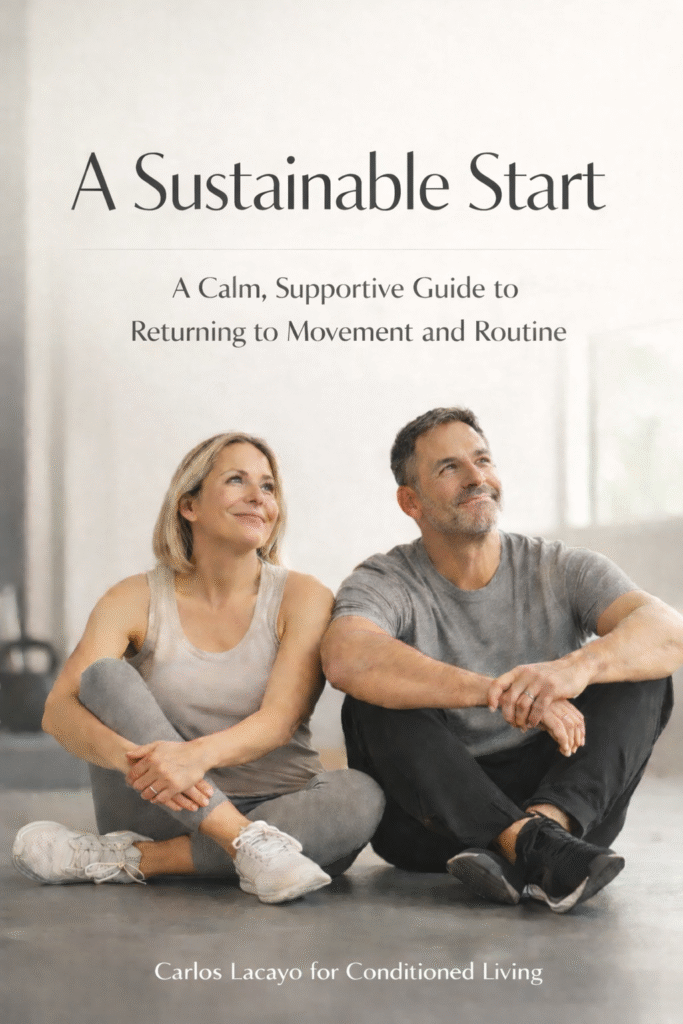
    Cover image titled ‘A Sustainable Start,’ showing two adults sitting on a gym floor in casual workout clothes, smiling and looking ahead, with colorful confetti around the border.

    My free e-book A Sustainable Start fits intentionally into the process of returning to fitness after time off. Rather than functioning as a full training program, it serves as a re-entry guide. It helps you reconnect with movement without urgency, comparison, or pressure to perform.

    It focuses on rebuilding trust with your body by establishing gentle and repeatable habits, and removing pressure-based motivation. For many people, this sense of safety is what makes consistency possible again. It’s designed for people who want to rebuild fitness without forcing themselves back into old expectations.

    Signs You Are Returning to Fitness at the Right Pace

    A calm post-workout moment in the gym showing a balanced return to fitness.

    You don’t need performance metrics to know if your approach is working. Your body gives clear signals when you listen. When you are moving at the right pace:

    • Soreness tends to be mild and short-lived
    • Energy improves rather than crashes
    • Motivation builds gradually instead of disappearing
    • Movement leaves you calmer; not anxious

    If training leaves you depleted or discouraged, that does not mean you failed. It means your current workload may be too high for this stage.

    Adjusting pace is part of the process, not a setback.

    Compassion-Based Consistency

    Consistency does not require intensity to be effective. Compassion-based consistency means showing up in ways that respect your current capacity. Some days that might look like walking. Other days it might be light strength work, mobility, or gentle conditioning.

    What matters is repetition without pressure. Over time, this approach rebuilds confidence, physical capacity, and trust. Those are the foundations needed for long-term fitness, conditioning, and health.

    Support Long-Term Fitness
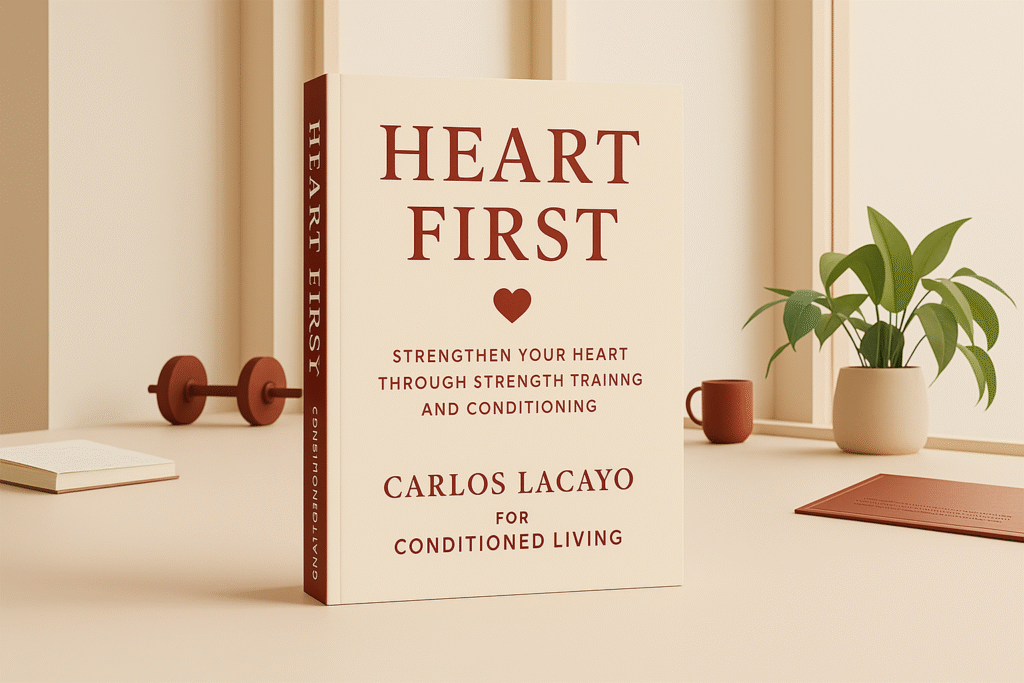
    Heart First fitness and wellness guide book cover by Carlos Lacayo, styled on a warm, minimalist workspace with strength training equipment and plants.

    Once movement feels stable and safe again, Heart First, a practical framework for building strength and cardiovascular fitness without burnout, becomes the next supportive layer. Heart First helps you build structure, improve strength and conditioning gradually, and support cardiovascular health in a steady, grounded way. It doesn’t replace A Sustainable Start, it just builds on it.

    Together, they create a progression that respects both physical readiness and emotional confidence.

    Returning to Fitness Without Pressure or Guilt

    Coming back to fitness after time off is not about proving discipline or redeeming past consistency. It is about meeting yourself where you are now and choosing a path that supports you long-term.

    Your body has not abandoned you.
    Your progress has not disappeared.
    You are allowed to return gently.

    Fitness will meet you there.


    Ready to Take the Next Step?

    Person wearing a black sleeveless hoodie and cap, arms crossed, photographed against a light background with a composed expression

    Interested in training with me or just want to connect?

    Send a DM to @Litoswaay, or email Carlos@ConditionedLiving.com. I would love to hear from you.

    Follow @ConditionedLiving at ConditionedLiving.com for reflections, tips, and updates on mindset, strength, and everyday wellness.

    Stay in the loop by joining my free mailing list for updates and inspiration.
  • Cozy Conditioning: How to Stay Active and Grounded Through the Holidays

    Cozy Conditioning: How to Stay Active and Grounded Through the Holidays

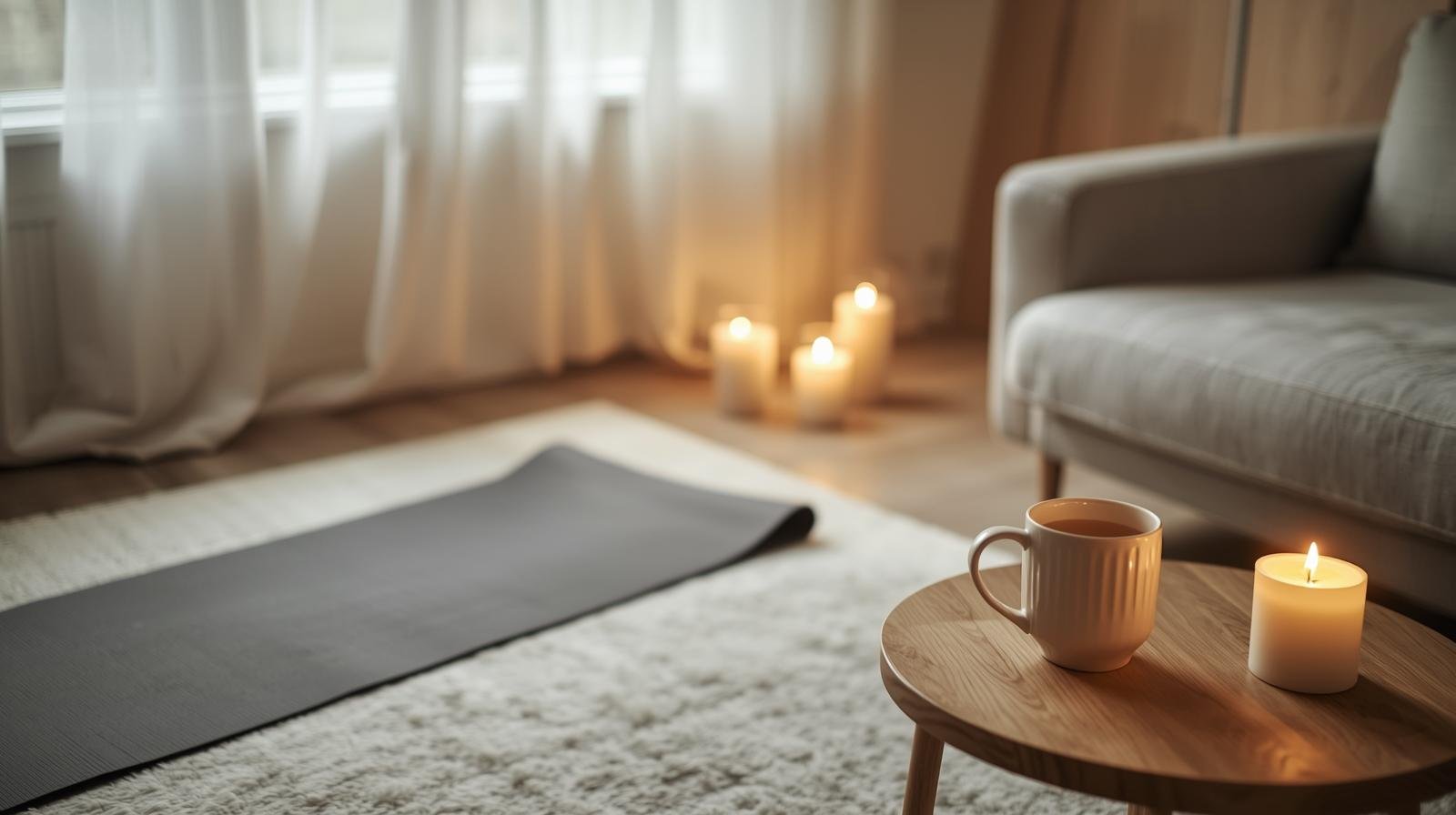
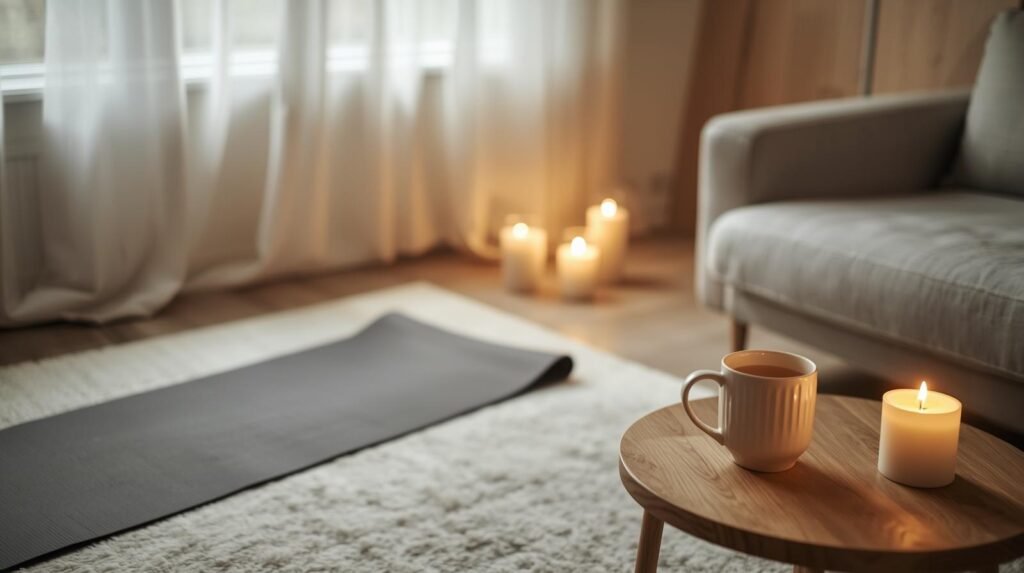
    Cozy home workout space with candles and yoga mat during the holidays.

    There is no doubt that cold weather has the potential to tests our routines. Short days and cozy nights can make the couch more appealing than a workout. This is where a little mentality shift I’m calling Cozy Conditioning comes into play. Think of it as a way to bring warmth, consistency, and self-care together.

    You have probably seen the Cozy Cardio trend online. Candles are glowing, walking pads are humming, and quiet playlists set the tone. It is comfort meeting consistency, and it is getting more people to slow down and move with intention. Cozy Conditioning takes that a step further. It isn’t just a mood. It is movement with meaning.

    This mindset is about how exercise makes you feel, not how it makes you look. It is about showing up for yourself, staying grounded (especially through the holidays), and moving because you care about your well-being.

    Exercise as Self-Care

    Exercise is not a chore we owe our bodies. It is something we give ourselves. Taking time to move is an act of respect. It reconnects us to our bodies when life feels chaotic and reminds us that we are worth showing up for. That same mindset shows up in Discipline from the Gym to Everyday Life; it’s all about carrying that “showing up” energy beyond the gym and into how you live every day.

    Person stretching mindfully beside soft holiday lights, representing exercise as self-care.

    This is one of the pillars Cozy Conditioning is built on. It is not about forcing workouts or pushing through guilt. It is about gentle discipline and finding peace in movement that feels good and sustainable. During the holidays, routines fall apart. Travel, gatherings, and endless food spreads can make exercise feel impossible. Through it all, you need to keep in mind that the goal is not perfection; it’s presence.

    Intentional movement can undoubtedly keep your rhythm alive. Ten minutes of stretching before bed. A light circuit beside the Christmas tree. A calm walk after dinner. Every time you choose to move, you remind your body that you still care. When January comes, you are not starting over. You are continuing the story you have been writing all along.

    Cozy Conditioning is discipline with warmth, comfort with purpose, and progress that begins with being present.

    Movement That Feels Good

    The best thing about Cozy Conditioning is its flexibility. It adapts to your energy, schedule, and space. There is no pressure to perform, only an invitation to move.

    Ask yourself what kind of movement feels right today. Some days it might be strength training. Other days it might be yoga, foam rolling, or dancing around your living room. What matters is the intention behind it.

    Woman doing gentle bodyweight exercises in a cozy home setting.

    If you usually focus on high-intensity workouts, balance them with something restorative. If you sit most of the day, start with ten minutes of walking or mobility work. Your body does not need punishment. It needs partnership. That is what Cozy Conditioning is really about.

    Make your environment inviting. Use soft lighting, wear your favorite hoodie, and play music that helps you breathe a little easier. When your space feels welcoming, movement turns into a ritual instead of a task.

    Ideas to Try

    • Take five deep breaths, light a candle, and move through a short mobility warm-up.
    • Do one round of body-weight squats, push-ups, and core holds. Repeat if it feels good.
    • Stretch on the floor before bed with your phone in another room.

    These small choices add up. Each time you move with intention, you are conditioning not only your body but also your mindset. You learn to value consistency and balance over burnout.

    Keeping the Momentum Through the Holidays

    The holidays can throw anyone off track. Schedules change, motivation dips, and it is easy to think, “I will start again in January.” Cozy Conditioning challenges that idea. Instead of pausing your fitness, shift your expectations. Replace “all or nothing” with “always something.” Movement becomes part of the celebration rather than a break from it.

    Take a walk with your family after dinner. Stretch in the morning before everyone wakes up. Pack resistance bands when you travel (or your Crossrope Ropeless Weighted Ropes if you’re me) . The goal is to keep your connection to movement alive.

    Person walking outdoors in winter clothes, staying active during the holidays.

    Consistency during the holidays is not about maintaining your best shape. It is about staying grounded. When you move, your energy stays steady and your stress stays low. You end the season feeling more like yourself.

    Be kind to yourself. Enjoy the food and skip a workout if you need rest. Return to movement from gratitude, not guilt. That balance is what Cozy Conditioning is about. Compassion and commitment can exist in the same space.

    The Feel-Good Finish Line

    Real progress does not always come from intensity. Sometimes it comes from slowing down. From treating rest and recovery as part of the process as well as choosing to be present instead of pressured. When you embrace Cozy Conditioning, you move from care instead of criticism. You stop chasing results and start building a relationship with movement that lasts.

    Person meditating peacefully after a cozy home workout.

    This is a transformation that goes beyond strength or endurance; it changes how you see yourself. You learn that discipline can feel soft and human. You build trust with your body and pride in your consistency.

    As the holidays unfold, let Cozy Conditioning remind you that showing up, even gently, still counts. You are not starting over. You are continuing your story with intention, one mindful breath and one small rep at a time.


    Carlos Lacayo, fitness coach and founder of Conditioned Living, wearing a black sleeveless hoodie and hat, arms crossed confidently.

    Interested in training with me or just want to connect?
    Send a DM to @Litoswaay, or email Carlos@ConditionedLiving.com. I’d love to hear from you!
    Follow @ConditionedLiving for reflections, tips, and updates on mindset, strength, and everyday wellness.
    Stay in the loop by joining my free mailing list for updates and inspiration.
fb-share-icon
Instagram