
Tag: Fitness progress

  • Interval Training vs Reps: What Most Workouts Get Wrong

    Interval Training vs Reps: What Most Workouts Get Wrong

    Most workouts are built around counting reps. Ten squats, ten pullups, twelve lunges or fifteen pushups sound normal. On the surface, this looks structured and effective, but when you look closer, the effort behind those numbers can vary dramatically. When comparing interval training vs counting reps, this is where the gap begins.

    One round might be slow and controlled. The next might be rushed. Another might feel easy, while the following one leaves you exhausted. The numbers stay the same, but the stimulus changes every time. Your body doesn’t respond to numbers; it responds to demand. When that demand changes from set to set, the adaptation becomes inconsistent. Over time, this makes progress harder to predict and harder to measure.

    This is the difference between going through the motions and actually creating a training effect, something I break down further when discussing whether you’re actually building strength or just exercising.

    How Interval Training Improves Workout Consistency

    Interval training removes much of that randomness by controlling time instead of reps. Instead of performing twelve squats, you might perform squats for thirty seconds followed by thirty seconds of rest. Now the structure stays the same every round. When you look at interval training vs reps, the biggest difference is consistency.

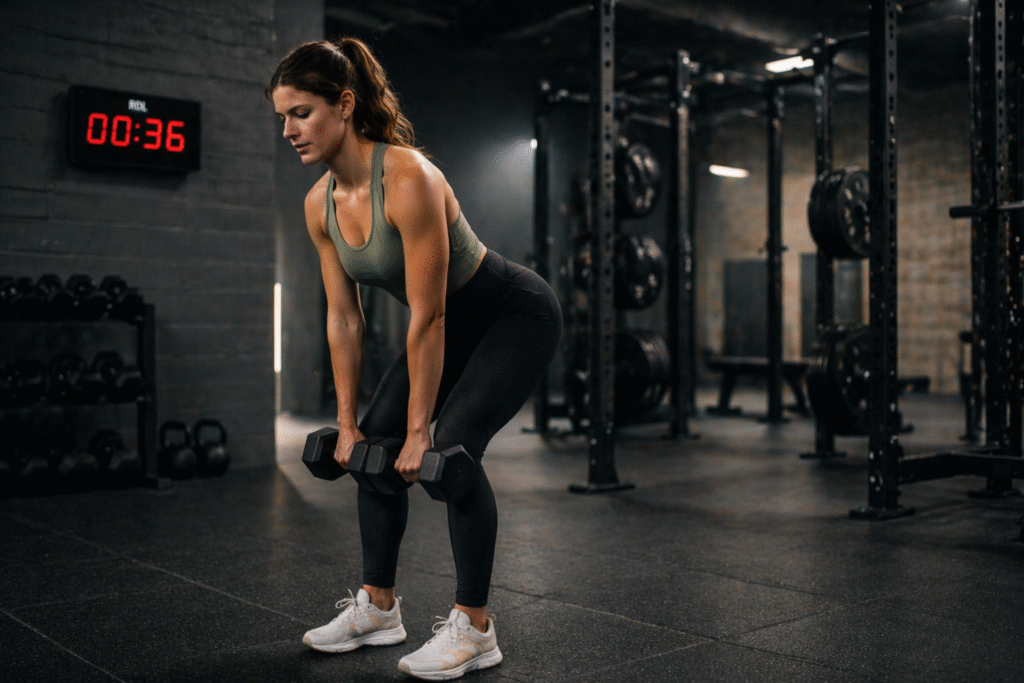
    Female athlete performing a controlled dumbbell Romanian deadlift in a modern gym, maintaining proper hip hinge form with a focused expression, while a red digital wall timer counts down in the background under cinematic lighting

    Pacing becomes part of the workout and effort becomes more predictable. Fatigue also follows a pattern instead of spiking randomly. Your heart rate rises and falls in a controlled way, which improves conditioning over time. This doesn’t necessarily make workouts harder. It makes them repeatable, and repeatable workouts are what lead to measurable progress.

    That’s also why progress can feel slow at first. Improvements are happening, but they’re subtle and consistent rather than dramatic and random. This idea connects closely to why fitness progress often feels invisible in the early stages.

    Over time, interval training creates a clearer signal for your body to adapt to. And clearer signals produce better results.

    When Counting Reps Is Better Than Interval Training

    Counting reps still plays a critical role, especially in strength training. Reps allow you to slow down and focus on quality. Eight squats, six presses, or seven rows encourage control, proper mechanics, and muscle engagement. You’re not racing the clock. You’re focusing on execution. When comparing interval training vs counting reps, this is where reps win.

    Strength training benefits from deliberate pacing. You want controlled movement, consistent form, and the ability to gradually increase resistance over time. Intervals can sometimes push you to rush, which reduces stability and technique.

    Female athlete holding a paused lunge position in a modern gym, resting her arm on her front knee with a fatigued expression, wearing a purple top and black shorts, surrounded by weights and equipment under soft cinematic lighting

    Rep-based training works best for:

    • Strength development
    • Muscle control
    • Progressive overload
    • Technique refinement

    Reps create structure for strength. Intervals create structure for conditioning. They serve different purposes. The problem isn’t counting reps. It’s using them for everything.

    Structure Is What Actually Drives Results

    This isn’t really about choosing between interval training and counting reps. It’s about structure versus randomness. Many workouts mix the two without intention. People rush through strength work, slow down when they should maintain effort, and rest inconsistently between sets. The result is unpredictable fatigue and unclear progress.

    Male athlete performing jump rope outdoors on a park path, maintaining a smooth and consistent rhythm with a focused expression, wearing green shorts and a light grey shirt, surrounded by trees and greenery in a bright spring environment

    When comparing interval training vs counting reps, the real advantage comes down to structure. Intervals create structured conditioning. Reps create structured strength training. When each is used correctly, workouts become repeatable. When workouts are repeatable, progress becomes measurable.

    Research consistently shows that structured training improves both cardiovascular efficiency and performance over time. The common factor isn’t the method, it’s consistency; which…comes from structure.

    Choosing the Right Approach

    Interval training builds conditioning. Counting reps builds strength. The best approach isn’t choosing one over the other. It’s understanding when to use each method and applying it with intention. If your workouts feel random, inconsistent, or hard to track, the issue usually isn’t effort; it’s structure.

    Give your body a clear and repeatable signal, and it will adapt. Progress isn’t just about what you do, it’s about how consistently you do it.


    Interested in Training with Me or Just Want to Connect?

    Fitness professional standing with arms crossed, wearing a black sleeveless hoodie and cap, calm confident expression against a clean neutral background.

    Send a DM to @Litoswaay, or email Carlos@ConditionedLiving.com; I’d love to hear from you!
    Follow @ConditionedLiving for reflections, tips, and updates on mindset, strength, and everyday wellness.

    Stay in the loop by joining my free mailing list for updates and inspiration.

    Additionally, download the free guide/e-book “A Sustainable Start” to begin your journey toward sustainable strength and wellness, with a focus on consistency and balance.

    Conditioned Living is about realistic fitness and training advice. Real progress takes time; stay consistent.

  • Why Fitness Progress Feels Invisible at First (And What’s Actually Happening)

    Why Fitness Progress Feels Invisible at First (And What’s Actually Happening)

    Man with an average build tying his running shoes while sitting on a gym bench, soft morning light coming through large windows in a quiet gym, dumbbells resting on the floor nearby, calm and reflective pre-workout moment.

    Many people expect noticeable fitness results within a few weeks of starting a training program. They anticipate visible changes in the mirror or dramatic improvements in performance almost immediately. When those changes do not appear right away, the experience can feel confusing or discouraging.

    The reality is that the early phase of training rarely looks dramatic from the outside. Workouts begin to happen regularly, routines take shape, effort is being applied consistently, and yet, the results are often subtle or difficult to notice.

    Because of this, many people believe something is wrong with their program or their body. In truth, the process is unfolding exactly the way it should. Early progress simply tends to happen beneath the surface before it becomes visible.

    Why Early Fitness Progress Happens Inside the Body

    When someone begins training, the body starts adapting almost immediately. However, the first changes rarely involve visible muscle growth or dramatic improvements in endurance.

    Female athlete performing a controlled dumbbell curl while seated on a bench in a quiet gym, wearing a gray sleeveless top, focused expression, soft natural lighting with blurred gym equipment in the background.

    Instead, the nervous system is often the first system to adapt. The brain becomes more efficient at recruiting muscle fibers and coordinating movement patterns. This is why exercises that initially feel awkward or difficult often start to feel smoother within a few weeks.

    Movements become more controlled. Balance improves. The body learns how to perform exercises more efficiently.

    These neurological adaptations create the foundation for future improvements in strength, conditioning, and physical performance. Even though these changes are not always visible, they represent an important part of the training process.

    Many people confuse fatigue with progress during this phase. Understanding the difference between simply working hard and actually building strength is essential, which is explored further in Are You Actually Building Strength or Just Exercising?

    Why Workout Results Take Time to Appear

    One of the most confusing aspects of fitness progress is the delay between effort and visible results.

    Each workout acts as a small stimulus that encourages the body to adapt. Muscles, connective tissue, and the nervous system all respond to the stress placed on them during training. However, these adaptations do not happen instantly. Instead, they accumulate gradually over time.

    Female athlete holding a controlled forearm plank on a workout mat in a quiet minimalist gym, wearing an olive green athletic top and black shorts, focused expression, soft natural lighting with blurred gym equipment in the background.

    This delay creates the impression that nothing is happening. People continue to train, but because the visible results have not appeared yet, it can feel like their efforts are not producing real progress.

    In reality, the body is constantly responding to the training stimulus. The changes are simply unfolding more gradually than many people expect.

    Small Signs of Fitness Progress Most People Miss

    Progress often appears in subtle ways that are easy to overlook.

    Exercises may begin to feel easier to perform even though the weight has not changed. Balance or coordination may improve. Recovery between sets might become slightly faster. Movements that once felt uncomfortable may start to feel more natural.

    Another important signal of progress is consistency. When workouts begin to feel like a normal part of the week rather than something that requires constant motivation, it often means the body and mind are adapting to the training process. These signals indicate the body is building capacity and improving its ability to handle training stress.

    How Unrealistic Fitness Expectations Distort Progress

    Female athlete standing on a body composition scanner while looking at the results on a screen, wearing a tie-dye athletic top, with a trainer beside her in a modern wellness facility with soft lighting and neutral tones.

    Fitness culture often highlights dramatic transformation stories. Before and after photos suggest that major changes can happen quickly and effortlessly. These stories can be motivating but they often compress months or years of work into a simplified narrative. The slower phases of progress aren’t shown as much. In reality, sustainable improvements in strength and conditioning occur gradually. The body needs time to adapt safely and effectively.

    This is also why relying on simple measurements like BMI can be misleading when evaluating fitness progress. Weight alone does not always reflect improvements in strength, conditioning, or overall health. This topic is explored further in BMI and Fitness: Why the Number Doesn’t Tell the Whole Story.

    Why Consistency Becomes the Turning Point

    Over time, consistent training begins to compound. Strength gains become more noticeable; endurance improves, workouts become more productive and physical changes gradually begin to appear. The turning point often arrives quietly. What once felt difficult and required intense effort becomes manageable and routine. None of this happens without the early stage of training where progress feels slow or invisible. Consistency during this phase is what allows improvements to show up later.

    Why Real Fitness Progress Takes Time

    Woman leaving the gym with a gym bag over her shoulder and a water bottle in hand, wearing a pink athletic top and black leggings, warm natural light coming through the windows, calm and relaxed post-workout moment.

    The early stage of training often feels quiet and uneventful. Progress may seem slow, and visible changes can take time to appear. Beneath the surface the body is building the foundation for long term improvement. The nervous system is learning new movement patterns. On top of that, muscles and connective tissues are adapting to the demands of training. These early changes prepare the body for future gains in strength, endurance, and overall fitness.

    Real progress develops gradually through consistent effort. When patience is maintained during the early phase, those hidden improvements eventually begin to show.


    Interested in training with me or just want to connect?

    Fitness professional standing with arms crossed, wearing a black sleeveless hoodie and cap, calm confident expression against a clean neutral background.


    Send a DM to @Litoswaay, or email Carlos@ConditionedLiving.com — I’d love to hear from you!
    Follow @ConditionedLiving for reflections, tips, and updates on mindset, strength, and everyday wellness.

    Stay in the loop by joining my free mailing list for updates and inspiration.

    Additionally, download the free guide/e-book “A Sustainable Start” to begin your journey toward sustainable strength and wellness, with a focus on consistency and balance.

  • BMI and Fitness: Why the Number Doesn’t Tell the Whole Story

    BMI and Fitness: Why the Number Doesn’t Tell the Whole Story

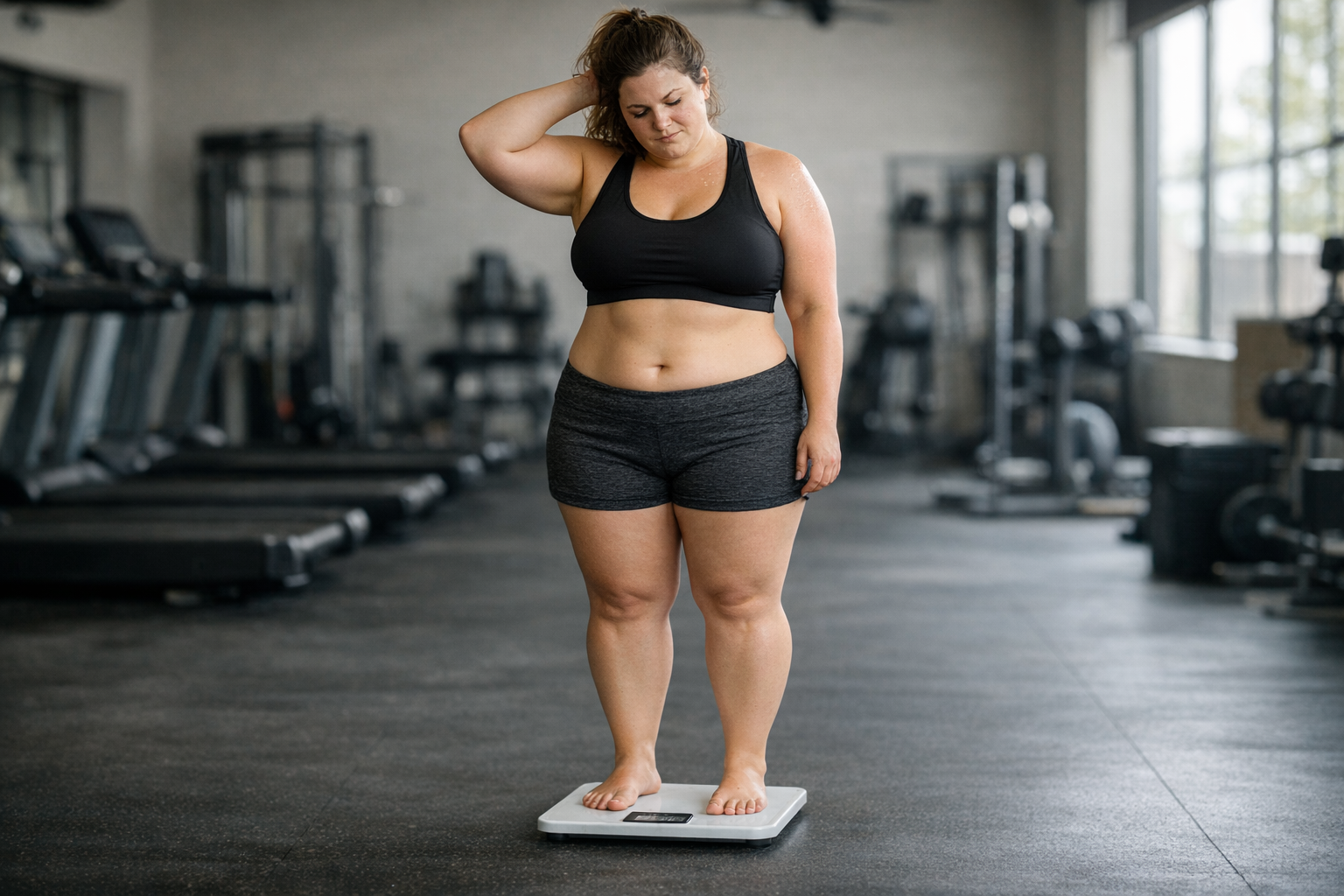
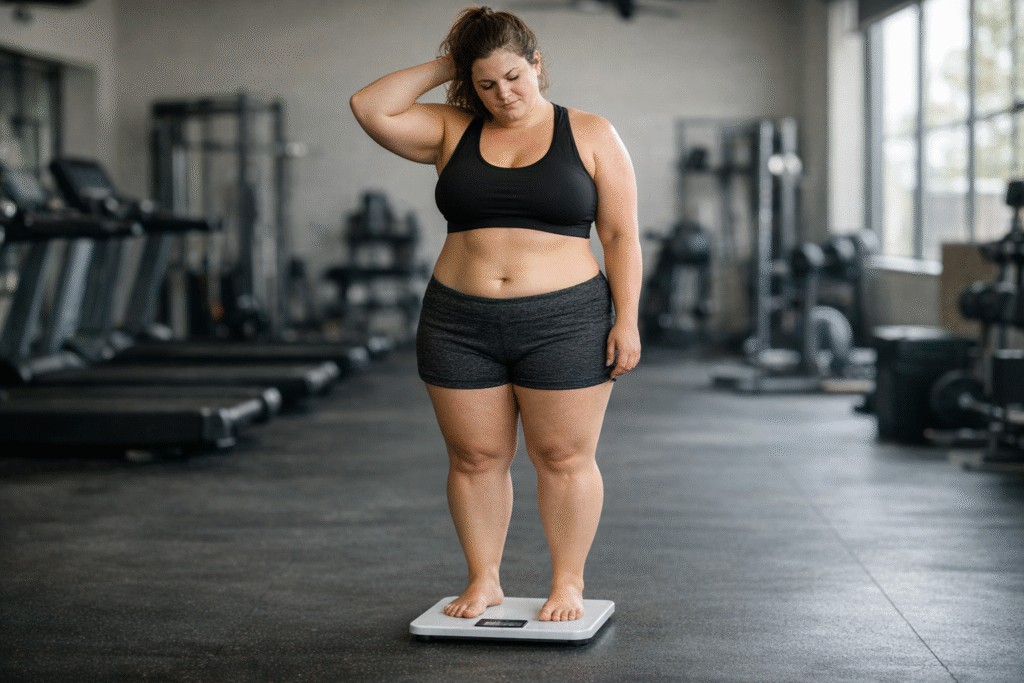
    Athletic woman with a slightly chubby build standing on a digital scale in a modern gym, looking thoughtfully at the number, illustrating confusion around weight, BMI, and fitness progress.

    Why BMI Can Be Confusing for People Who Exercise

    Many people begin exercising with the expectation that progress will show up clearly on a scale or through measurements like BMI. When those numbers don’t change the way they expect, it can create confusion about whether their efforts are actually working.

    Someone may begin strength training, improve their conditioning, and develop consistent exercise habits. They feel stronger, move better, and notice their workouts becoming more structured. Then they check their BMI and see little change, or sometimes even a higher number.

    Moments like this reveal an important truth about BMI: while it can provide general information about population health trends, it does not always capture what is happening within an individual fitness journey.

    Understanding where BMI is helpful and where it falls short can make it easier to interpret progress more realistically.

    What BMI Was Originally Designed to Measure

    BMI, or Body Mass Index, was created in the 1800s by a Belgian statistician named Adolphe Quetelet. His goal was not to evaluate individual fitness or health. Instead, the formula was designed as a simple way to study weight patterns across large populations.

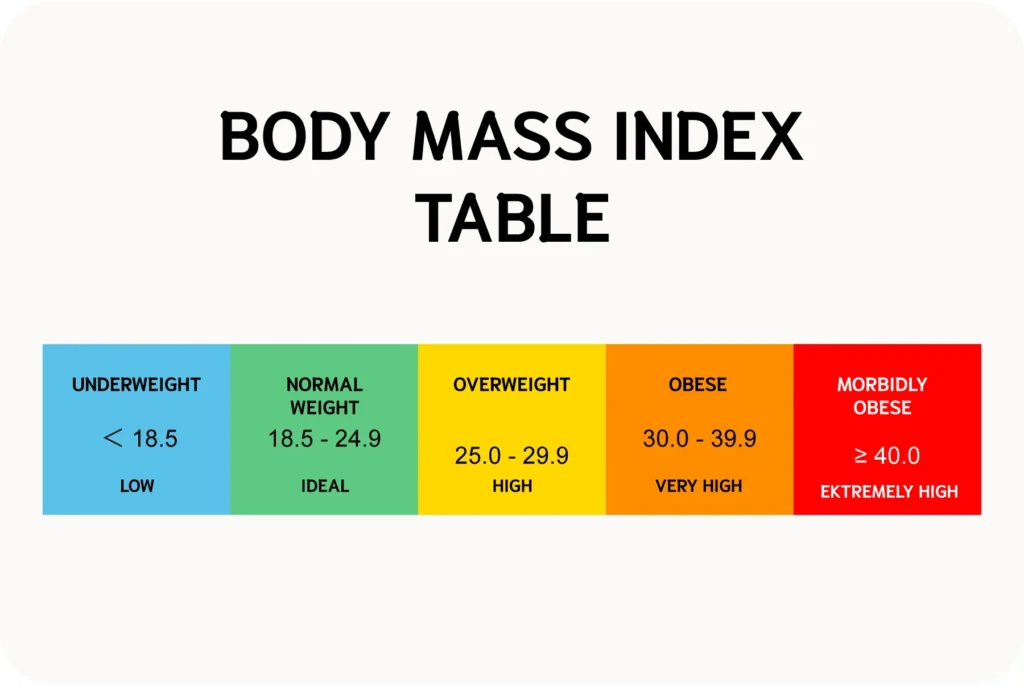
    Color-coded Body Mass Index (BMI) chart showing weight categories from underweight to morbidly obese with BMI ranges used to classify body weight.

    The calculation compares a person’s weight to their height and produces a number that places them into categories such as underweight, normal weight, overweight, or obese. Because the formula is simple and easy to apply, it has become widely used in public health and medical settings.

    However, BMI was never designed to evaluate body composition or athletic performance. It simplifies the body into a single number, which means it cannot capture the full complexity of how someone trains, moves, or builds strength.

    Why Muscle Mass Can Make BMI Misleading

    One of the biggest limitations of BMI becomes clear when people begin resistance training.

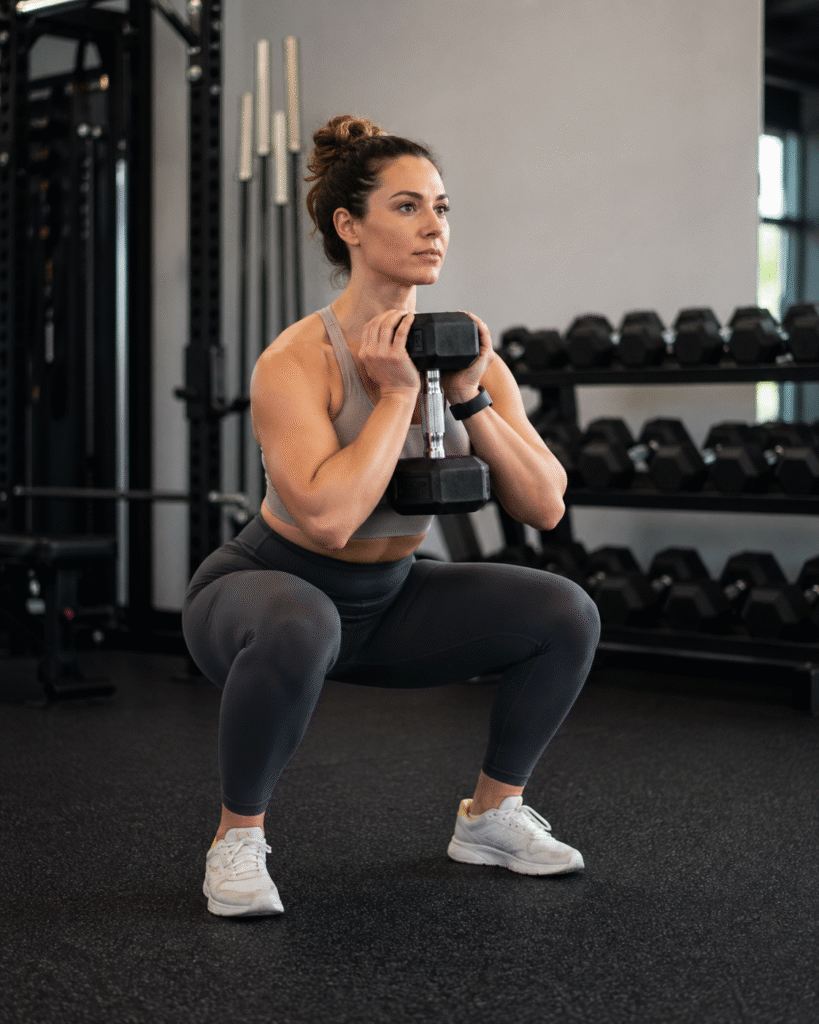
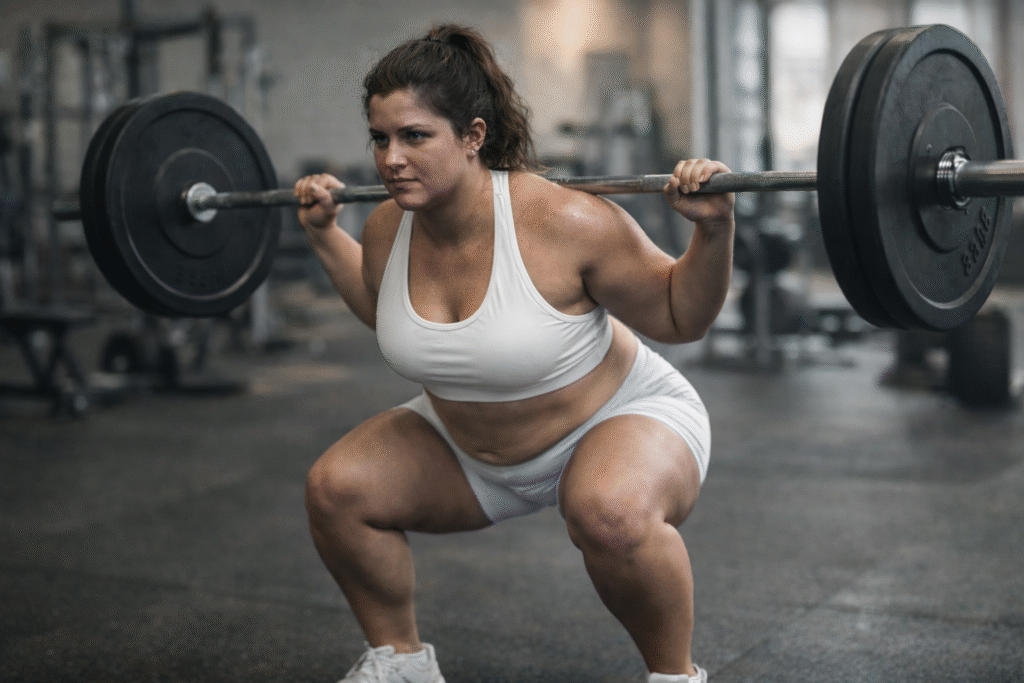
    Strong female athlete performing a barbell squat in a gym, illustrating strength training and how muscular fitness does not always align with BMI measurements.

    Muscle tissue weighs more than fat by volume. As someone begins lifting weights and building muscle, their body composition may improve even if their overall weight stays the same. In some cases, their weight may increase slightly as muscle develops. In fact, learning how to train with enough resistance to stimulate muscle growth is something I discuss in “Are You Lifting Heavy Enough? A Simple Guide to Muscle Growth and Fat Loss.”

    Because BMI only looks at total body weight relative to height, it cannot distinguish between muscle and fat. A person becoming stronger and leaner could technically move into a higher BMI category despite improving their physical fitness.

    Body Composition vs BMI: What the Number Misses

    Another limitation of BMI involves body composition.

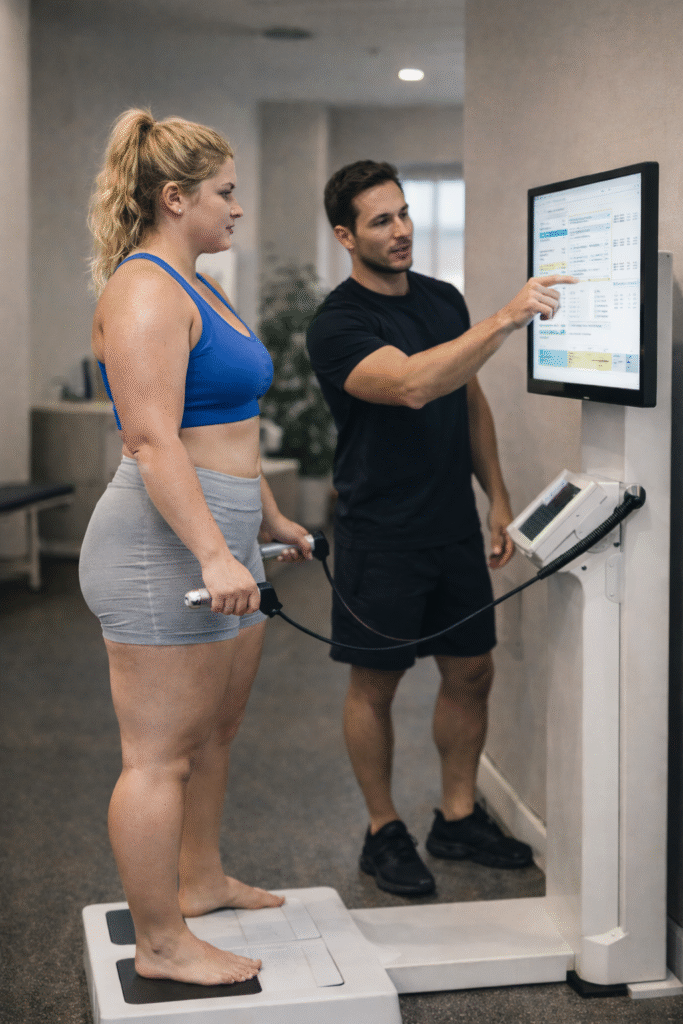
    Athlete undergoing a body composition scan while a trainer reviews results on a screen, illustrating modern fitness testing beyond BMI measurements.

    Two people can have identical BMI scores while having completely different physical profiles. One person may carry higher levels of muscle and lower body fat. Another person may have lower muscle mass and higher body fat.

    Even though their BMI numbers are identical, their strength levels, metabolic health, and physical resilience could be dramatically different. BMI measures total body mass, but it does not measure what that mass is made of.

    Real Fitness Progress Goes Beyond Body Weight

    Fitness progress often appears in ways BMI cannot measure.

    Strength improvements, better endurance, and faster recovery between workouts are all meaningful signs of physical adaptation. In fact, this difference between real training progress and simply going through the motions is something I explored more deeply in “Are You Actually Building Strength or Just Exercising?”

    Someone who consistently trains may find that exercises feel smoother, movements become more controlled, and their conditioning steadily improves.These changes reflect real progress even if they do not immediately change a height-to-weight ratio.

    Why BMI Is Still Widely Used in Health Guidelines

    BMI remains widely used because it is simple and inexpensive to calculate. Public health systems rely on metrics that can be applied quickly across large groups of people. For population-level trends, BMI can provide useful general insights.

    But for individuals who are actively training, the number often tells only part of the story.

    Trainer reviewing BMI and body composition data on a tablet with a client during a health consultation, illustrating modern fitness and health assessment.

    A better way to think about fitness progress is to consider a broader picture. Strength, conditioning, consistency, and sustainable habits all play important roles in long-term health.

    Charts and formulas may provide helpful context, but they rarely capture the full reality of someone’s training journey.

    In the long run, real progress is often reflected not just in numbers, but in how the body moves, performs, and adapts over time.


    Interested in training with me or just want to connect?

    Fitness professional standing with arms crossed, wearing a black sleeveless hoodie and cap, calm confident expression against a clean neutral background.

    Send a DM to @Litoswaay, or email Carlos@ConditionedLiving.com.

    If you’re looking for a calm, realistic way to get started, you can also download my free guide, A Sustainable Start, which walks you through building strength, conditioning, and consistency without burnout or pressure.

    Follow @ConditionedLiving for reflections, tips, and updates on mindset, strength, and everyday wellness. Stay in the loop by joining my free mailing list for updates and inspiration.

fb-share-icon
Instagram