Tag: fitness mindset

  • Why Body Weight Can Be Misleading: You Are Not a Number

    Why Body Weight Can Be Misleading: You Are Not a Number

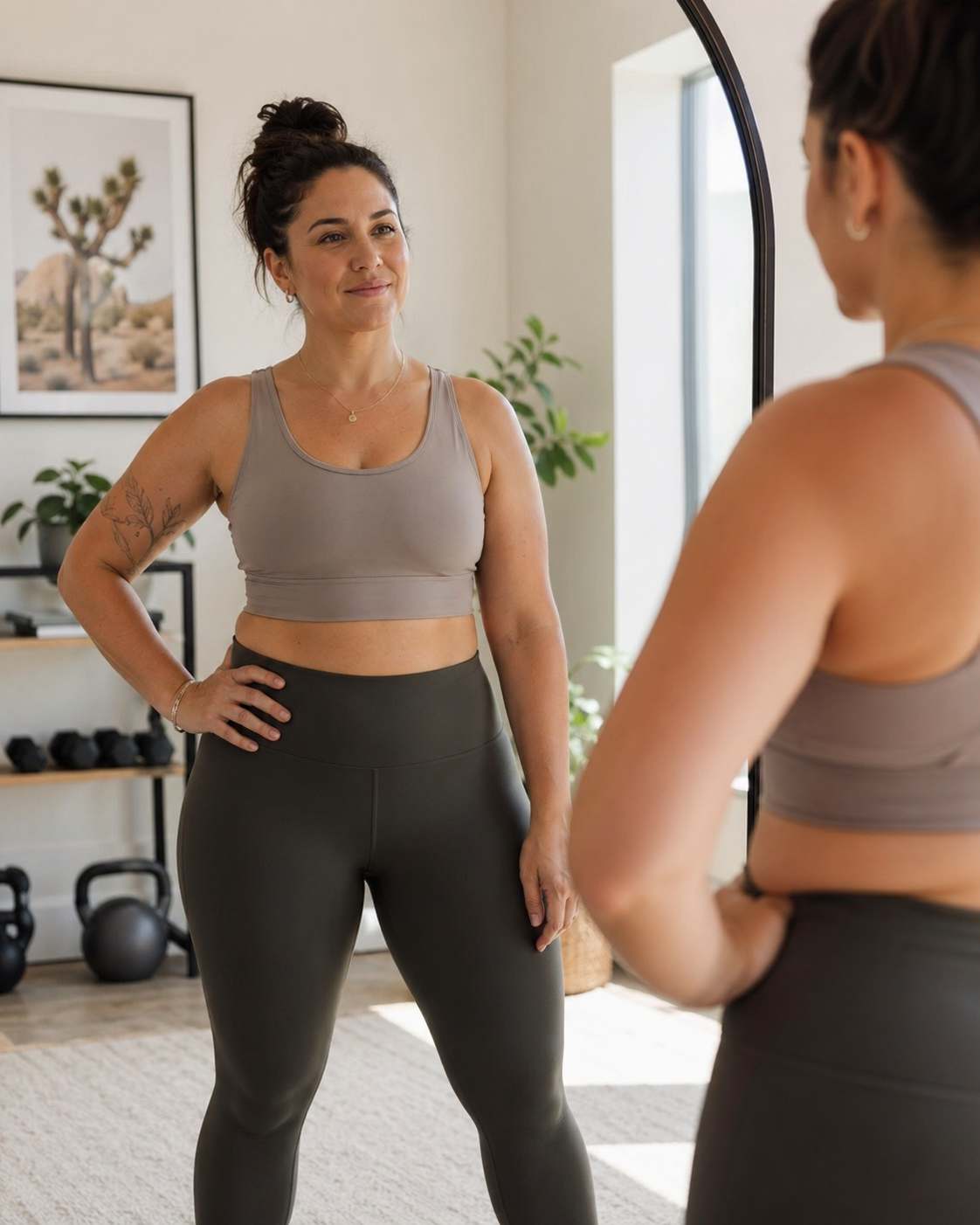
    Confident woman in neutral workout clothes standing near a tall mirror in a bright home fitness space, with dumbbells and kettlebells in the background, reflecting on her body and progress with a calm, body-positive expression.

    A number on the scale can feel louder than it should.

    People hear a weight like 180, 200, or 230 pounds and immediately picture a certain body type. They assume they know what that number looks like. They imagine size, softness, fitness level, and sometimes even health, but body weight can be misleading.

    Two people can weigh the exact same and look completely different. One person may look athletic and strong. Another may look softer. Someone else may carry weight in a way that makes the number surprising. That is because the scale only tells you total weight. It does not tell you height, muscle mass, fat distribution, posture, training history, or how someone feels in their body.

    The scale gives information, it doesn’t tell the whole story.

    Weight Does Not Sit the Same on Every Body

    One of the biggest reasons body weight can be misleading is that weight does not sit the same on every person.
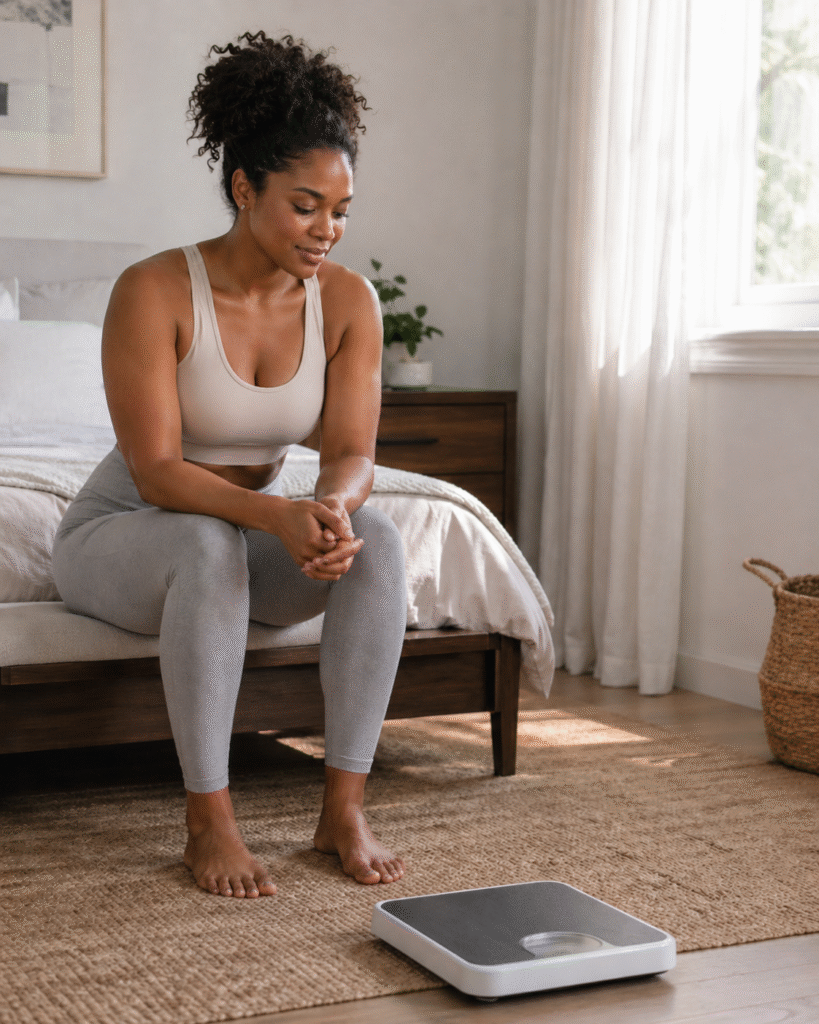
    African American woman in neutral athletic wear sitting on the edge of a bed in a bright bedroom, calmly looking toward a bathroom scale with no visible number, reflecting on wellness beyond weight.

    Height (for one) can change everything. A woman who is 230 pounds at 5 feet 2 inches will usually look very different from a woman who is 230 pounds at 5 feet 9 inches. A taller body has more space for that weight to distribute. The number may be the same, but the visual result can be completely different.

    Frame size matters too. Shoulder width, hip structure, bone density, and natural body shape all affect how weight appears. Some people carry weight evenly. Others carry more in their stomach, hips, thighs, chest, arms, or back. Just like I covered in BMI and Fitness: Why the Number Doesn’t Tell the Whole Story, a single measurement can give you information, but it cannot explain the full picture.

    Body Composition Matters More Than Body Weight

    Body composition is one of the most important parts of this conversation.

    Your total body weight includes muscle, fat, bone, water, organs, food, and stored glycogen. The scale does not separate those things for you. It simply gives you one number and lets your brain panic or celebrate from there.
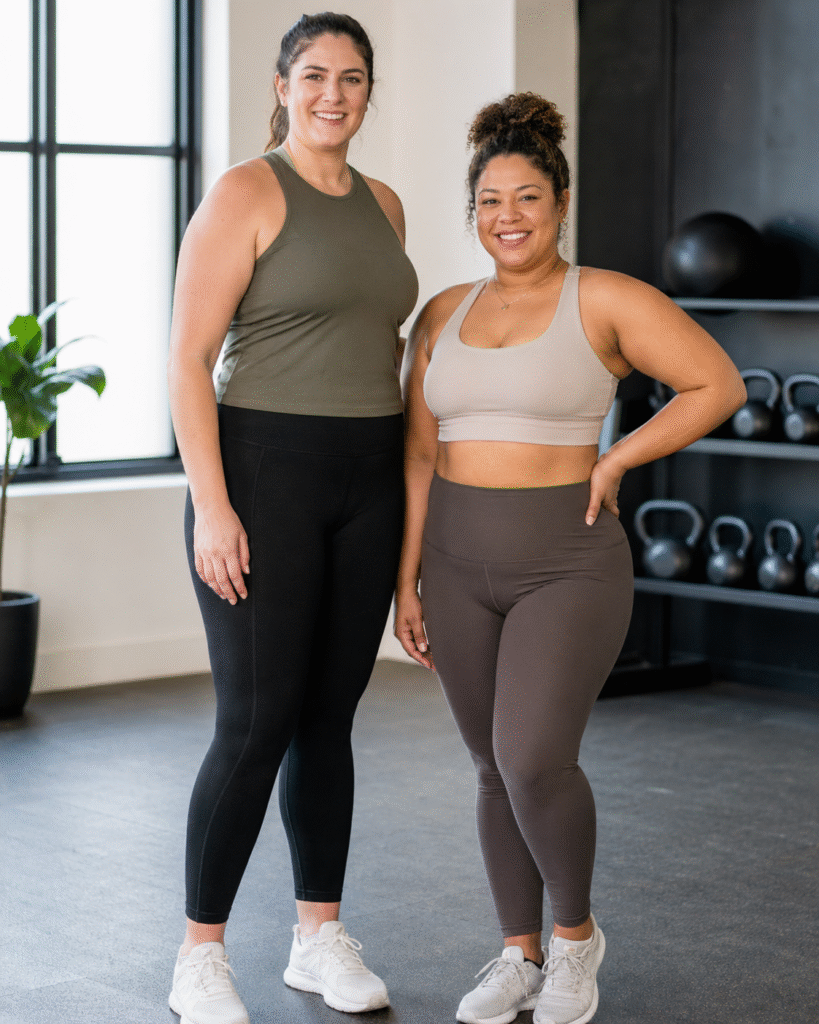
    Someone with more muscle may weigh more than expected but look firmer, stronger, or more athletic. Muscle adds weight, especially in the legs, glutes, back, and shoulders. Someone else may weigh less but look softer if they have less muscle mass.

    This is why strength training can change the way your body looks even when the scale barely moves. If your goal is to build muscle while improving body composition, Are You Lifting Heavy Enough? A Simple Guide to Muscle Growth and Fat Loss breaks down why the right training stimulus matters. The scale tells you how much of you there is, not what that weight is made of.

    Fat Distribution Changes the Visual Story

    Fat distribution plays a major role in how someone looks at any weight.

    Some people gain weight mostly in the midsection, while others gain more in their hips, thighs, glutes, chest, arms, or back. Genetics, hormones, stress, age, activity level, and lifestyle can all affect where the body stores fat.
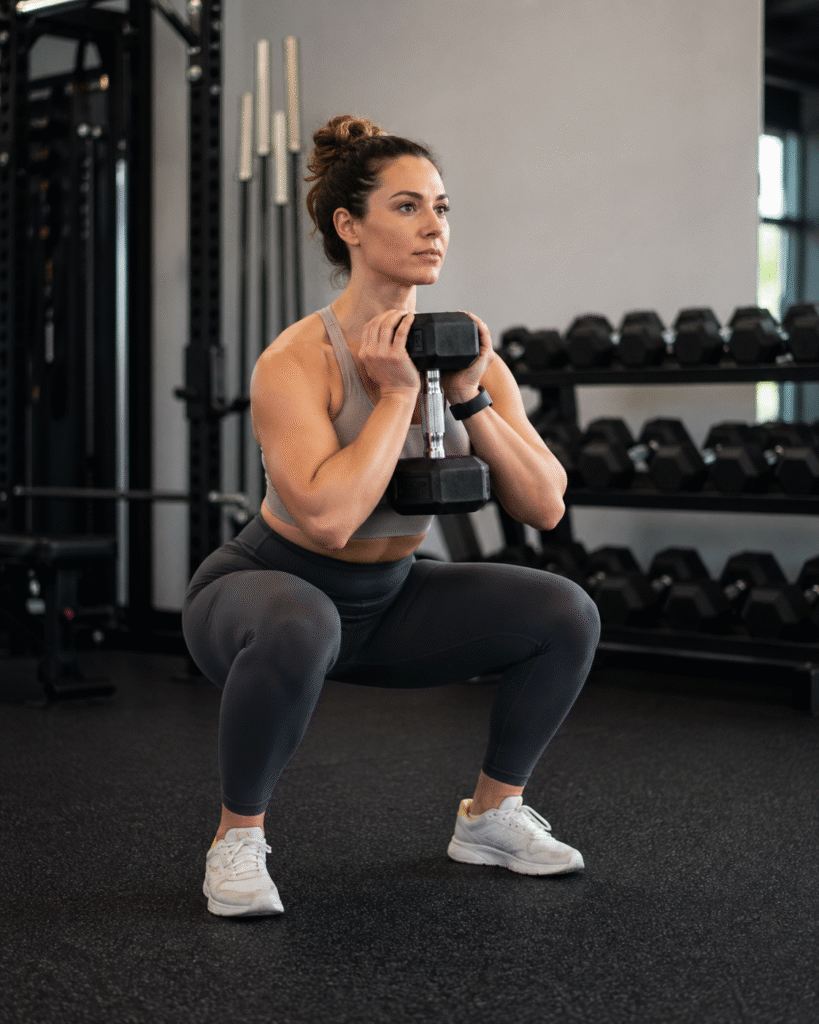
    Strong woman in neutral workout clothes performing a controlled goblet squat with a dumbbell in a clean gym, showing focused strength and natural athletic form.

    Someone can have noticeable softness in one area but still not look as big as the scale number sounds. A person may have belly softness, but if weight is also spread through the legs, hips, chest, and upper body, the overall appearance may look more balanced. Softness is not a moral failure. It is part of how bodies store energy and respond to life. The goal isn’t shame, it’s awareness.

    The Problem With Scale Obsession

    The scale becomes a problem when it turns into the only scoreboard. A higher number can make someone feel like they are failing, even if they are stronger, sleeping better, walking more, and building healthier habits. A lower number can create false confidence if that weight loss comes with muscle loss, low energy, or poor nutrition.

    Body weight is useful, but it needs context. It can help track trends, but it should not control the entire conversation. Better progress markers include:
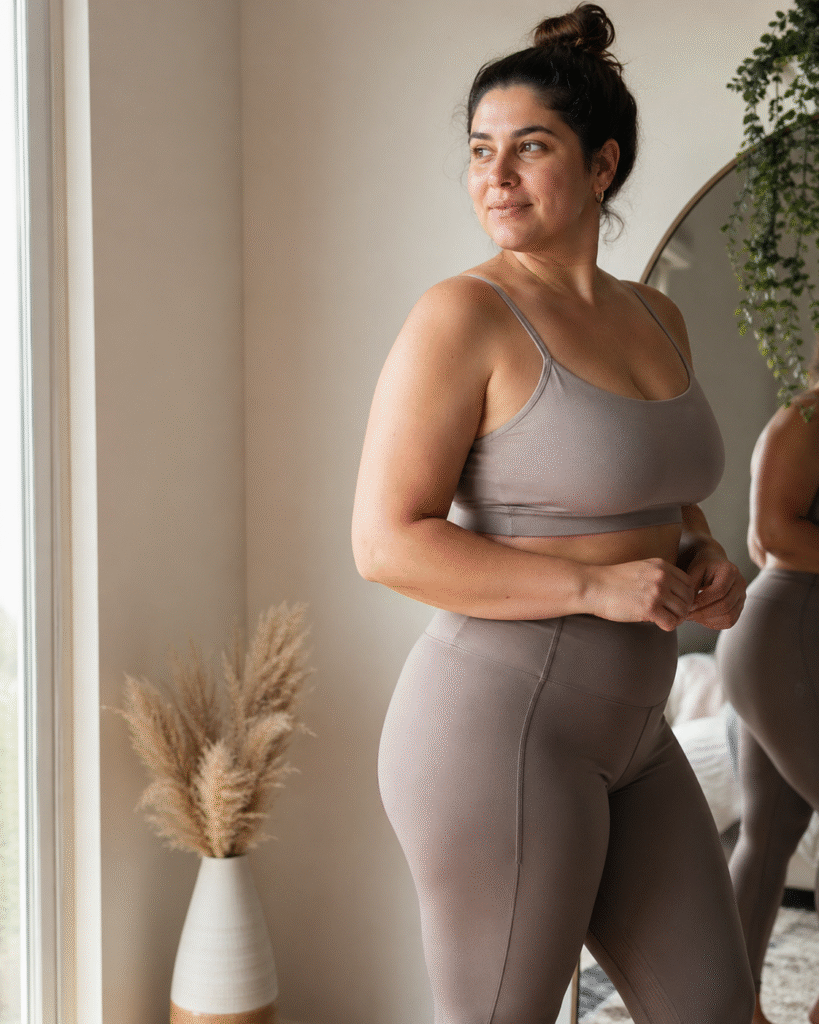
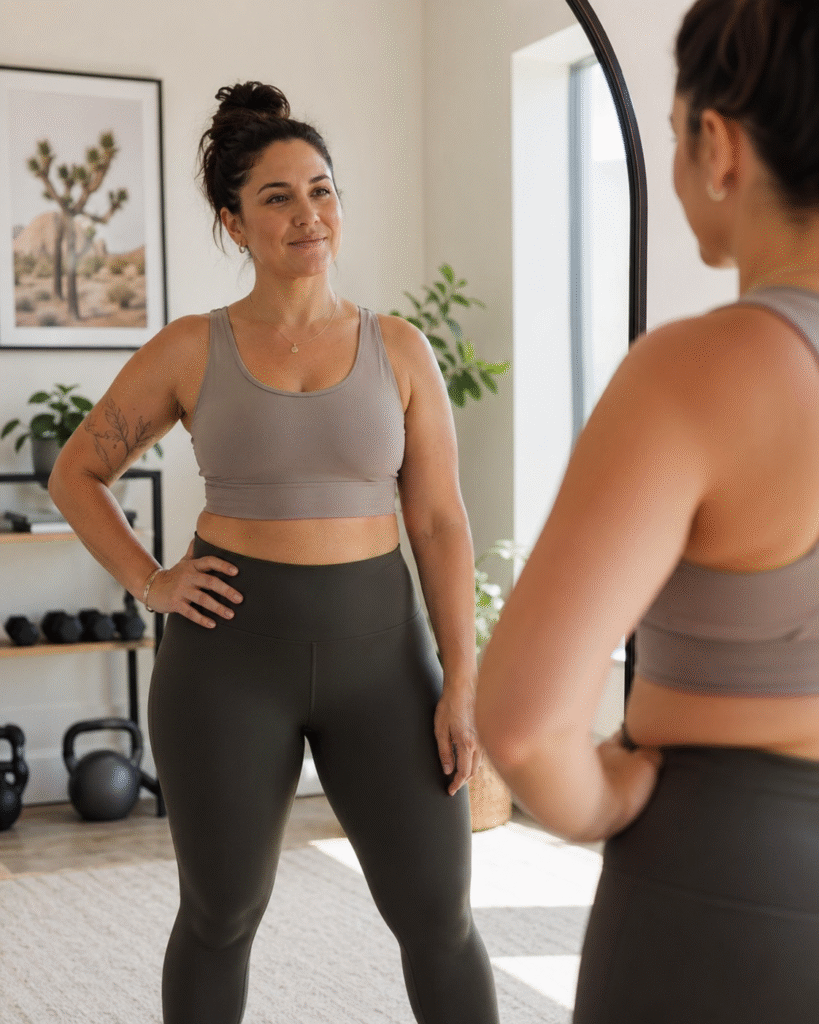
    Woman in neutral fitted workout clothes standing near a bright window and mirror, showing a natural body shape with a calm, confident expression in a warm wellness setting.
    • how your clothes fit
    • waist measurement
    • strength increases
    • walking endurance
    • workout recovery
    • resting heart rate
    • energy levels
    • mood
    • consistency

    Progress photos can help too, as long as they are used with a healthy mindset. A healthier body usually reveals itself through more than one number.

    You Are Not a Scale Reading

    You can weigh more than expected and not look the way people assume. You can weigh less and still feel soft, weak, or out of shape. You can also stay the same weight while building a stronger, healthier body underneath. The goal is not to ignore the scale completely. The goal is to stop giving it more power than it deserves.
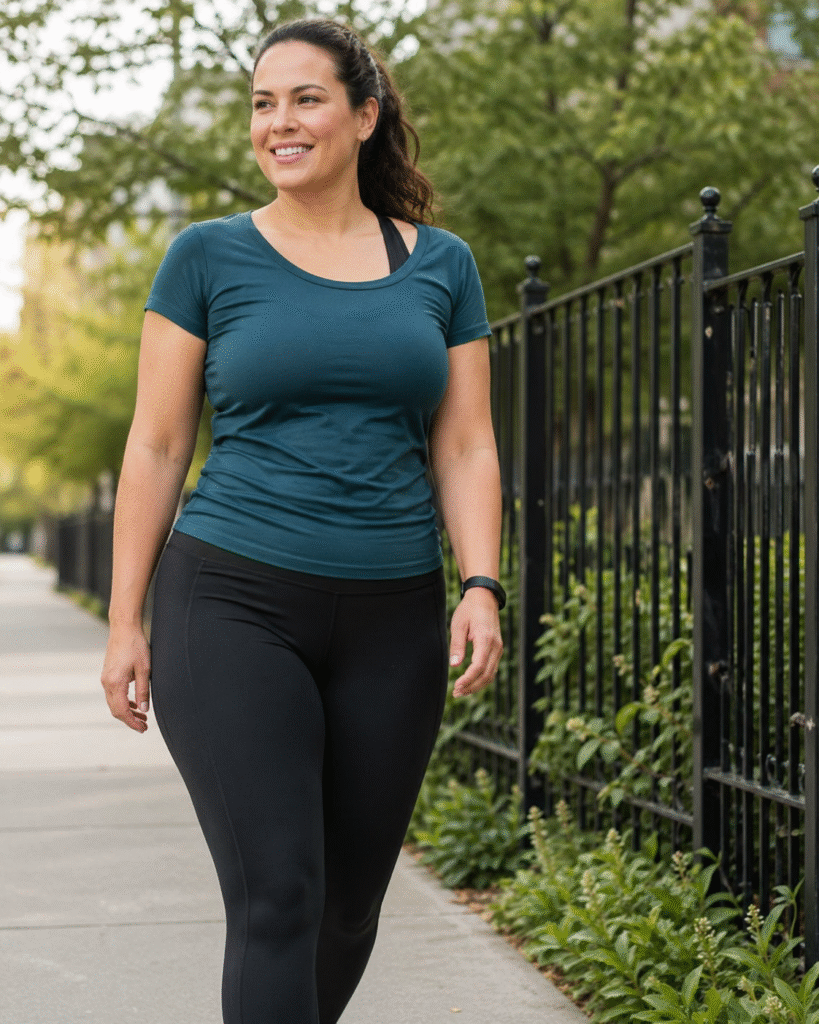
    If you take one thing away for this let it be that ou do not look like a number. You look like a combination of height, structure, muscle, fat distribution, habits, history, and life. That is why real progress should be measured by more than pounds.

    Focus on building strength, improving your conditioning and moving consistently. Eat in a way that supports your body and let the scale be one tool, not the final judge.

    Interested in training with me or just want to connect?
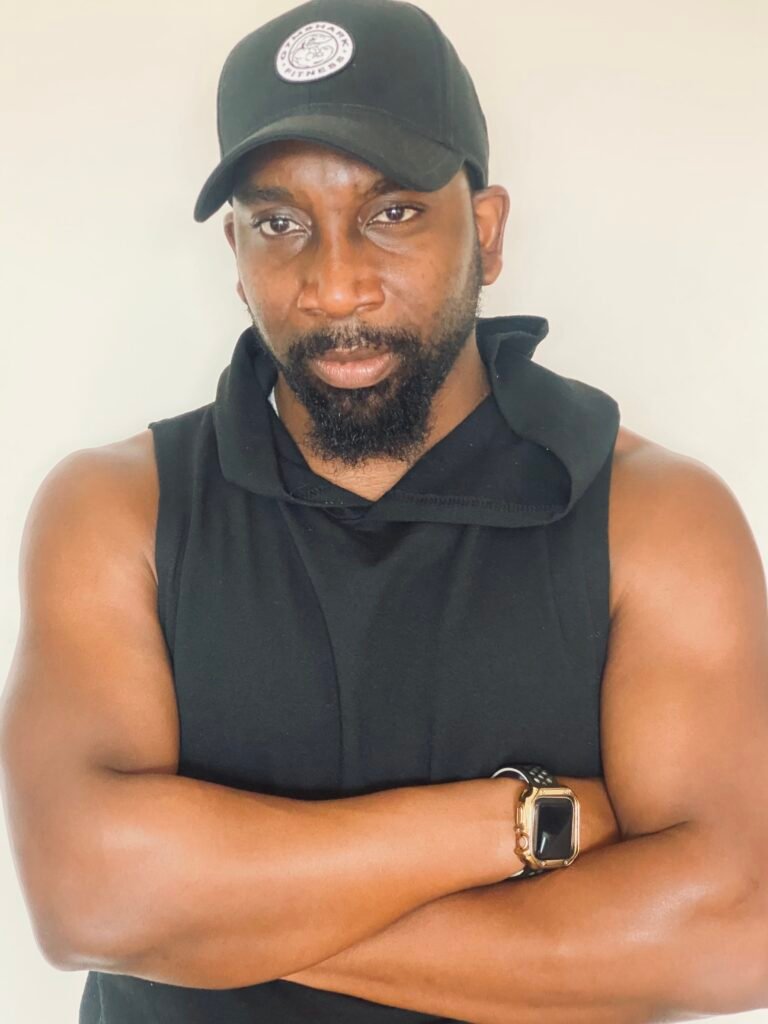
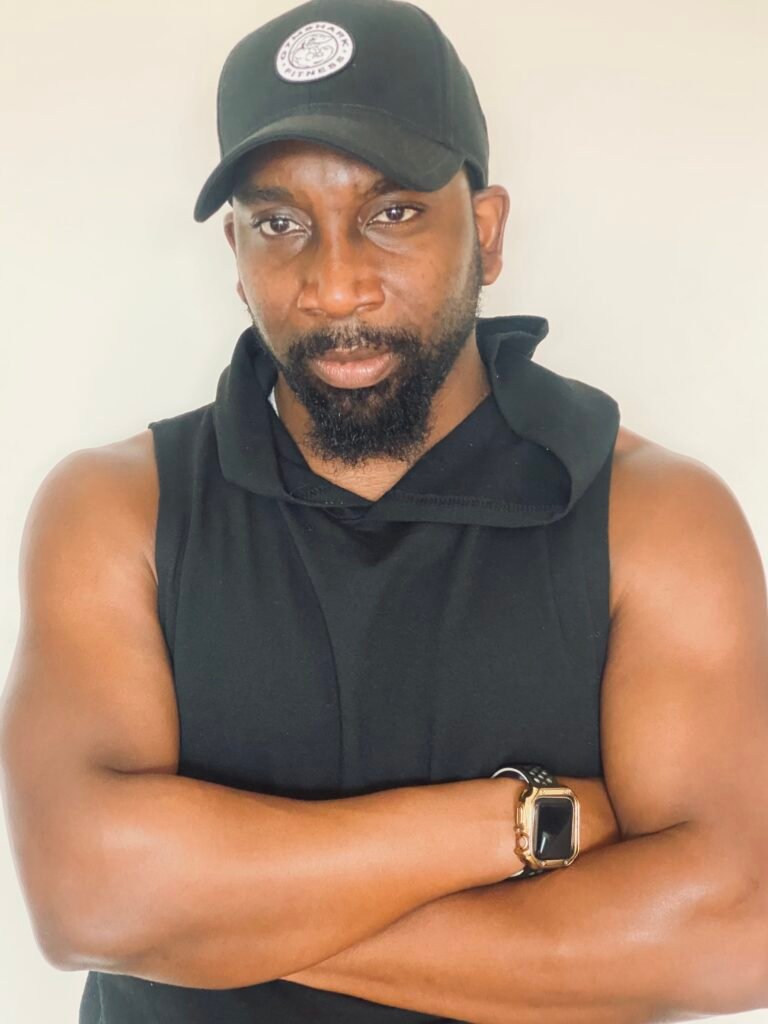
    Fitness professional standing with arms crossed, wearing a black sleeveless hoodie and cap, calm confident expression against a clean neutral background.

    Send a DM to @ConditionedLiving, or email Carlos@ConditionedLiving.com.  Stay in the loop by following me on social media for updates, inspiration, for reflections, tips, and updates on mindset, strength, and everyday wellness.

    Also, download the free guide A Sustainable Start to begin your journey toward sustainable strength and wellness.


  • Discipline from the Gym to Everyday Life: Making Fitness Part of Your Identity

    Discipline from the Gym to Everyday Life: Making Fitness Part of Your Identity

    You hit your workouts consistently, but the moment you step outside the gym, that discipline fades.
    Ever notice how some people just live their fitness, while for others it’s just another box to check?

    I’ll be the first to admit, I’ve had my own struggles with discipline. I can get my workout done, but then something like writing a blog post suddenly feels like the most tedious thing in the world. It’s funny how we can power through a tough set but stall on the small things that move us forward. I’ve learned that discipline isn’t just about doing the hard thing; it’s about showing up for yourself, no matter the context.

    Turning Exercise Into a Lifestyle, Not a Task

    For me, exercise is non-negotiable. I love training first thing in the morning, but life doesn’t always make that possible. After about noon, it gets a little harder; motivation dips and distractions pile up,  but I still make sure I get it done. The difference? I’ve made fitness part of my identity. When something becomes who you are, not just what you do, you stop giving yourself ways to back out.

    Many people separate “workout life” and “real life,” but the truth is, sustainable health happens when movement, mindfulness, and nutrition blend seamlessly into daily living. Fitness shouldn’t live in a silo. It should show up in small, natural ways that remind you you’re living actively.

    Maybe it’s:

    • Taking the stairs instead of the elevator.
    • Doing walking meetings instead of sitting all day.
    • Treating meal prep as an act of self-care, not a chore.

    Weaving fitness into your routine, as a form of alignment as opposed to punishment, can help with the transformation from effort into identity.

    Discipline and Intention: The Foundation of Lasting Change

    It always amazes me how, the moment a consultation starts, people assume a trainer’s goal is to “train them half to death.” Some even want me to be a drill sergeant of sorts. Somewhere along the way, fitness became akin to boot camp. People crave discipline but expect it to come through force, not trust. Discipline isn’t punishment. It’s a conversation between your mind and your body.

    Good habits are hard to build and easy to lose, but they’re never born from shame. When clients realize that I’m not here to manipulate or degrade them but to teach them how to fall in love with the process, something shifts.

    That’s when the magic happens because the transformation doesn’t start in the gym. It starts in the mind. They move with passion. They fall in love with the process. That’s when fitness becomes a part of you forever.

    Intention + Discipline = Sustainable Fitness

    Intention setting is about clarity and purpose. Deciding why you want to do something and how you want to show up in the process. For example, “I intend to prioritize my health by moving my body daily” creates a mental and emotional anchor, a guiding principle rather than a strict rule.

    Discipline is about follow-through; the structure, consistency, and self-control that turn intention into daily action, even when motivation dips. Discipline makes your intention tangible.

    Think of it like this:

    • Intention = direction (your “why”)
    • Discipline = momentum (your “how”)

    Without intention, discipline can feel rigid or empty, like forcing yourself through routines without meaning. Without discipline, intention stays in the realm of good ideas. When the two align, you create a sustainable, meaningful practice.

    For example:
    “I intend to feel strong and grounded in my body.”
    → leads to →
    “I discipline myself to show up for strength training three times a week.”

    That’s where transformation takes root; not just in your muscles, but in your mindset.

    What “Making Fitness Part of Your Identity” Really Means

    Making fitness part of your identity means reframing how you think about yourself and your habits. Instead of “I have to work out,” try “I’m someone who trains.” It’s a subtle but powerful shift.

    When your actions align with who you believe yourself to be, consistency follows naturally. You no longer negotiate with yourself about whether you’ll work out; it’s just what you do.

    Fitness also supports who you want to be: strong, focused, and confident. It’s not just about how you look. When your goals align with your values, showing up becomes easier.

    To help build that connection:

    • Anchor your routines in purpose (a morning ritual, journaling progress).
    • Keep accountability partners who share your goals.
    • Focus on progress markers beyond aesthetics such as endurance, strength, energy and mindset.

    Training is a mirror. What you practice under the bar shows up in your real life such as resilience, patience and commitment.


    Integrating Fitness Into Everyday Life

    If you want to make fitness second nature, build systems that support it. These aren’t hacks, they’re habits that reinforce who you are:

    • Schedule movement like a meeting. It’s not optional, it’s on the calendar.
    • Eat to fuel, not restrict. Nutrition supports performance, not punishment.
    • Set goals beyond looks. Maybe it’s running a 5K, hiking a new trail, or improving your deadlift.
    • Surround yourself with people who live actively. Energy is contagious.

    The goal isn’t perfection; it’s consistency with compassion. The best fitness identity is one that is strong, flexible, adaptable and blends with who you are.

    Mindset & Reflection

    When fitness becomes who you are, not just what you do,  you start to carry that strength into every part of your life. It shows up in how you handle stress, how you speak to yourself, and how you show up for others.

    At Conditioned Living, we believe in training for the long game. This is a place where strength, cardio, recovery, and mindset all work together to create lasting wellness.

    The gym is the training ground. But the real work?
    That’s how you live when you walk out the door.


    If this story resonated, I’d love to hear from you.
    You can DM me on Instagram @Litoswaay or @ConditionedLiving; or send an email to Lacayo.Carlos1@gmail.com, I’d love to connect.
    Also, follow @ConditionedLiving for updates, tips, and all things mindset and movement.

fb-share-icon
Instagram